Healthy Night Routine: 10 Simple Habits for Better Sleep
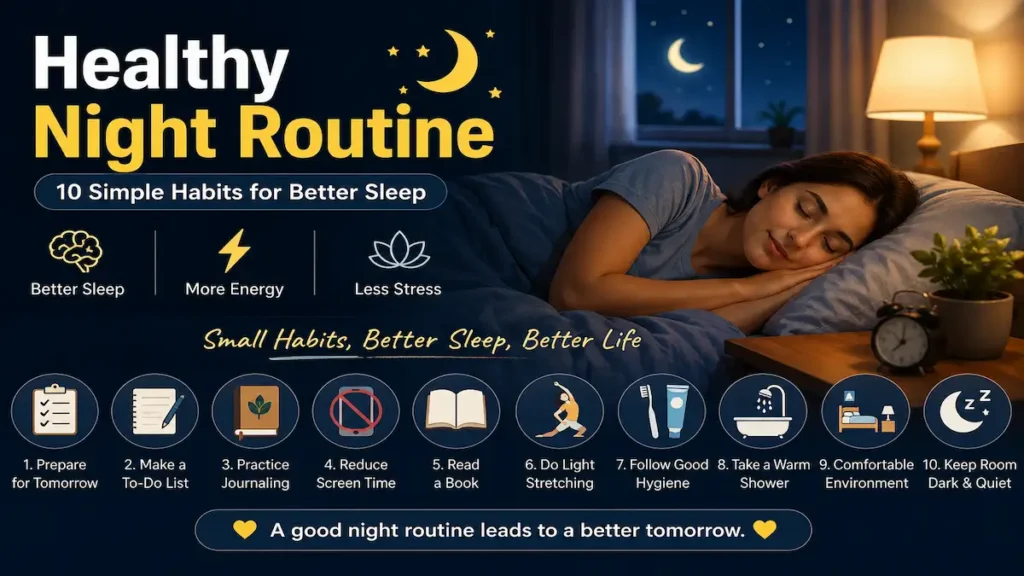
A healthy night routine can help you sleep better, feel more energetic, and improve your overall health. A good night’s sleep is just as important for your health as regular exercise and a healthy diet. In today’s busy world, many people struggle with poor sleep because of stress, screen time, and unhealthy habits. The good news is that a few simple changes before bedtime can make a big difference.
Introduction
After a long and busy day, our body and mind need proper rest. Sleep is the time when the body repairs itself, restores energy, and prepares for the next day. However, many people do not get enough sleep because of late-night phone use, work pressure, stress, or irregular daily routines.
According to health experts, good sleep is just as important as healthy food and regular exercise. Without enough sleep, a person may feel tired, irritated, and unable to focus. Poor sleep can also affect physical health, mental wellness, and daily performance.
This is where a Healthy Night Routine becomes important. A healthy night routine is a group of simple habits that help the body relax and prepare for sleep. These habits can improve sleep quality, reduce stress, and support overall well-being.
The best part is that you do not need expensive products or complicated methods. Small daily habits can bring big improvements over time.
In this article, you will learn why sleep matters, how a healthy night routine works, and the 10 best habits that can help you enjoy better sleep and a healthier life.
What Is a Healthy Night Routine?
A Healthy Night Routine is a set of activities that you follow every evening before going to bed. These activities help your body and mind slow down after a busy day.
Just as a morning routine helps you start your day, a night routine helps you end your day in a healthy way.
A healthy night routine may include:
• Preparing for the next day
• Limiting screen time
• Reading a book
• Practicing deep breathing
• Doing light stretching
• Following good hygiene habits
• Making it a habit to go to sleep at the same time every night
These simple actions tell your brain that it is time to rest.
Why Is Sleep So Important?
Many people think sleep is simply a time when the body shuts down. In reality, the body stays very active during sleep.
While you sleep, your body:
• Repairs muscles and tissues
• Builds stronger immunity
• Stores memories
• Supports brain function
• Balances hormones
• Restores energy
Good sleep helps you wake up feeling refreshed and ready for the day.
When you do not get enough sleep, you may experience problems such as:
• Low energy
• Poor concentration
• Mood changes
• Increased stress
• Weaker immunity
• Lower productivity
This is why sleep experts often say that quality sleep is one of the foundations of good health.
Understanding the Science of Sleep
The human body follows a natural clock called the circadian rhythm. This internal clock tells the body when to feel awake and when to feel sleepy.
As evening approaches, the body begins producing a hormone called melatonin. This hormone helps the body get ready for a restful night’s sleep.
However, certain habits can disturb this natural process, such as:
• Using mobile phones late at night
• Watching television for long hours
• Sleeping at different times each day
• High stress levels
• Consuming caffeine late in the evening
A Healthy Night Routine helps support the body’s natural sleep cycle and makes it easier to fall asleep.
1. Prepare for Tomorrow Before Going to Bed
One of the easiest ways to reduce stress at night is to prepare for the next day.
Many people lie in bed thinking about unfinished work, school tasks, or morning responsibilities. This keeps the mind active and makes sleep difficult.
Instead, spend a few minutes preparing for tomorrow.
You can:
• Choose your clothes
• Pack your school or office bag
• Organize important documents
• Set reminders
• Prepare a simple plan
When everything is ready, your mind feels more relaxed and less worried.
2. Create a Simple To-Do List
A to-do list is a powerful tool for reducing bedtime stress.
When tasks stay inside your head, they can keep your brain busy. When you write your tasks down, it becomes easier to relax and stop thinking about them.
Your to-do list does not need to be long.
Simply write:
• Important tasks
• Appointments
• Personal goals
• Household work
Benefits of making a to-do list include:
• Less worry
• Better planning
• Improved focus
• Reduced mental pressure
Even five minutes of planning can help improve sleep.
3. Practice Journaling
Journaling is a simple habit where you write down what you think, feel, or experience during the day.
Many mental health professionals recommend journaling because it helps people express emotions in a healthy way.
At night, you can write about:
• Your day
• Things you learned
• Personal goals
• Happy moments
• Things you are grateful for
Journaling can help reduce stress and make your mind feel lighter before sleep.
Over time, it may also help improve emotional well-being.
4. Reduce Screen Time Before Bed
One of the most common sleep problems today is excessive screen use.
Many people spend hours scrolling through social media, watching videos, or checking messages before bed.
The blue light from screens may affect the body’s natural sleep process.
Health experts often suggest avoiding screens at least 30 to 60 minutes before bedtime.
This includes:
• Mobile phones
• Tablets
• Laptops
• Televisions
Instead of screen time, choose calming activities that help your mind relax.
5. Read a Book
Reading is one of the best bedtime habits.
A good book helps take your attention away from daily worries and encourages relaxation.
Reading before sleep may help:
• Reduce stress
• Improve focus
• Relax the mind
• Build healthy habits
Choose books that are enjoyable and easy to read.
Avoid highly exciting or stressful content before bed.
Even 15 minutes of reading can help prepare your mind for sleep.
6. Do Light Stretching or Yoga
After sitting, working, or studying all day, your body may feel tight and tired.
Light stretching or simple yoga exercises can help relax your muscles and reduce tension.
Benefits include:
• Better flexibility
• Reduced stress
• Relaxed muscles
• Improved comfort
Simple stretches for the neck, shoulders, back, and legs can be very helpful.
You can also practice gentle yoga poses or breathing exercises.
Avoid intense workouts close to bedtime because they may make it harder to relax.
7. Follow Good Personal Hygiene Habits
Good hygiene is an important part of a Healthy Night Routine.
Nighttime hygiene habits may include:
• Brushing your teeth
• Washing your face
• Taking a shower
• Changing into comfortable clothes
These habits help you feel clean, fresh, and relaxed.
They also signal to the brain that it is time to slow down and prepare for sleep.
Good hygiene supports both health and sleep quality.
8. Take a Warm Bath or Shower
A warm bath after a busy day can feel very relaxing.
Warm water helps the body release tension and feel more comfortable.
A warm shower before bed may help many people:
• Feel calm
• Reduce muscle tightness
• Relax mentally
• Sleep more comfortably
You do not need a long bath. Even a short warm shower can help you unwind.
9. Create a Comfortable Bedroom Environment
Your bedroom plays a major role in sleep quality.
A messy, noisy, or uncomfortable room can make sleep difficult.
Try to keep your bedroom:
• Clean
• Quiet
• Comfortable
• Well-organized
Choose comfortable pillows and bedding.
A peaceful sleeping environment can help you fall asleep faster and stay asleep longer.
10. Keep the Room Dark and Quiet
The body naturally responds to darkness.
A dark room supports melatonin production and encourages healthy sleep.
To create a sleep-friendly environment:
• Turn off bright lights
• Use soft lighting before bed
• Close curtains
• Reduce noise
Some people also use sleep masks or earplugs if needed.
A quiet and dark room often leads to deeper sleep.
Practice Deep Breathing Before Sleep
Deep breathing is a simple relaxation technique that anyone can use.
It helps slow the heart rate and calm the nervous system.
Try this method:
- Breathe in slowly through your nose.
- Pause for a few seconds before breathing out.
- Breathe out slowly through your mouth.
- Repeat several times.
Many people find deep breathing helpful when they feel stressed or restless.
Think About Positive Things
Many people go to bed worrying about problems.
Negative thoughts can make it difficult to relax.
Instead, try focusing on positive experiences.
You can think about:
• Good moments from the day
• Personal achievements
• Future goals
• Things you appreciate
Some people also keep a gratitude journal.
Positive thinking can help reduce stress and improve emotional health.
⚠️ Habits That Can Harm Your Sleep
Even if you follow a Healthy Night Routine, certain habits can negatively affect your sleep quality. Avoiding these common mistakes can help you fall asleep faster, stay asleep longer, and wake up feeling refreshed.
| Habit to Avoid | Why It Can Affect Your Sleep |
|---|---|
| 📱 Using Your Phone Late at Night | Scrolling through social media or watching videos before bed can keep your brain active and make it harder to relax and fall asleep. |
| ☕ Drinking Caffeine Before Bed | Coffee, tea, energy drinks, and some soft drinks contain caffeine, which may keep you awake longer and reduce sleep quality. |
| 🍔 Eating Heavy Meals Late | Having a large meal shortly before bedtime may cause discomfort, indigestion, and make it difficult to sleep comfortably. |
| ⏰ Sleeping at Different Times | An inconsistent sleep schedule can confuse your body’s natural clock and make it harder to maintain healthy sleep habits. |
| 💼 Doing Stressful Work Before Bed | Checking work emails, studying under pressure, or thinking about stressful tasks can keep your mind active when it should be relaxing. |
🌙 Benefits of Following a Healthy Night Routine
A Healthy Night Routine offers many benefits for both your body and mind. By following simple bedtime habits consistently, you can improve sleep quality, boost energy levels, and support overall well-being.
😴 Better Sleep Quality
A Healthy Night Routine may help you fall asleep sooner and improve your overall sleep quality.
⚡ More Energy
Better sleep helps you wake up feeling refreshed, energetic, and ready to take on the day.
🧠 Better Mental Health
Quality sleep supports emotional balance, reduces stress, and promotes mental wellness.
🎯 Improved Focus
Well-rested people often concentrate better and perform tasks more effectively at work and school.
🛡️ Stronger Immunity
Sleep gives the body time to recover and helps strengthen the immune system.
😊 Better Mood
Getting enough sleep can help you feel happier, calmer, and more emotionally balanced.
🚀 Improved Daily Performance
When you sleep well, daily activities often feel easier, and you may perform better throughout the day.
💡 Expert Tips for Better Sleep
Sleep experts recommend following these simple yet effective habits to improve sleep quality and support overall health. Consistency is the key to building healthy sleep habits that last.
Try to get between 7 and 9 hours of quality sleep each night to support your physical and mental well-being.
Go to bed and wake up at the same time every day, including weekends.
Avoid phones, tablets, and televisions at least 30–60 minutes before bedtime.
Regular physical activity during the day may help you fall asleep more easily at night.
Practice relaxation techniques such as deep breathing, meditation, or journaling before bed.
Nutritious meals throughout the day can support healthy sleep and overall wellness.
Keep your bedroom clean, quiet, cool, and comfortable to promote restful sleep.
🌙 Simple Healthy Night Routine Checklist
Use this quick bedtime checklist every evening to build healthy sleep habits and improve your sleep quality over time.
🛏️ Before Bed Checklist
Conclusion
A Healthy Night Routine is one of the easiest ways to improve your sleep and overall health. Simple and consistent habits can improve your sleep and overall health without major lifestyle changes.
Simple habits such as reducing screen time, making a to-do list, reading a book, practicing deep breathing, and keeping a regular bedtime can help your body and mind relax.
Good sleep is important for physical health, mental wellness, energy levels, and daily performance. The small choices you make each night can have a big impact on how you feel the next day.
Start with a few healthy sleep habits and gradually build a Healthy Night Routine that fits your lifestyle.
With regular practice, a Healthy Night Routine can help you enjoy better sleep, less stress, and a healthier life.
❓ Healthy Night Routine FAQs
Find answers to the most common questions about building healthy sleep habits and improving sleep quality.
🌙 What is a Healthy Night Routine?
A set of bedtime habits that help your body and mind relax before sleep.
📱 When should I stop using my phone?
Avoid screens 30–60 minutes before bedtime for better sleep quality.
📚 Can reading help me sleep?
Yes, reading calms the mind and prepares your body for sleep.
✍️ Is journaling helpful?
Yes, it reduces stress and clears mental clutter before bed.
🧘 Can yoga improve sleep?
Light yoga relaxes muscles and improves sleep quality.
⏰ How much sleep do adults need?
Most adults need 7–9 hours of sleep every night.
💻 Why is screen time harmful?
Blue light can disturb the natural sleep cycle.
🚿 Is a warm shower helpful?
Yes, it relaxes muscles and prepares the body for rest.
🍔 What foods should I avoid?
Avoid caffeine, sugar, and heavy meals before bed.
⭐ Biggest benefit?
Better sleep, improved focus, and reduced stress.
💡 Sleep Success Tip
A consistent night routine improves sleep quality, reduces stress, and boosts daily energy.

Medical Disclaimer
This content is for informational purposes only and should not be considered medical advice.