5 Healthy Ways to Lose Weight Safely


Looking for healthy ways to lose weight safely? Choosing an approach that is both safe and sustainable can be challenging. Strict diets, skipped meals and extreme exercise routines may promise quick results, but they are often difficult to maintain. A healthier strategy focuses on practical lifestyle changes that support your overall well-being while helping you manage your weight over time. (CDC)
Healthy weight management involves balancing the energy you get from food and drinks with the energy your body uses. However, nutrition, physical activity, sleep, stress, medications and individual health conditions can all influence your progress. Rather than chasing rapid results, focus on habits that provide adequate nutrition and fit comfortably into your everyday life. (CDC)
Key Takeaways
- Choose balanced meals with protein, fibre-rich foods and appropriate portions.
- Add a combination of aerobic exercises and muscle-strengthening workouts to your weekly exercise plan.
- Replace sugary drinks with water more often to reduce added calories.
- Prioritise sleep, manage stress and set realistic health goals.
1. Eat Balanced Meals and Control Portion Sizes
Making nutritious food choices plays a key role in maintaining a healthy body weight. Losing weight does not require eliminating entire food groups or avoiding every food you enjoy. Instead, aim for balanced meals, sensible portions and an eating pattern that provides the nutrients your body needs. Include a variety of vegetables, fruits, whole grains, protein-rich foods and suitable sources of healthy fats. (NHS)
Foods such as beans, lentils, eggs, fish, tofu, yoghurt, nuts and lean meats can provide protein. Protein helps maintain body tissues, including muscles, while fibre-rich foods such as vegetables, fruits, beans and whole grains can make meals more satisfying. Your daily needs vary according to your body’s nutritional demands and how physically active you are. (Harvard Health Publishing; Mayo Clinic; NHS – Healthy Eating and Fibre Guidance)
You can make everyday meals more balanced with a few simple changes:
- Include vegetables or fruit in your meals.
- Add a suitable protein source to main meals.
- Choose whole grains more often when practical.
- Pay attention to portions of calorie-dense foods.
- Take your time while eating and pay attention to the signals that tell you when you have had enough.
- Reduce frequent consumption of sugary snacks and heavily fried foods.
For example, a meal containing lentils or grilled fish, vegetables and a moderate portion of rice or whole-grain bread can provide a useful combination of nutrients. You do not need expensive diet foods or complicated meal plans. Choose foods that suit your culture, preferences, budget and lifestyle so that your eating habits are easier to maintain. (NIDDK)
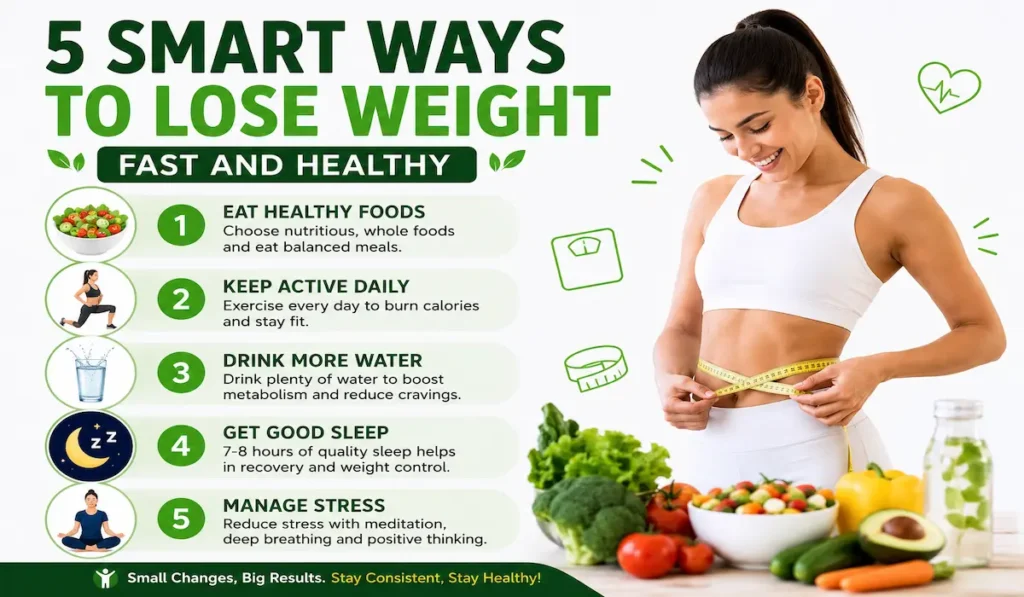
2. Exercise Regularly and Build Muscle Strength
Regular physical activity supports weight management, cardiovascular health, fitness and everyday mobility. Combining movement with balanced eating can help create the energy deficit needed for weight loss when weight reduction is appropriate. Exercise also offers benefits that are not measured by body weight, including better endurance, strength and physical function. (WHO)
Walking is a convenient way to become more active, particularly if you are new to exercise. Other options include cycling, swimming, dancing and activities that you enjoy. According to the World Health Organization, adults should aim for 150–300 minutes of moderate-intensity aerobic activity each week, or an equivalent amount of vigorous activity. Adults should perform exercises that work the main muscle groups on two or more days every week. (WHO)
You do not have to reach these targets immediately. Begin with manageable sessions and increase your activity gradually. Depending on your fitness and ability, strength exercises may include squats, modified push-ups, resistance-band movements or appropriate weight training. Stronger muscles can make everyday tasks easier and support overall physical function. (WHO)
Try these practical ways to move more:
- Take regular walks and gradually increase your walking time.
- Use stairs when comfortable and safe.
- Take short movement breaks during long periods of sitting.
- Try cycling, swimming or dancing if you enjoy them.
- Include muscle-strengthening activities in your weekly routine.
Choose activities according to your health and fitness level. If you have a chronic health condition, significant joint pain or have been inactive for a long time, ask a healthcare professional about suitable exercise before starting a demanding routine.
3. Drink More Water and Reduce Sugary Beverages
Water is essential for normal body functions, including temperature regulation, digestion and circulation. Choosing water instead of drinks with added sugar can also reduce the number of calories you consume. This small change may support weight management when it becomes part of an overall balanced routine. (NHS)
However, drinking extra water does not directly burn body fat or guarantee weight loss. Water supports hydration, while changes in body weight depend on several factors, including food intake, physical activity and individual health.
Soft drinks, sweetened juices, energy drinks and heavily sweetened tea or coffee can contribute added sugar and calories. Replacing these beverages with water more often is a practical habit. If plain water feels unappealing, try adding lemon, cucumber or mint for flavour. (NHS)
Useful hydration habits include:
- Keep a refillable water bottle nearby.
- Choose water instead of sugary soft drinks more often.
- Drink according to your thirst and daily needs.
- Include water-rich foods such as cucumbers and fruits.
- Pay attention to increased fluid needs during hot weather or physical activity.
Fluid requirements vary with age, activity, climate and health. People with certain heart or kidney conditions may need to follow specific fluid limits. If you have been given medical advice about fluid intake, follow your healthcare professional’s instructions rather than increasing water consumption on your own.
4. Get Enough Sleep and Follow a Regular Sleep Schedule
Getting sufficient sleep supports general well-being and may affect daily behaviours that contribute to weight control. Insufficient sleep may affect appetite, food choices, mood and energy levels. When you feel tired, it can also become harder to stay active and follow a regular eating routine. (CDC)
The Centers for Disease Control and Prevention recommends at least seven hours of sleep each night for adults aged 18–60. Sleep needs differ by age, and individual requirements can vary. Getting enough good-quality sleep supports emotional well-being, concentration and daily functioning. (CDC)
A consistent sleep schedule may help improve your sleep routine. Follow a regular sleep routine by keeping your bedtime and wake-up time consistent each day. Keep your bedroom quiet, comfortable and relaxing. Reducing screen use before bedtime and limiting caffeine in the afternoon or evening may also help. (CDC)
Consider these simple sleep habits:
- Aim for at least seven hours of sleep if you are an adult aged 18–60.
- Maintain consistent sleeping and waking times.
- Keep your bedroom dark, quiet and comfortable.
- Avoid large meals close to bedtime if they disturb your sleep.
- Reduce screen use before going to sleep.
- Limit caffeine later in the day.
If you regularly struggle to sleep, experience excessive daytime tiredness or suspect a sleep disorder, speak with a healthcare professional. Persistent sleep problems may need more than lifestyle adjustments.
5. Manage Stress and Track Your Progress
Stress can influence sleep, mood, appetite and everyday decisions. Some people eat more when they feel stressed, while others notice changes in their usual eating patterns. These responses differ from person to person, but managing stress can make it easier to maintain healthy routines. (Hill et al., systematic review and meta-analysis; Yau and Potenza, review)
Activities such as meditation, deep breathing, yoga, walking outdoors and spending time with supportive friends or family may help you manage everyday stress. Choose activities that feel comfortable and realistic rather than treating stress management as another demanding task.
Tracking your progress can help you understand which habits are working. Instead of focusing only on daily changes in body weight, pay attention to your activity, eating patterns, sleep and consistency. Body weight naturally fluctuates because of fluid balance, food intake and other factors. Looking at longer-term trends can provide a more useful picture. (NIDDK)
You can make progress tracking easier by:
- Setting small, realistic and measurable goals.
- Recording meals or physical activity when useful.
- Checking weight under similar conditions if weight monitoring is appropriate for you.
- Noticing improvements in strength, fitness and daily energy.
- Asking supportive friends or family members for encouragement.
- Reviewing your routine when you face difficulties and making practical adjustments.
Progress is not always perfectly consistent. Missing a workout or having an occasional less-balanced meal does not mean you have failed. Return to your usual routine without trying to compensate through extreme exercise or restrictive eating. Building habits that you can maintain is more useful than expecting perfection.
How Fast Can You Lose Weight Safely?
Many people want to see results quickly, but rapid weight loss is not suitable for everyone. For adults who have excess weight and have been advised to lose it, a gradual rate of around 0.5–1 kg (1–2 pounds) per week is often used as a general guideline. Actual progress varies with starting weight, age, health conditions, medications, activity and eating habits. This range is not a target that every person needs to achieve. (CDC)
A calorie deficit occurs when the body uses more energy than it receives from food and drinks. This is an important part of weight loss, but it should not be created through starvation, extreme calorie restriction or excessive exercise. Your body still needs sufficient energy, protein, vitamins, minerals and other nutrients. (NIDDK)
The National Institute of Diabetes and Digestive and Kidney Diseases (NIDDK) explains that a safe weight-loss programme should include a suitable eating plan, physical activity when appropriate, support for changing habits and a plan to maintain progress. If weight loss is appropriate for your health, a healthcare professional or registered dietitian can help you choose a realistic goal. (NIDDK)
Who Should Seek Professional Advice Before Trying to Lose Weight?
Weight loss is not necessary or appropriate for everyone. Children and teenagers have different growth and nutritional needs, while pregnancy and breastfeeding require specific nutritional considerations. People with a history of eating disorders, those who are already at a healthy weight, and individuals with medical conditions or medicines that affect weight should avoid starting restrictive weight-loss plans without professional guidance.
If you are unsure whether losing weight would benefit your health, discuss your concerns with a qualified healthcare professional. They can consider your medical history, nutritional needs and overall health before suggesting an appropriate approach.
Common Weight-Loss Mistakes to Avoid
Some approaches can make weight management more difficult or create unnecessary health risks. Skipping meals, following highly restrictive diets, relying on unverified slimming supplements and expecting immediate results are not reliable long-term strategies. Extreme restrictions may also make it harder to get adequate nutrition. (NIDDK)
Be cautious of programmes that promise dramatic results without meaningful lifestyle changes. Claims such as losing a large amount of weight in a few days or reducing fat from one specific body part should be treated with scepticism. No single diet or exercise routine works equally well for everyone. (NIDDK)
A suitable plan should be based on realistic goals, support your health and fit your everyday life. If a programme requires expensive products, makes unrealistic promises or discourages you from seeking medical advice, consider it a warning sign.
Frequently Asked Questions About Healthy Weight Loss
1. What approach supports safe and sustainable weight loss?
A healthy approach combines balanced eating, appropriate portion sizes, regular physical activity and consistent daily habits. The right plan should provide adequate nutrition and be realistic enough to maintain over time. (CDC)
2. Can I lose weight without skipping meals?
Yes. Skipping meals is not necessary for weight loss. You can focus on balanced meals, suitable portions and reducing frequent consumption of high-calorie snacks and sugary drinks. Your eating schedule should suit your nutritional needs and lifestyle.
3. Which foods can support healthy weight management?
Vegetables, fruits, beans, lentils, whole grains, eggs, fish, yoghurt, tofu and other protein-rich foods can form part of a balanced eating pattern. Portion sizes and your individual nutritional requirements also matter. (NHS – Healthy Eating and Fibre Guidance; Harvard Health Publishing)
4. What is the recommended amount of weekly physical activity for adults?
Adults are advised to complete 150–300 minutes of moderate-intensity exercise per week, or an equivalent duration of vigorous activity. They should also schedule strength-training sessions that target major muscle groups at least twice weekly. Beginners can start with shorter sessions and gradually increase their activity. (WHO)
5. Does drinking water directly burn body fat?
No. Drinking water does not directly burn body fat. However, choosing water instead of sugary drinks can reduce calorie intake and support normal hydration. (NHS)
Conclusion
Healthy weight loss is not about following extreme diets or trying to achieve overnight results. The focus should be on building regular habits that benefit your health and improve your overall quality of life. Balanced meals, sensible portions, regular physical activity, adequate hydration, sufficient sleep and stress management can all contribute to healthier weight-management habits. (CDC)
Start with small changes that fit your lifestyle and build on them gradually. Focus on long-term health rather than temporary results, and seek professional guidance when your health circumstances require it. A realistic and sustainable routine provides a better foundation for lasting progress. (NIDDK)
Sources & References
- Centers for Disease Control and Prevention (CDC). Steps for Losing Weight
- National Institute of Diabetes and Digestive and Kidney Diseases (NIDDK). Choosing a Safe & Successful Weight-Loss Program
- World Health Organization (WHO). Physical Activity
- NHS. Tips to Help You Lose Weight
- Centers for Disease Control and Prevention (CDC). About Sleep
- Harvard Health Publishing. High-Protein Snacks to Build Muscle and Keep Hunger at Bay
- Mayo Clinic. Weight Loss: 6 Strategies for Success
- Hill D, et al. Stress and Eating Behaviours in Healthy Adults: A Systematic Review and Meta-Analysis
- Yau YHC, Potenza MN. Stress and Eating Behaviors
- NHS. Healthy Eating When Trying to Lose Weight – Fibre and Protein Guidance
Medical Disclaimer
This content is for informational purposes only and should not be considered medical advice.