Pranayama Benefits and Breathing Techniques for Better Health
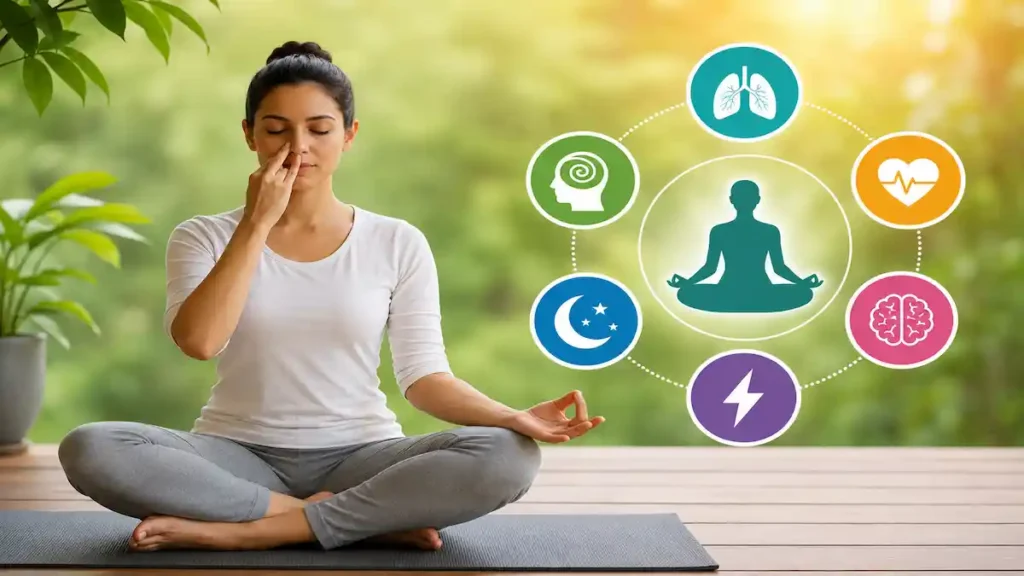
Pranayama Benefits include better breathing, reduced stress, improved focus, and better overall health. Pranayama is a breathing exercise and an important part of yoga. Pranayama is an ancient breathing practice that people have followed for many centuries. It teaches us how to breathe in a slow and correct way.
Many people do yoga to keep their bodies healthy. But breathing exercises are also important. Good breathing can help people feel calm, relaxed, and active.
The word Pranayama comes from Sanskrit. “Prana” means life energy. “Ayama” means control. Pranayama means learning how to control your breathing.
Today, many people feel stressed because of work, studies, and their busy daily lives. Some people find it hard to sleep. Some feel tired all the time. Others find it difficult to focus on their work. Pranayama may help with these problems.
One of the best things about Pranayama is that it is simple. You do not need expensive equipment. You do not need a gym. You only need a quiet place and a few minutes every day.
People of all ages can practice simple Pranayama exercises. Children, adults, and older people can all learn basic breathing techniques.
In this guide, you will learn what Pranayama is, why it is important, its different types, its benefits, and how beginners can practice it safely. Many people practice Pranayama Benefits daily to improve both physical and mental wellness.
What Is Pranayama?
Pranayama is a breathing practice that helps people learn how to breathe in a slow and controlled way. Many people breathe every day without thinking about how they do it. They take short breaths during the day and do not pay attention to how they breathe.
Pranayama teaches people to become aware of their breathing. It teaches them to take slow and deep breaths.
There are three basic parts of Pranayama.
Inhalation
This means breathing in. Fresh air enters the lungs and gives the body oxygen.
Exhalation
This means breathing out. The body removes waste gases when we breathe out.
Breath Holding
Some breathing exercises include holding the breath for a short time. Beginners should learn this slowly and carefully.
These simple steps can help people breathe better and feel more relaxed.
History of Pranayama
Pranayama started in ancient India. People have followed this breathing practice for many centuries.
Old yoga books talk about the importance of breathing. Ancient yoga teachers believed that good breathing could improve both the body and the mind.
These teachers noticed that breathing changes when feelings change. When a person feels angry or worried, breathing becomes fast. When a person feels calm, breathing becomes slow.
Because of this, yoga teachers developed breathing exercises to help people feel calm and healthy.
Today, people around the world practice Pranayama. It is used in yoga classes, wellness programs, and relaxation exercises. Today, Pranayama Benefits are recognized by yoga teachers, wellness experts, and health-conscious people around the world.
Why Is Pranayama Important?
Pranayama is important because breathing affects the whole body.
Every cell in the body needs oxygen. Breathing helps deliver oxygen to different parts of the body.
Good breathing can help:
• Keep the body active
• Help people feel calm
• Improve focus
• Reduce stress
• Support good health
Many yoga teachers say that learning how to breathe correctly is just as important as learning yoga poses.
Pranayama also helps prepare the mind for meditation. Slow breathing helps people relax and focus. These Pranayama Benefits make breathing exercises an important part of a healthy lifestyle.
How Pranayama Helps the Body
The body needs oxygen to work properly.
When people take slow and deep breaths, more oxygen reaches the lungs. This can help the body work better.
Regular practice may help:
• Improve breathing
• Increase energy
• Help the heart work properly
• Support lung health
• Reduce tiredness
Many people say they feel fresher and more active after practicing breathing exercises. Many of these Pranayama Benefits are linked to better breathing habits and improved oxygen flow.
How Pranayama Helps the Mind
Breathing and feelings are connected.
When people feel scared, worried, or angry, they often breathe quickly.
When people feel calm, they usually breathe slowly.
Pranayama teaches people how to slow down their breathing. This can help the mind feel calmer.
Many people practice Pranayama to:
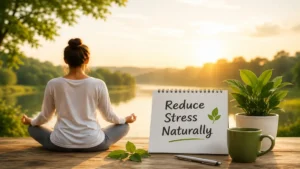
• Reduce stress
• Feel relaxed
• Improve focus
• Stay calm during difficult situations
Students often practice breathing exercises before studying because they may help improve attention. Because of these Pranayama Benefits, many people include breathing exercises in their daily wellness routine.
Types of Pranayama
There are many types of Pranayama. Some are easy for beginners. Others are more advanced.
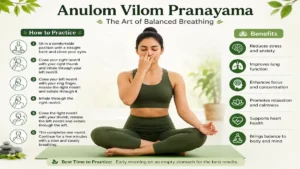
Anulom Vilom
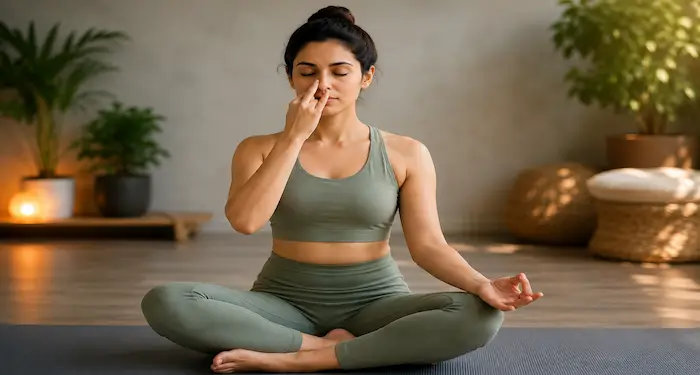
Anulom Vilom is one of the most popular breathing exercises.
In this exercise, people breathe through one nostril and then the other.
Benefits may include:
• Better focus
• Less stress
• Calm breathing
• Relaxation
Nadi Shodhana
Nadi Shodhana is also called alternate nostril breathing.
It is simple and easy to learn.
Benefits may include:
• A calm mind
• Better focus
• Less worry
• Better breathing
Kapalabhati
Kapalabhati uses quick and strong breaths out.
Many people practice it in the morning.
Benefits may include:
• More energy
• Better breathing
• A fresh feeling
• Improved digestion
Bhramari
Bhramari is also called Bee Breathing.
People make a soft humming sound while breathing out.
Benefits may include:
• Less stress
• A calm mind
• Better focus
• Relaxation
Ujjayi
Ujjayi breathing creates a soft sound in the throat.
Benefits may include:
• Better focus
• Calm breathing
• Relaxation
• Better control of breathing
Bhastrika
Bhastrika uses strong and fast breathing.
Benefits may include:
• More energy
• Better blood flow
• Active body
• Improved breathing
Health Benefits of Pranayama and Pranayama Benefits
The growing popularity of Pranayama Benefits has encouraged more people to include breathing exercises in their daily routine. Pranayama is not only a breathing exercise. It can also help improve many parts of daily life. When people practice it regularly, they may notice positive changes in both their body and mind.
Let us look at some of the main benefits of Pranayama.
1. Helps Reduce Stress
Stress is a common problem today. People feel stressed because of work, studies, money problems, and daily responsibilities.
When people feel stressed, they often start breathing quickly and take shorter breaths.
Pranayama teaches people to slow down their breathing. Slow breathing can help the body relax and may reduce stress.
Many people practice Pranayama in the morning or evening to help them feel calm and peaceful.
2. Helps Improve Sleep
Many people find it hard to sleep at night.
Some people keep thinking about their problems. Others feel worried or stressed before bedtime.
Simple breathing exercises may help calm the mind before sleep.
People who practice Pranayama regularly often say that they:
• Feel more relaxed
• Fall asleep faster
• Sleep more peacefully
• Wake up feeling fresh
Good sleep is important for good health, and breathing exercises may help support better sleep habits.
3. Supports Healthy Lungs
The lungs help us breathe and take in oxygen.
Pranayama teaches people to take slow and deep breaths. This helps the lungs do their job better.
Regular practice may help:
• Improve breathing
• Strengthen the lungs
• Increase oxygen intake
• Support lung health
Many athletes and fitness lovers include breathing exercises in their daily routine. Improved lung function is one of the most valued Pranayama Benefits for regular practitioners.
4. May Help the Heart
The heart works all day and all night.
When people feel stressed, the heart often beats faster.
Slow breathing may help the body relax, which can reduce pressure on the heart.
Pranayama may help:
• Support healthy blood flow
• Help the body relax
• Support normal blood pressure
• Improve overall heart health
A healthy heart is important for a healthy life.
5. Improves Focus
Many students and office workers have trouble staying focused.
Mobile phones, television, and busy schedules can make concentration difficult.
Pranayama helps people pay attention to their breathing. This simple habit may help improve focus.
Benefits may include:
• Better concentration
• Better memory
• Better learning
• Better work performance
Many students practice breathing exercises before studying. Better concentration is among the most popular Pranayama Benefits for students and professionals.
6. Helps Improve Mood
Everyone feels sad, angry, or worried sometimes.
Breathing exercises may help people feel calmer during difficult situations.
Regular practice may help people:
• Feel happier
• Stay calm
• Feel less worried
• Think more positively
A calm mind can make daily life easier.
7. Increases Energy
Many people feel tired even after resting.
One reason can be poor breathing habits.
When the body gets enough oxygen, people often feel more active and alert.
Pranayama may help people:
• Feel more energetic
• Reduce tiredness
• Stay active longer
• Feel fresh during the day
Because of this, many people practice Pranayama in the morning.
8. Helps Build Healthy Habits
Pranayama teaches patience and self-control.
People who practice every day often develop a healthy routine.
This can encourage other good habits such as:
• Waking up early
• Exercising regularly
• Eating healthy food
• Managing stress better
Doing small things every day can make a big difference later.
What Does Science Say About Pranayama?
Scientists have studied breathing exercises for many years. Research on Pranayama Benefits suggests that controlled breathing may support relaxation, focus, and overall well-being.
Many studies show that slow and controlled breathing can help the body relax.
Research suggests that regular breathing exercises may help:
• Reduce stress
• Improve sleep
• Improve focus
• Support lung health
• Help people feel calmer
Scientists are still studying Pranayama, but many results are positive.
Because of these benefits, more people are choosing breathing exercises today.
Best Time to Practice Pranayama
People can practice Pranayama at different times of the day.
Many yoga teachers say that early morning is the best time to practice Pranayama. The morning is usually quiet and peaceful. The air is often fresher, and the mind is calmer.
You can also practice:
• Before yoga
• After yoga
• Before meditation
• In the evening
• Before going to bed
Try to practice at the same time every day. This helps build a regular habit. Regular morning practice may help people experience Pranayama Benefits more consistently.
Where Should You Practice?
Choose a place that is:
• Quiet
• Clean
• Comfortable
• Free from distractions
Many people practice:
• In a garden
• On a balcony
• In a yoga room
• In a quiet corner of their home
Fresh air can make breathing exercises more comfortable.
What Should You Wear?
Wear loose and comfortable clothes.
Avoid very tight clothes because they can make breathing difficult.
Comfortable clothing allows the body to relax during practice.
What Should You Eat Before Pranayama?
It is usually better to practice on an empty stomach.
If you have eaten a meal, wait for about three hours before practicing.
A full stomach can make breathing exercises uncomfortable.
You can drink water if needed, but avoid heavy meals before practice.
Common Mistakes to Avoid During Pranayama
Many beginners make mistakes while learning Pranayama. These mistakes can make the practice less effective. Learning the correct way to breathe is very important.
Let us look at some mistakes that people often make while practicing Pranayama.
1. Breathing Too Fast
Some people try to breathe very quickly during practice.
Pranayama is about slow and controlled breathing. Breathing too fast can make you feel uncomfortable or dizzy.
Always breathe slowly and gently.
2. Forcing the Breath
Pranayama should never feel painful.
Some beginners try to take very deep breaths even when it feels uncomfortable.
Do not force your breathing. Let it happen naturally.
If you feel uncomfortable, slow down and relax.
3. Holding the Breath for Too Long
Breath holding is part of some Pranayama techniques.
Beginners should avoid holding their breath for too long.
Holding the breath for too long can make you feel dizzy or tired.
Start with simple breathing exercises before trying advanced techniques.
4. Practicing After a Heavy Meal
A full stomach can make breathing exercises difficult.
Many yoga teachers suggest practicing Pranayama on an empty stomach.
If you have eaten a meal, wait at least three hours before practicing.
5. Practicing in a Noisy Place
Noise can make it difficult to focus on breathing.
Practice in a peaceful place away from noise and distractions.
A peaceful environment helps improve the quality of practice.
6. Trying Difficult Techniques Too Soon
Many people want fast results.
Because of this, they try advanced breathing exercises before learning the basics.
It is always better to start with simple techniques such as:
• Deep Breathing
• Anulom Vilom
• Nadi Shodhana
• Bhramari
Learn the basics first and then move to more difficult practices.
Safety Tips for Pranayama
Pranayama is safe for most people when practiced correctly.
Following a few simple safety rules can help make your practice comfortable and effective. Practicing safely is important if you want to enjoy the full Pranayama Benefits over time.
Sit in a Comfortable Position
Choose a position that feels comfortable.
You can sit on:
• A yoga mat
• A chair
• The floor
The most important thing is to keep your body relaxed.
Keep Your Back Straight
A straight back helps the lungs work properly.
Do not sit in a way that makes breathing difficult.
Good posture helps you take deeper breaths.
Start Slowly
Do not rush.
Begin with simple exercises and short practice sessions.
As your confidence grows, you can slowly increase the time.
Listen to Your Body
Listen to your body as you practice Pranayama.
Stop immediately if you feel:
• Dizzy
• Weak
• Uncomfortable
• Short of breath
Take a break and rest if needed.
Ask a Doctor If Needed
People with health problems should speak with a doctor before starting new breathing exercises.
This is especially important for people with:
• Heart problems
• Lung diseases
• High blood pressure
• Serious medical conditions
Learn from a Qualified Teacher
A trained yoga teacher can help you learn the correct method.
Good guidance can help prevent mistakes and improve your practice. Proper guidance can help beginners enjoy Pranayama Benefits safely and effectively.
🌟 Simple Tips for Better Results
Pranayama works best when it becomes a daily habit. These simple tips can help you get better results.
Even 10 minutes each day can be helpful. Regular practice is more important than long practice sessions.
Do not expect results overnight. Small improvements often appear after a few weeks of regular practice.
Do not worry about doing everything perfectly. Focus on slow and comfortable breathing.
Practice at the same time every day. This helps make Pranayama a healthy habit.
Missing one day is not a problem. Simply start again the next day and continue your routine.
Over time, Pranayama Benefits may support both physical wellness and mental relaxation.
Conclusion
Pranayama Benefits make this breathing practice one of the most valuable parts of yoga. It is one of the most important parts of yoga and can be practiced by people of almost any age.
Learning how to breathe correctly may help improve both physical and mental health. Regular practice can help reduce stress, improve sleep, support healthy lungs, increase energy, and improve focus.
One of the best things about Pranayama is that it is easy to start. You do not need expensive equipment, special clothing, or a lot of space. A quiet place and a few minutes each day are enough.
Simple techniques such as Anulom Vilom, Nadi Shodhana, Bhramari, Kapalabhati, Ujjayi, and Bhastrika can help people develop healthy breathing habits.
The key to success is regular practice. Start slowly, stay patient, and make breathing exercises part of your daily routine.
With regular practice, Pranayama Benefits can help you feel calmer, healthier, and more active every day.
❓ Pranayama Benefits FAQs
Ans. Pranayama is a breathing exercise that teaches people how to control their breathing in a healthy way.
Ans. Pranayama Benefits may include reduced stress, improved breathing, better focus, improved sleep, and support for overall health.
Ans. Anulom Vilom and Nadi Shodhana are often recommended for beginners because they are simple and easy to learn.
Ans. Yes. Slow breathing exercises can help calm the mind and reduce stress.
Ans. Yes. Many people do breathing exercises before sleeping because they can help the body feel calm and relaxed.
Ans. Beginners can start with 10 minutes a day and slowly increase the time as they become comfortable.
Ans. Yes. Simple breathing exercises are usually safe for children when practiced under proper guidance.
Ans. Early morning is often considered the best time, but it can also be practiced in the evening or before bedtime.
Ans. Yes. Regular breathing practice may help improve focus and attention.
Ans. No. You only need a quiet place and a few minutes of free time each day.

Medical Disclaimer
This content is for informational purposes only and should not be considered medical advice.