Stretching Benefits: Improve Flexibility, Reduce Pain & Boost Health Naturally
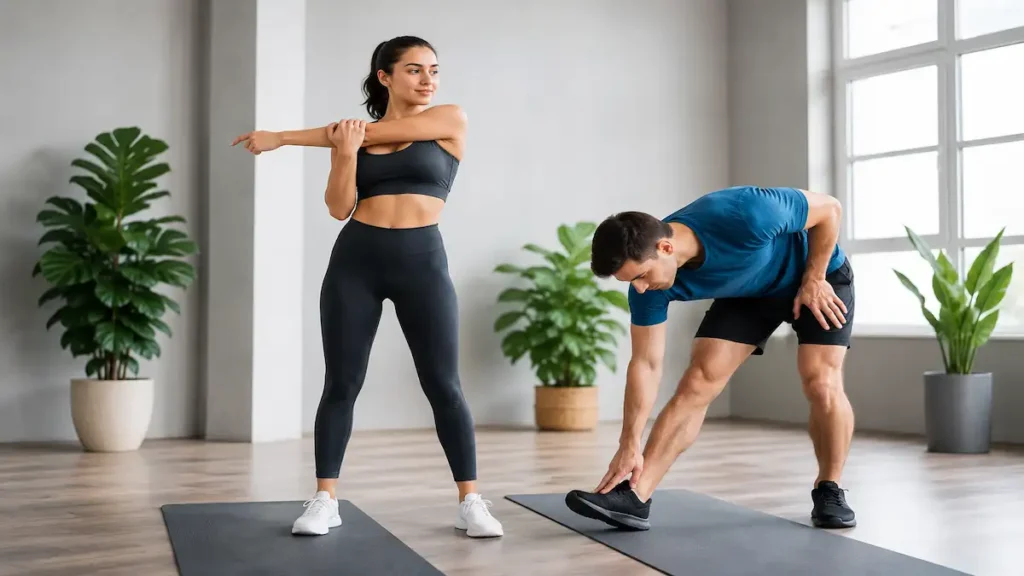
Stretching Benefits are very important for improving flexibility, reducing pain, and boosting overall body health naturally. Stretching offers a range of benefits, from increased flexibility to improved blood flow. Just be sure to start slowly and listen to your body to avoid injury.
But health experts, doctors, and physiotherapists clearly say that stretching is just as important as any other exercise.
In today’s lifestyle, people move less and sit more. Students sit in school for many hours. Office employees usually remain seated on chairs for long hours. Many people also spend extra time on mobile phones, computers, or watching television. Because of this, the body becomes stiff and tight.
When the body does not move properly, muscles become hard and painful. Blood flow becomes slow. This leads to problems like neck pain, back pain, shoulder pain, and body stiffness. Many people also feel tired even without doing hard work.
Stretching is a very simple solution to all these problems. It helps the body move better. It improves flexibility. It reduces muscle pain. It also helps the mind feel relaxed.
The best thing is that stretching does not need any equipment or a gym. It can be done in any place, such as home, school, office, or even a small room.
What is Stretching? (Simple and Detailed Explanation)
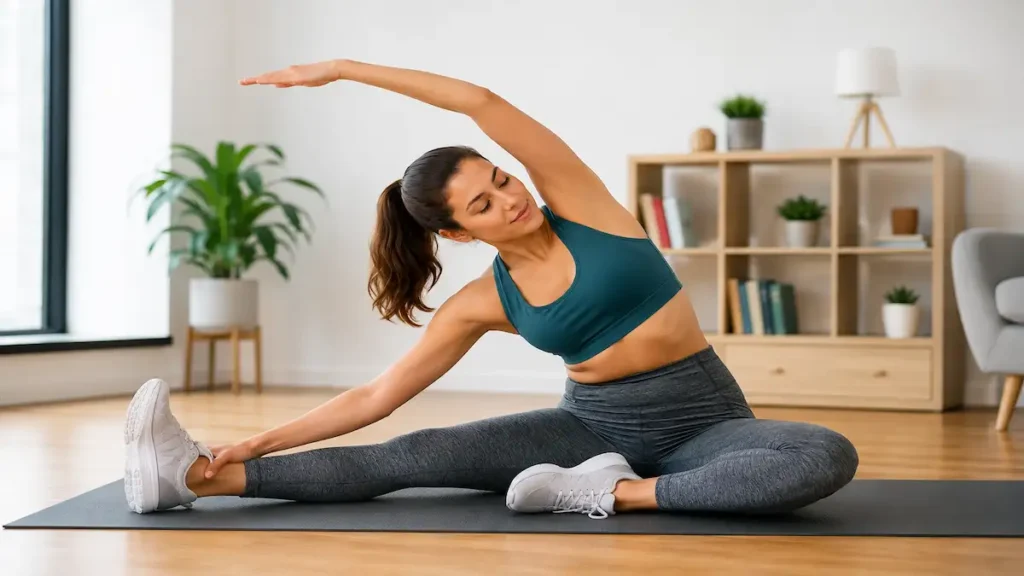
Stretching means slowly moving your body in a way that makes your muscles longer, softer, and more flexible. It is a natural movement that helps your body stay active and pain-free. Stretching Benefits help the body stay active, flexible, and pain-free in daily life.
When you stretch, you gently pull your muscles. This helps muscles relax and improves blood flow in that area. It also reduces stiffness and improves movement.
Muscles become tight due to many reasons such as:
• Sitting for long hours without movement
• Not doing physical exercise
• Poor sitting posture
• Sudden heavy exercise
• Stress and mental pressure
When muscles stay tight for a long time, they become painful. This is where stretching helps.
Experts say stretching works like a “reset system” for the body. It refreshes muscles and helps them work better again.
Stretching is not only for athletes. It is for everyone — children, adults, and older people.
Stretching Benefits for Overall Health and Fitness
Stretching is not just a fitness activity. It is a daily health habit. It helps both the body and mind.
Below are detailed reasons why stretching is important:
1. Stretching Benefits for Flexibility Improvement
Flexibility means how easily your body can move. A flexible body can bend, stretch, and move without pain.
If the body is not flexible, even small tasks become difficult like:
• Bending to pick something
• Climbing stairs
• Sitting down or standing up
• Turning the neck
When you do stretching daily:
• Muscles become soft
• Body becomes more flexible
• Movement becomes easier
• Injury risk becomes low
Flexibility is important for both young and old people because it helps in daily life activities. One of the main Stretching Benefits is improved flexibility.
2. Stretching Reduces Muscle Pain and Stiffness
Muscle pain is very common today. Many people feel pain in the neck, shoulders, back, or legs.
This pain happens because muscles become tight and do not get enough movement.
Stretching helps reduce this pain in a natural way:
• It relaxes tight muscles
• It improves oxygen supply
• It increases blood flow
• It removes stiffness from the body
For example, after a long day of sitting, stretching can reduce back pain and make the body feel light.
Physiotherapists often recommend stretching as a basic treatment for muscle pain because it is safe and effective. Stretching Benefits help reduce muscle stiffness and pain naturally.
3. Stretching Improves Blood Circulation
Good blood flow is very important for a healthy body. Blood carries oxygen and nutrients to all muscles and organs.
When you stretch:
• Blood moves better in muscles
• Oxygen reaches all parts of the body
• Muscles recover faster
• Body feels fresh and active
Poor blood flow can cause tiredness and pain, but stretching helps fix this naturally. Another Stretching Benefits is improved blood circulation.
4. Stretching Improves Body Posture
Bad posture is a very common problem in students and office workers.
Bad posture happens when:
• You sit for too long
• You bend your neck while using your mobile
• You do not sit straight
Bad posture can cause:
• Neck pain
• Shoulder pain
• Back pain
• Fatigue
Stretching helps improve posture by:
• Strengthening muscle balance
• Reducing tight muscles
• Aligning the spine properly
Good posture makes the body look confident and healthy. Stretching Benefits improve body posture and alignment.
5. Stretching Reduces Stress and Improves Mental Health
Stretching is not just good for the body; it is also helpful for the mind. When you stretch slowly and breathe deeply:
• Stress reduces
• Mind becomes calm
• Negative thoughts reduce
• Sleep becomes better
Many yoga teachers use stretching as a relaxation method because it helps both body and brain.
Even 10 minutes of stretching daily can improve mood and reduce anxiety.
Types of Stretching (Detailed Explanation)
There are different types of stretching. Each type has a different purpose. Different types of stretching also provide different Stretching Benefits for fitness and recovery.
1. Static Stretching (Holding Position)
Static stretching means holding your body in one position without movement.
How it works:
• You stretch a muscle
• Hold the position for 15–30 seconds
• Then slowly relax
Benefits:
• Improves flexibility
• Reduces muscle tightness
• Helps recovery after exercise
Example:
Touching your toes and holding the position.
2. Dynamic Stretching (With Movement)
Dynamic stretching includes movement.
How it works:
• You move your body slowly
• You do not hold a position
Benefits:
• Warms up the body
• Prepares muscles for exercise
• Improves blood flow
Example:
Arm circles, leg swings.
3. Ballistic Stretching (Fast Movement)
This type uses bouncing movements.
Important points:
• Not good for beginners
• Can cause injury
• Used by advanced athletes
4. PNF Stretching (Professional Type)
This is a special stretching method used in physiotherapy.
Features:
• Done with partner help
• Very effective
• Improves flexibility quickly
Best Time to Do Stretching
Stretching can be done at different times of the day:
Morning Time
• Wakes up the body
• Improves energy
Before Exercise
• Warms up muscles
• Prevents injury
After Exercise
• Reduces pain
• Helps recovery
Night Time
• Helps relaxation
• Improves sleep quality
How Stretching Helps Muscle Pain (Simple Understanding)
Muscle pain happens when:
• You sit too long
• You do not move enough
• You overuse muscles
Stretching helps because:
• It increases blood flow
• It relaxes muscles
• It reduces stiffness
• It helps the healing process
This is why doctors suggest stretching for pain relief.
Common Body Areas That Need Stretching
Some parts of the body become tight very easily:
Neck
• Due to mobile use
Shoulders
• Due to sitting posture
Back
• Due to long sitting
Legs
• Due to standing or walking
Simple Stretching Exercises
Neck Stretch
Slowly move your head left and right. Hold each side for 10–15 seconds.
Shoulder Stretch
Pull one arm across the chest and hold gently.
Back Stretch
Sit and bend forward slowly to touch your toes.
Leg Stretch
Sit and try to touch your toes slowly.
Cat Stretch
Move back up and down on hands and knees. These simple exercises deliver effective Stretching Benefits for daily health improvement.
Pre-Workout and Post-Workout Stretching
Before Exercise
• Light movement
• Warm-up body
• Prevent injury
After Exercise
• Slow stretching
• Relax muscles
• Reduce soreness
Both are very important.
Safety Tips for Stretching
Always follow safety rules:
• Never stretch in pain
• Move slowly
• Do not force the body
• Warm up first
• Breathe normally
• Stop if you feel pain
Following safety rules ensures maximum Stretching Benefits without injury.
How to Start a Daily Stretching Routine
Step 1
Start with 5–10 minutes daily.
Step 2
Do it every day.
Step 3
Stretch full body parts.
Step 4
Add deep breathing.
Step 5
Increase slowly over time.
Stretching Benefits for Mental Health and Stress Relief
Stretching helps the mind:
• Reduces stress
• Improves focus
• Helps sleep
• Improves mood
• Makes the mind calm
Stretching Benefits for mental health include stress reduction and better focus.
Common Mistakes People Make
Many people make mistakes like:
• Stretching too fast
• Not warming up
• Holding breath
• Skipping daily routine
• Forcing body
Avoiding mistakes gives better results.
Conclusion
Stretching is a very simple but powerful habit. It helps reduce muscle pain, improves flexibility, improves posture, and increases blood flow in the body.
It is safe for all age groups. It does not require any equipment. It can be done anywhere.
If you do stretching daily, your body becomes more flexible, active, and pain-free. It is one of the best habits for long-term health.
Even a few minutes every day can make a big difference in your body and mind. Overall, Stretching Benefits are very important for long-term health. Overall, Stretching Benefits play a very important role in maintaining long-term physical and mental health.
Frequently Asked Questions (FAQs)
Q1. What is stretching?
Stretching is a slow movement of body muscles to make them flexible.
Q2. Is stretching good for pain?
Yes, it reduces muscle pain and stiffness.
Q3. How much time should I stretch?
5 to 10 minutes daily is enough.
Q4. Can I stretch every day?
Yes, it is safe daily.
Q5. What is the best time for stretching?
Morning, before exercise, and after exercise.
Q6. Is stretching difficult?
No, it is very easy.
Q7. Does stretching improve posture?
Yes, it helps fix body alignment.

Medical Disclaimer
This content is for informational purposes only and should not be considered medical advice.