High Blood Pressure and Low Blood Pressure: Simple Guide for Better Heart Health
High blood pressure and low blood pressure are common health problems that can affect the heart, brain, kidneys, and overall health. Blood pressure shows how strongly blood moves inside the blood vessels when the heart pumps. If blood pressure becomes too high or too low, it may lead to serious health problems over time.
Today, millions of people around the world suffer from blood pressure problems.
High blood pressure is becoming common because of stress, unhealthy food, smoking, lack of exercise, obesity, and poor sleep.
Low blood pressure can also affect health and may cause weakness, dizziness, and fainting.
Many people ignore blood pressure problems because symptoms are not always visible in the beginning.
But if blood pressure stays uncontrolled for a long time, it may damage the heart, brain, kidneys, and eyes.
The good news is that healthy habits, regular checkups, exercise, stress control, and simple breathing exercises may help manage high blood pressure and low blood pressure naturally.
What Is Blood Pressure?
Understanding high blood pressure and low blood pressure is important for maintaining good heart health. Blood pressure is the pressure created when blood flows through the arteries and pushes against their walls. Arteries are the blood vessels that transport blood from the heart to different parts of the body.
Blood pressure is written in two numbers:
• Systolic Pressure—the pressure created in the arteries when the heart pumps blood.
• Diastolic Pressure—pressure when the heart relaxes
A normal blood pressure reading is usually:
120/80 mm Hg
When blood pressure becomes too high or too low, health problems may develop. Learning about high blood pressure and low blood pressure may help people protect their heart health.
What Is High Blood Pressure?
Among all blood pressure problems, high blood pressure and low blood pressure are the most common conditions seen today. High blood pressure is also called hypertension. It happens when blood pushes too hard against the artery walls for a long time.
Usually, blood pressure above:
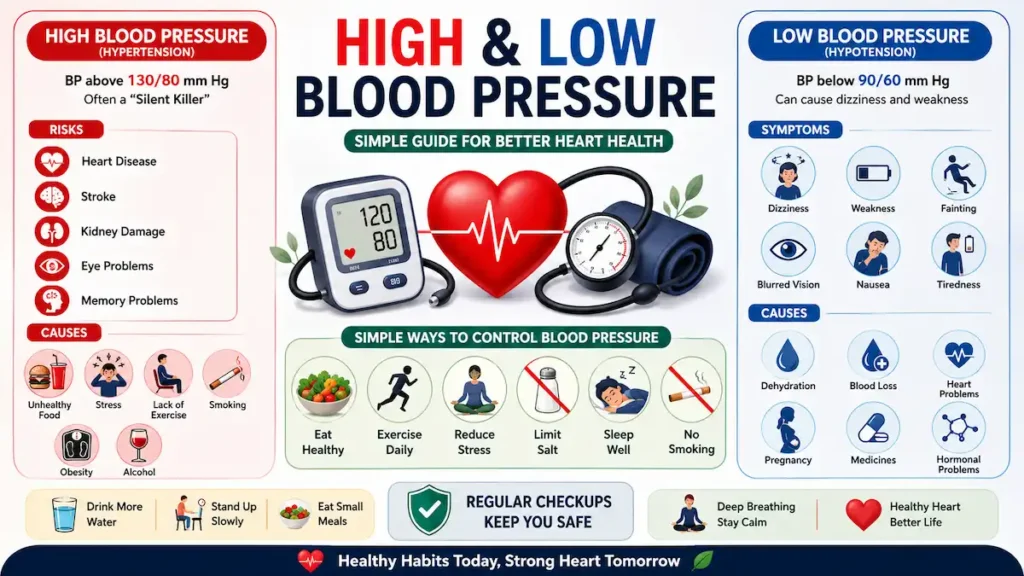
130/80 mm Hg
is considered high.
High BP is called a “silent killer” because many people do not notice symptoms early. A person may feel healthy even when blood pressure is dangerously high.
Why High Blood Pressure Is Dangerous
Doctors often warn people about high blood pressure and low blood pressure because both conditions may become dangerous over time. High BP slowly damages the body over time. It makes the heart and blood vessels work harder than normal.
If not controlled, it may lead to serious diseases.
1. Heart Disease
The heart has to work harder when BP is high. This may cause:
• Heart attack
• Heart failure
• Blocked arteries
2. Stroke
High BP may damage blood vessels in the brain. This increases the risk of stroke.
3. Kidney Damage
The kidneys clean waste from the blood. High BP can damage the kidney blood vessels and affect kidney function.
4. Eye Problems
Very high BP may damage blood vessels in the eyes and affect eyesight.
5. Memory Problems
Some studies show that uncontrolled BP may increase the risk of memory loss and dementia later in life.
Causes of High Blood Pressure
There are many causes of hypertension.
Unhealthy Food
Eating too much:
• Salt
• Junk food
• Fried food
• Processed food
may increase blood pressure.
Stress
Stress increases hormones like cortisol that can raise BP levels.
Lack of Exercise
People who are not physically active have a higher risk of hypertension.
Smoking
Smoking harms the blood vessels and may raise blood pressure levels.
Alcohol
Too much alcohol may raise BP and harm the heart.
Obesity
Extra body weight puts more pressure on the heart.
Family History
High BP sometimes runs in families.
Symptoms of High Blood Pressure
Many people may not notice symptoms. But some common signs include:
• Headache
• Dizziness
• Chest pain
• Fast heartbeat
• Tiredness
• Blurred vision
• Shortness of breath
If BP becomes very high, medical help may be needed immediately. Early treatment of high blood pressure and low blood pressure may help prevent serious health problems.
What Is Low Blood Pressure?
Both high blood pressure and low blood pressure can become dangerous if ignored for a long time. Low blood pressure is also called hypotension.
Usually, BP below:
90/60 mm Hg
is considered low.
Some healthy people naturally have low BP without problems. But in some cases, very low BP may reduce blood flow to important organs like the brain and heart.
Symptoms of Low Blood Pressure
Low BP may cause:
• Weakness
• Dizziness
• Fainting
• Blurred vision
• Nausea
• Tiredness
• Difficulty concentrating
Severe low BP can become dangerous if not treated. Some people ignore high blood pressure and low blood pressure symptoms until the condition becomes severe.
Causes of Low Blood Pressure
Dehydration
Not drinking enough water can lower blood volume.
Blood Loss
Heavy bleeding may suddenly reduce BP.
Heart Problems
Heart disease may affect blood flow.
Pregnancy
Some women develop low BP during pregnancy.
Hormonal Problems
Conditions like diabetes or thyroid disorders may affect BP.
Medicines
Some medicines may lower blood pressure too much.
Examples include:
• Diuretics
• Beta blockers
• Anxiety medicines
• Parkinson’s medicines
Feeling Dizzy After Standing Up
Some people feel dizzy when they stand up suddenly. This is called postural hypotension.
When a person stands up quickly, blood may collect in the legs instead of reaching the brain properly.
This may cause:
• Dizziness
• Weakness
• Fainting
Older adults face this problem more often.
Deep Breathing for Blood Pressure
One simple and natural method that may help control blood pressure is abdominal breathing.
It is also called:
• Belly breathing
• Deep breathing
• Diaphragmatic breathing
This method helps relax the body and calm the mind.
How Deep Breathing Helps
When a person feels stressed, the body releases stress hormones. These hormones can make the heart beat faster and cause the blood vessels to become narrow.
Deep breathing helps calm the nervous system.
It may help:
• Slow the heart rate
• Relax blood vessels
• Reduce stress
• Improve oxygen flow
This is why many experts recommend breathing exercises for stress and high BP.
How to Do Abdominal Breathing
Follow these simple steps:
Step 1
Sit comfortably or lie down.
Step 2
Place one hand on your chest and the other on your belly.
Step 3
Breathe in slowly through your nose.
Your belly should rise more than your chest.
Step 4
Hold your breath gently for 1–2 seconds.
Step 5
Breathe out slowly through your mouth.
Your belly should move down.
Step 6
Repeat for 5–10 minutes.
Practice this exercise daily for better results.
Benefits of Deep Breathing
Regular deep breathing may help:
• Reduce stress
• Improve sleep
• Calm the mind
• Lower anxiety
• Improve focus
• Support healthy blood pressure
It is easy, free, and safe for most people. Deep breathing exercises may support people dealing with high blood pressure and low blood pressure.
Simple Ways to Control High Blood Pressure
1. Eat Healthy Food
A balanced diet helps keep the heart healthy.
Eat more:
• Fruits
• Vegetables
• Whole grains
• Salad
• Nuts
Eat less:
• Salt
• Fried food
• Sugary drinks
• Fast food
2. Exercise Daily
Regular exercise may help manage high blood pressure and low blood pressure naturally. Exercise improves blood circulation and keeps the heart strong.
Good exercises include:
• Walking
• Cycling
• Swimming
• Yoga
Try to exercise for at least 30 minutes daily.
3. Maintain a Healthy Weight
Losing extra weight may help lower BP naturally.
4. Reduce Stress
Stress can increase blood pressure.
Helpful methods include:
• Meditation
• Music
• Yoga
• Deep breathing
• Proper sleep
5. Quit Smoking
Smoking damages blood vessels and increases the risk of heart disease.
6. Limit Alcohol
Too much alcohol may raise blood pressure levels.
7. Sleep Properly
Poor sleep may affect heart health and BP levels.
Most adults need 7–9 hours of sleep daily.
Tips to Manage Low Blood Pressure
Drink More Water
Water helps increase blood volume and prevents dehydration.
Eat Smaller Meals
Large meals may suddenly lower BP in some people.
Stand Up Slowly
Avoid standing up too quickly.
Use More Salt if the doctor advises
Some people with low BP may need slightly more salt.
Avoid Too Much Alcohol
Alcohol may lower BP further.
Why Regular BP Checkups Are Important
Regular monitoring is important for people with high blood pressure and low blood pressure. High BP often has no symptoms. Regular BP checks help detect problems early.
People with the following conditions should check their BP regularly:
• Diabetes
• Obesity
• Heart disease
• Stress
• Family history of hypertension
Home BP machines may also help monitor BP.
When Should You See a Doctor?
Visit a doctor if you notice:
• Frequent dizziness
• Fainting
• Chest pain
• Severe headache
• Breathing problems
• Very high BP readings
Never stop BP medicines without medical advice.
Healthy Lifestyle for Better Blood Pressure
Healthy habits may help prevent high blood pressure and low blood pressure naturally. Healthy habits can protect the heart and improve overall health.
Important habits include:
• Eating healthy food
• Daily exercise
• Drinking enough water
• Proper sleep
• Less stress
• No smoking
Small daily changes can make a big difference.
Conclusion
High blood pressure and low blood pressure can both affect overall health and quality of life. If blood pressure stays uncontrolled, it may damage important organs like the heart, brain, kidneys, and eyes. Healthy eating, exercise, stress control, proper sleep, deep breathing, and regular checkups may help manage high blood pressure and low blood pressure naturally. Small healthy habits every day can protect your heart for many years.
FAQs
1. What is normal blood pressure?
Normal blood pressure is around 120/80 mm Hg.
2. Why is high BP called a silent killer?
Because many people do not notice symptoms early.
3. Can stress increase blood pressure?
Yes. Stress may raise BP levels.
4. Can deep breathing help lower BP?
Deep breathing may help reduce stress and relax the body.
5. Is low blood pressure dangerous?
Very low BP may reduce blood flow to important organs.
6. Which foods are good for blood pressure?
Fruits, vegetables, whole grains, and healthy foods are good choices.
7. Can exercise help control blood pressure?
Yes. Exercise helps improve heart health and circulation.
8. Should people with high BP avoid salt?
Yes. Too much salt may raise blood pressure.
9. Can young people get high BP?
Yes. Poor lifestyle habits can increase the risk.
10. When should I check my blood pressure?
People with BP problems or risk factors should check their BP regularly.
11. Can healthy habits help manage high blood pressure and low blood pressure?
Yes. Healthy eating, exercise, stress control, proper sleep, and regular checkups may help manage blood pressure naturally.

Medical Disclaimer
This content is for informational purposes only and should not be considered medical advice.