Best Push Pull Legs Workout Routine for Muscle Growth and Strength
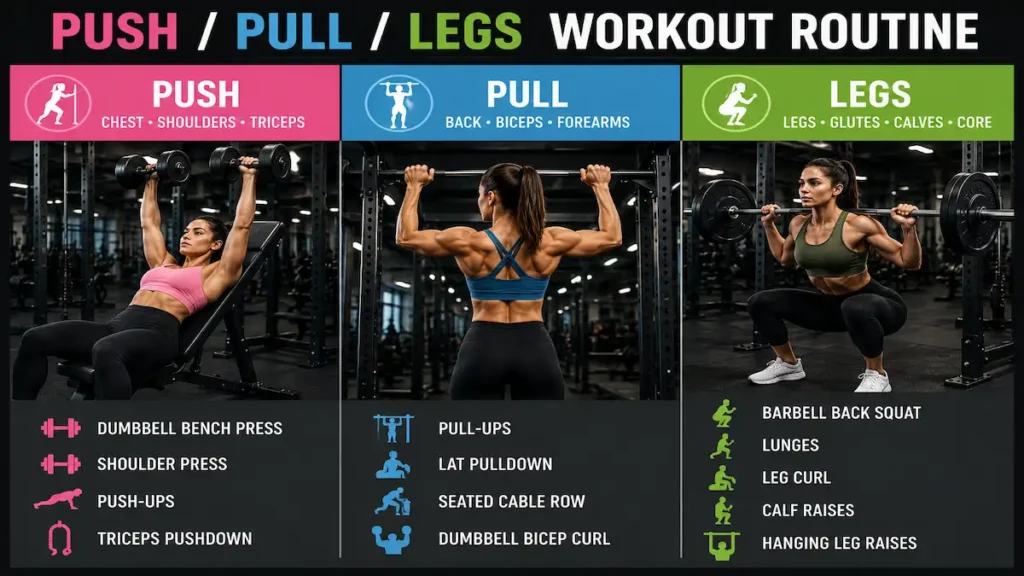
Push Pull Legs Workout Routine is one of the most effective training systems for building muscle, increasing strength, and improving overall fitness. This Push Pull Legs Workout Routine helps beginners and experienced gym-goers train the entire body while allowing proper recovery between workouts.
One of the most popular workout plans is the Push-Pull-Legs (PPL) routine. Many beginners and experienced gym members use this workout system because it trains the whole body while giving muscles enough time to rest.
If you want to build muscle, gain strength, and improve your fitness, the Push-Pull-Legs routine can be a good choice.
Why Is Exercise Important?
Regular exercise keeps your body healthy and strong. It can improve your energy, fitness, balance, and overall health.
Health experts say that everyone should stay physically active.
Children should be active for about 60 minutes every day. Adults should get at least 150 minutes of moderate exercise each week.
The good news is that you do not have to be perfect. Even a little exercise is better than doing nothing. Regular exercise can help you get better results from a Push Pull Legs Workout Routine.
What Is the Push Pull Legs Workout Routine
The Push-Pull-Legs workout divides training into three parts. The Push Pull Legs Workout Routine is popular because it allows balanced muscle training and recovery.
Push Day
On this day, you train muscles that help you push things away from your body. Push Day is an important part of the Push Pull Legs Workout Routine because it focuses on the chest, shoulders, and triceps.
These muscles include:
• Chest
• Shoulders
• Triceps
Pull Day
On this day, you train muscles that help you pull things toward your body. The Pull Day in a Push Pull Legs Workout Routine helps develop a stronger back, arms, and grip strength.
These muscles include:
• Back
• Biceps
• Forearms
Legs Day
On this day, you train your lower body and core. Leg training is essential in any Push Pull Legs Workout Routine because strong legs support overall fitness and strength.
These muscles include:
• Quadriceps
• Hamstrings
• Glutes
• Calves
• Abs
This system is popular because one muscle group can rest while another group is being trained.
Push Pull Legs Workout Routine – Push Day Exercises
Bench Press
The bench press is one of the most common gym exercises.
Benefits:
• Builds a stronger chest.
• Strengthens shoulders.
• Improves arm strength.
Many people use this exercise as the main movement on Push Day.
Shoulder Press
This exercise focuses on the shoulders.
Benefits:
• Builds stronger shoulders.
• Helps with lifting objects overhead.
• Improves upper-body strength.
Push-Ups
Push-ups are simple but effective.
Benefits:
• Need no equipment.
• Build upper-body strength.
• Improve muscle endurance.
Even experienced athletes still use push-ups in their workouts.
Triceps Pushdown
This exercise mainly targets the back of the upper arm.
Benefits:
• Builds stronger triceps.
• Helps improve pressing strength.
• Supports other upper-body exercises.
Push Pull Legs Workout Routine – Pull Day Exercises
Pull-Ups
Pull-ups are one of the best bodyweight exercises.
Benefits:
• Build a strong back.
• Strengthen the arms.
• Improve grip strength.
Beginners can use assisted pull-up machines if needed.
Lat Pulldown
This exercise is often easier than pull-ups.
Benefits:
• Strengthens back muscles.
• Improves posture.
• Helps beginners build pulling strength.
Barbell Row
This exercise works several muscles at the same time.
Benefits:
• Builds back strength.
• Improves overall power.
• Helps with sports and daily activities.
Bicep Curl
A simple exercise for the front of the upper arm.
Benefits:
• Builds stronger biceps.
• Improves arm size and strength.
• Makes lifting easier.
Push Pull Legs Workout Routine – Legs and Core Day
Many beginners enjoy training the upper body but avoid leg workouts. This is a mistake.
Strong legs help you run, walk, jump, and stay balanced.
Barbell Back Squat
The squat is one of the best lower-body exercises.
Benefits:
• Builds stronger legs.
• Strengthens glutes.
• Improves balance.
• Helps overall fitness.
Many trainers call the squat the “king of exercises.”
Lunges
Lunges train one leg at a time.
Benefits:
• Improve balance.
• Strengthen each leg.
• Increase hip flexibility.
Move slowly and keep your body straight while doing lunges.
Hamstring Leg Curl
This exercise targets the back of the thigh.
Benefits:
• Strengthens hamstrings.
• Supports healthy knees.
• Improves leg power.
Calf Raises
The calf muscles help you walk, run, and jump.
Benefits:
• Build stronger calves.
• Improve ankle strength.
• Support better movement.
Hanging Leg Raises
This exercise trains the core muscles.
Benefits:
• Strengthens the abs.
• Improves core stability.
• Builds grip strength.
Beginners can bend their knees while doing this movement.
How Much Weight Should You Lift?
Many beginners think heavier weights always give better results. That is not true.
Choose a weight that feels challenging but still allows you to use good form.
A simple rule is:
• The last few reps should feel difficult.
• You should still control the movement.
• If the weight feels too easy, increase it slowly.
Good form is always more important than heavy weight. Choosing the correct weight is important for success in a push-pull legs workout routine.
Why Should You Track Your Progress?
If you do not track your workouts, it can be hard to know whether you are improving.
Keep a record of:
• Weight used
• Number of sets
• Number of reps
• Workout dates
Tracking progress can help you stay motivated and reach your goals faster.
Why Variety Matters
Doing the same workout every week can become boring.
You can add variety by:
• Using dumbbells instead of barbells.
• Trying cable exercises.
• Changing exercise angles.
• Learning new movements.
Small changes can keep workouts fun and challenging.
Eat Well to Get Better Results
Exercise is important, but food is just as important.
Your body needs good nutrition to recover and grow.
Healthy Foods
Try to eat more:
• Fruits
• Vegetables
• Eggs
• Beans
• Fish
• Chicken
• Milk
• Yogurt
• Nuts
These foods give your body protein, vitamins, and minerals.
Foods to Limit
Try to eat less:
• Fast food
• Sugary drinks
• Candy
• Processed snacks
Eating healthy most of the time can improve your results.
Do Not Forget Sleep
Many people focus on training and forget about sleep.
Sleep is when the body repairs itself.
Experts generally recommend:
• Teenagers: 8–10 hours of sleep
• Adults: 7–9 hours of sleep
Good sleep can:
• Improve recovery.
• Increase energy.
• Help muscle growth.
• Improve focus.
Without enough sleep, your workouts may suffer.
Benefits of the Push Pull Legs Workout Routine
The Push Pull Legs Workout Routine offers several benefits for beginners and experienced lifters. This workout plan has many advantages.
1. Better Recovery
Muscles get enough time to rest before the next workout.
2. Full-Body Training
Every major muscle group gets attention.
3. Beginner Friendly
The routine is easy to understand and follow.
4. Helps Build Strength
Regular training can make you stronger over time.
5. Easy to Organize
You always know which muscles to train each day.
6. Can Reduce Overtraining
Because muscles get recovery time, the risk of overtraining may be lower.
Common Mistakes to Avoid
Many beginners make these mistakes:
• Lifting too heavy too soon.
• Skipping warm-ups.
• Ignoring rest days.
• Using poor form.
• Eating unhealthy food all the time.
• Expecting fast results.
Remember, fitness is a long-term journey. Avoiding these mistakes can help you get better results from your Push Pull Legs Workout Routine.
Final Thoughts
The Push Pull Legs Workout Routine is one of the easiest and most effective workout systems for building muscle, increasing strength, and improving overall fitness.
For the best results, focus on four things:
• Regular exercise
• Healthy food
• Good sleep
• Consistency
You do not need to be perfect. Small improvements every week can lead to big results over time.
FAQs About Push Pull Legs Workout Routine
1. What is a Push-Pull-Legs (PPL) workout?
A Push-Pull-Legs workout is a training plan that splits workouts into three days:
• Push Day: Chest, shoulders, and triceps
• Pull Day: Back, biceps, and forearms
• Legs Day: Legs and core
This helps train the whole body while giving muscles time to recover.
2. Is the PPL workout good for beginners?
Yes. The PPL routine is simple to follow and works well for beginners. You can start with basic exercises and increase the difficulty over time.
3. How many days a week should I do PPL?
Most beginners can start with 3 days per week. More experienced gym-goers may train 4–6 days per week, depending on their goals and recovery.
4. Can I build muscle with a PPL routine?
Yes. A PPL routine can help build muscle when combined with:
• Regular training
• Healthy eating
• Enough sleep
• Proper recovery
5. What are the best exercises for Push Day?
Some popular Push Day exercises are:
• Bench Press
• Push-Ups
• Shoulder Press
• Triceps Pushdown
These exercises mainly train the chest, shoulders, and triceps.
6. What are the best exercises for Pull Day?
Common Pull Day exercises include:
• Pull-Ups
• Lat Pulldown
• Barbell Row
• Bicep Curl
These exercises target the back and arms.
7. What are the best exercises for Legs Day?
Popular Legs Day exercises include:
• Squats
• Lunges
• Hamstring Curls
• Calf Raises
• Hanging Leg Raises
These movements help build strong legs and a strong core.
8. How do I choose the right weight?
Choose a weight that feels challenging but still allows you to use proper form. If the weight feels too easy, increase it slowly.
9. Is rest important in a PPL workout?
Yes. Rest is important because muscles grow and recover during recovery time. Most people benefit from at least one or two rest days each week.
10. What should I eat while following a PPL routine?
Try to eat:
• Fruits
• Vegetables
• Eggs
• Fish
• Lean meat
• Dairy products
• Beans and nuts
These foods provide nutrients that support recovery and muscle growth.
11. How important is sleep for fitness?
Sleep is very important. Most adults need 7–9 hours of sleep each night. Good sleep helps improve recovery, energy, and workout performance.
12. How long does it take to see results?
Many people notice better strength and fitness within a few weeks. Visible muscle growth usually takes longer and depends on training, nutrition, and consistency.
13. Can I do a Push-Pull-Legs workout at home?
Yes. Exercises like push-ups, squats, lunges, and resistance band rows can be done at home with little or no equipment.
14. Is the Push-Pull-Legs routine good for weight loss?
Yes. A PPL routine can support weight loss when combined with a healthy diet and regular physical activity.
15. What is the biggest mistake beginners make?
Common mistakes include:
• Lifting too much weight
• Skipping warm-ups
• Ignoring rest days
• Using poor form
• Being inconsistent
Focusing on proper technique and regular training is usually the best approach.
16. Why is the Push Pull Legs Workout Routine so popular?
The Push Pull Legs Workout Routine is popular because it trains all major muscle groups while allowing enough recovery time between workouts.
Disclaimer: This article is for educational purposes only. If you have an injury, health condition, or medical concern, speak with a doctor or qualified fitness professional before starting a new workout program.

Medical Disclaimer
This content is for informational purposes only and should not be considered medical advice.