Banana vs Mango: Which Fruit Is Better for Your Body
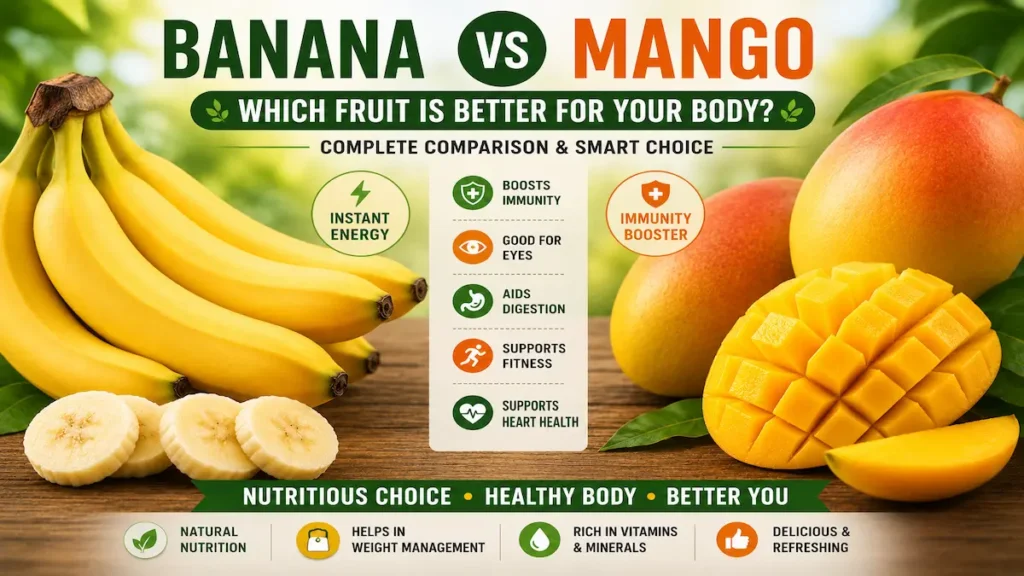
Bananas and mangoes are among the most loved fruits around the world. They are tasty, naturally sweet, and packed with important nutrients. Many people often ask, “Which fruit is healthier—banana or mango?”
The truth is that there is no single winner. Both fruits offer different health benefits. The better choice depends on your age, health condition, activity level, and personal goals, such as weight loss, muscle building, improving digestion, or managing blood sugar.
In this article, we compare Banana vs Mango in detail using reliable nutrition information. By the end, you will know which fruit is better for your specific health needs and lifestyle.
Key Takeaways
- Eat a variety of seasonal fruits.
- Bananas and mangoes are both healthy.
- Choose portions based on your health goals.
- People with diabetes or kidney disease should seek medical advice.
- This article is for educational purposes only.
Why Are Fruits Important for Good Health?
Fruits provide vitamins, minerals, fiber, antioxidants, and natural carbohydrates. Eating different fruits regularly may help:
- Support a healthy immune system
- Improve digestion
- Reduce the risk of nutrient deficiencies
- Keep the body hydrated
- Support heart health
- Provide natural energy
- Help maintain healthy skin
Both bananas and mangoes can be part of a balanced diet when eaten in the right amount.
Banana vs Mango: Nutrition Comparison
The table below shows an approximate Banana vs Mango nutrition comparison per 100 grams of edible fruit.
| Nutrient | Banana | Mango |
| Calories | 89 kcal | 60 kcal |
| Carbohydrates | 23 g | 15 g |
| Fiber | 2.6 g | 1.6 g |
| Protein | 1.1 g | 0.8 g |
| Fat | 0.3 g | 0.4 g |
| Potassium | High | Moderate |
| Vitamin C | Lower | High |
| Vitamin A | Low | Very High |
| Natural Sugar | Moderate | Higher |
Key Point: Bananas provide more carbohydrates and potassium, while mangoes are richer in vitamins A and C.
Health Benefits of Bananas
1. Provides Quick Energy
Bananas contain natural carbohydrates that can provide quick energy. This is why many athletes and fitness enthusiasts eat bananas before or after exercise.
2. Rich in Potassium
Potassium is an important mineral that helps:
- Maintain normal blood pressure
- Support muscle function
- Maintain fluid balance
- Support nerve function
A medium-sized banana provides a good amount of daily potassium needs.
3. Supports Healthy Digestion
Bananas contain dietary fiber and resistant starch, especially when slightly unripe. These nutrients support healthy digestion and may help improve bowel regularity.
4. Good for Active People
People who exercise regularly often choose bananas because they are easy to digest and provide fast energy.
5. Gentle on the Stomach
Bananas are usually well tolerated and are often recommended as part of a bland diet when recovering from mild stomach discomfort.
Health Benefits of Mangoes
1. Excellent Source of Vitamin A
Mangoes are rich in beta-carotene, which the body converts into vitamin A. This vitamin supports:
- Healthy vision
- Skin health
- Immune function
2. High in Vitamin C
Vitamin C plays an important role in:
- Supporting immunity
- Collagen production
- Wound healing
- Protecting cells from oxidative stress
3. Rich in Antioxidants
Mangoes contain several natural antioxidants, including mangiferin and carotenoids, which help protect the body’s cells from damage caused by free radicals.
4. Supports Healthy Skin
The vitamins and antioxidants found in mangoes contribute to healthy skin and may support collagen production.
5. A Nutritious Seasonal Fruit
Fresh seasonal mangoes provide many essential nutrients while adding natural sweetness to your diet.
Banana vs Mango for Weight Loss
Many people believe they should avoid fruits while trying to lose weight. However, fruits can be part of a healthy weight-loss plan.
Banana
Pros
- Keeps you full for longer
- Good source of fiber
- Convenient healthy snack
Cons
- Slightly higher in calories than mango
Mango
Pros
- Lower in calories per 100 grams
- Rich in vitamins
Cons
- Easy to overeat because of its sweet taste
Which One Wins?
Neither fruit causes weight gain when eaten in moderation. Portion size and total calorie intake matter more than choosing one fruit over the other.
Banana vs Mango for Weight Gain
If your goal is healthy weight gain, bananas may be the better option because they contain more carbohydrates and calories.
Healthy combinations include:
- Banana with milk
- Banana with oats
- Banana with peanut butter
- Banana smoothie with yogurt
- Banana and mixed nuts
These combinations increase calorie and protein intake naturally.
Which Fruit Is Better for Diabetes?
People with diabetes do not always need to avoid fruits. Instead, portion control is important.
Bananas
- Slightly green bananas contain more resistant starch.
- Very ripe bananas may have a greater effect on blood sugar.
Mangoes
- Naturally sweet and contain more sugar than many fruits.
- Small portions can often fit into a diabetes-friendly meal plan.
Tips for People with Diabetes
- Eat fruit in moderate portions.
- Pair fruit with protein or healthy fats.
- Avoid fruit juices with added sugar.
- Monitor your blood sugar response.
- Follow advice from your healthcare provider or registered dietitian.
Which Fruit Is Better Before and After Exercise?
Before a Workout
Bananas are often preferred because they provide quick energy and are easy to digest.
After a Workout
Both fruits can help restore energy.
For better recovery, combine fruit with protein, such as:
- Greek yogurt
- Milk
- Cottage cheese
- Protein smoothie
Which Fruit Is Better for Children?
Both fruits are nutritious choices for children.
Banana
- Easy to chew
- Easy to digest
- Good snack for school
Mango
- Rich in vitamins A and C
- Supports growth and immunity
Offering a variety of fruits helps children receive different nutrients.
Which Fruit Is Better for Older Adults?
Older adults can enjoy both fruits depending on their health.
Bananas are soft and easy to digest.
Ripe mangoes are also soft and rich in vitamins.
People with kidney disease or those advised to limit potassium intake should speak with their doctor before eating large amounts of bananas.
Can You Eat Banana and Mango Together?
Yes. Most healthy people can eat banana and mango together.
However:
- Eat moderate portions.
- Avoid overeating.
- Include them as part of a balanced meal rather than consuming large fruit servings at once.
Who Should Limit Bananas?
You may need to limit bananas if:
- Your doctor has recommended a low-potassium diet.
- You have advanced kidney disease.
- You are following a medically supervised nutrition plan.
Who Should Limit Mangoes?
You may need to limit mango intake if:
- Your blood sugar is poorly controlled.
- You frequently eat large amounts of sweet foods.
- Your healthcare provider has advised you to reduce sugar intake.
Banana vs Mango: Quick Comparison
Use this quick Banana vs Mango comparison to understand the key differences and choose the best fruit for your health.
| Health Goal | Better Choice |
| Quick Energy | Banana |
| Immunity | Mango |
| Vitamin A | Mango |
| Vitamin C | Mango |
| Potassium | Banana |
| Workout Fuel | Banana |
| Eye Health | Mango |
| Skin Health | Mango |
| Feeling Full | Banana |
| Weight Gain | Banana |
| Summer Nutrition | Mango |
Can You Eat Them Every Day?
For most healthy adults, both fruits can be included in a balanced diet.
A reasonable serving may include:
- One medium banana per day, or
- About one cup of sliced mango during the season.
Your ideal portion depends on your calorie needs, physical activity, and overall diet.
Conclusion
Both bananas and mangoes are healthy fruits that can be part of a balanced diet.
Choose banana if your goal is:
- Quick energy
- Better workout performance
- Higher potassium intake
- Healthy weight gain
- Longer fullness
Choose mango if your goal is:
- Better immunity
- Higher vitamin A and C intake
- Healthy skin
- Eye health
- Seasonal nutrition
Rather than deciding between Banana vs Mango, include both fruits in your diet in moderate portions. A variety of fruits provides a wider range of nutrients and supports better long-term health.
Frequently Asked Questions (FAQs)
1. Is banana healthier than mango?
Not necessarily. Both fruits have different nutritional strengths. The healthier choice depends on your personal health goals.
2. Can people with diabetes eat mango?
Yes. Most people with diabetes can enjoy mango in moderate portions as part of a balanced meal plan, but they should follow their healthcare provider’s advice.
3. Which fruit is better before a workout?
Banana is generally preferred because it provides quick, easily digestible carbohydrates for energy.
4. Can I eat mango every day?
During mango season, healthy adults can usually enjoy moderate portions daily as part of a balanced diet.
5. Can banana and mango be eaten together?
Yes. Most healthy people can eat both fruits together in moderate amounts without any problem.
6. Which fruit is better for skin health?
Mango is richer in vitamins A and C, which support healthy skin and collagen production.
7. Which fruit keeps you full for longer?
Banana usually provides a greater feeling of fullness because it contains more fiber and carbohydrates than mango.
8. Which fruit is better for muscle recovery?
Bananas help replace carbohydrates and potassium after exercise, while mangoes provide vitamins and antioxidants. Pairing either fruit with a protein source offers better recovery support.

Medical Disclaimer
This content is for informational purposes only and should not be considered medical advice.