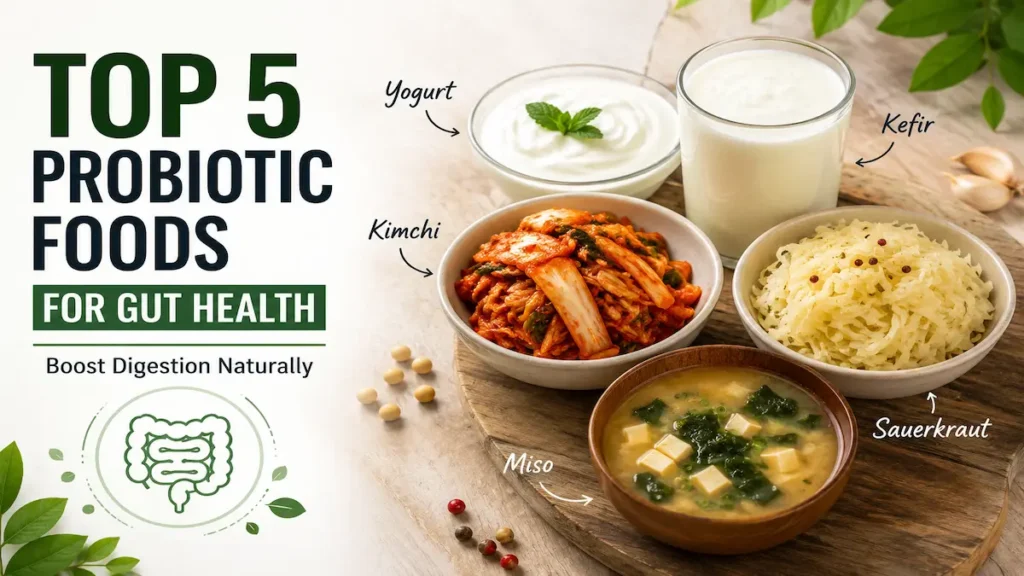
Top 5 Probiotic Foods for Gut Health
Your gut is home to trillions of bacteria that play an important role in digestion, immunity, metabolism, and even mental well-being. When the balance between good and harmful bacteria is disturbed, you may experience bloating, constipation, diarrhea, gas, or poor digestion.
One of the easiest ways to support a healthy gut is by eating probiotic foods. These foods naturally contain beneficial microorganisms that help maintain a balanced gut microbiome.
While many fermented foods contain probiotics, some have stronger scientific evidence for supporting digestive health than others. In this guide, you’ll discover the top five probiotic foods that can naturally improve gut health and learn how to include them in your daily diet.
Quick Answer: The best probiotic foods for gut health are yogurt, kefir, kimchi, sauerkraut, and miso. They provide beneficial bacteria that may support digestion, improve the balance of gut microbes, and promote overall digestive wellness when consumed as part of a balanced diet.
Key Takeaways
- Probiotic foods help maintain a healthy gut microbiome.
- Yogurt and kefir are among the best natural probiotic sources.
- Kimchi, sauerkraut, and miso support healthy digestion.
- Regular intake may improve gut balance and digestive wellness.
- Choose foods with live or active cultures.
What Are Probiotics?
Probiotics are live microorganisms, mainly beneficial bacteria and certain yeasts, that can support your health when consumed in adequate amounts. They help maintain a healthy balance of microbes in your digestive system.
A healthy gut microbiome may help:
- Support normal digestion
- Improve nutrient absorption
- Maintain regular bowel movements
- Support immune function
- Reduce occasional bloating and gas
- Help restore gut bacteria after antibiotic use (under medical guidance)
Although probiotics are beneficial, they work best alongside a diet rich in fruits, vegetables, whole grains, and fiber.
1. Yogurt – The Best Everyday Probiotic Food
Yogurt is one of the most popular and widely available probiotic foods. It is made by fermenting milk with beneficial bacteria that transform milk into a creamy, nutrient-rich food.
Many yogurts contain live bacterial cultures that may help maintain a healthy gut microbiome.
Why Yogurt Is Good for Gut Health
Yogurt may help:
- Increase beneficial gut bacteria
- Support healthy digestion
- Improve lactose digestion in some people
- Provide high-quality protein
- Supply calcium for healthy bones
Besides probiotics, yogurt is also a good source of protein, calcium, vitamin B12, and phosphorus.
How to Choose the Best Yogurt
Not every yogurt contains live probiotics.
Look for labels that mention:
- Live cultures
- Active cultures
- Live and active cultures
Choose plain yogurt whenever possible because flavored varieties often contain large amounts of added sugar.
Easy Ways to Eat Yogurt
- Add fresh fruits and berries
- Mix with oats
- Blend into smoothies
- Use as a healthy snack
2. Kefir – A Powerful Probiotic Drink
Kefir is a fermented milk drink made using kefir cultures. It has a slightly tangy taste and contains a wide variety of beneficial microorganisms.
Compared with many other fermented dairy foods, kefir usually contains a greater diversity of probiotic strains.
Benefits of Kefir
Kefir may help:
- Improve digestive balance
- Support healthy gut bacteria
- Promote regular bowel movements
- Provide protein and calcium
- Support overall digestive comfort
Some people with mild lactose sensitivity find kefir easier to digest because much of the lactose is broken down during fermentation.
How to Drink Kefir
- Drink one small glass daily
- Add it to smoothies
- Use it instead of milk in breakfast recipes
Start with small servings if you are new to probiotic foods.
3. Kimchi – A Traditional Fermented Vegetable
Kimchi is a famous Korean fermented food made mainly from cabbage along with garlic, ginger, chili, and other vegetables.
Its fermentation process encourages the growth of beneficial bacteria that contribute to its probiotic properties.
Why Kimchi Supports Gut Health
Kimchi offers several advantages:
- Contains beneficial bacteria from natural fermentation
- Rich in dietary fiber
- Low in calories
- Provides vitamins and minerals
- Adds variety to the gut microbiome
The fiber in cabbage also acts as food for healthy gut bacteria, making kimchi a combination of probiotics and natural prebiotics.
Best Way to Eat Kimchi
Enjoy small portions alongside meals, rice bowls, salads, or grilled vegetables.
If you are sensitive to spicy foods, begin with small amounts.
4. Sauerkraut – Fermented Cabbage Rich in Good Bacteria
Sauerkraut is made by naturally fermenting shredded cabbage with salt.
It has been enjoyed in many cultures for centuries and remains one of the best plant-based probiotic foods.
Health Benefits
Sauerkraut may help:
- Improve digestive health
- Support beneficial gut bacteria
- Increase fiber intake
- Provide vitamin C and vitamin K
- Supply natural antioxidants
Because fermentation creates beneficial bacteria naturally, unpasteurized sauerkraut usually contains more live cultures than heat-treated versions.
Buying Tips
Choose refrigerated, unpasteurized sauerkraut whenever available.
Shelf-stable products that have been heavily processed may contain fewer living bacteria.
5. Miso – A Traditional Japanese Fermented Paste
Miso is made by fermenting soybeans with beneficial microorganisms. It is commonly used to prepare soups, sauces, and marinades.
Although cooking at very high temperatures may reduce some live bacteria, miso still provides valuable nutrients and remains a nutritious fermented food.
Benefits of Miso
Miso provides:
- Plant protein
- Beneficial fermented compounds
- Essential minerals
- Flavor without excessive fat
Enjoying miso as part of a balanced diet may support digestive wellness.
Simple Ways to Use Miso
- Add to warm soup
- Mix into salad dressing
- Use as a seasoning for vegetables
Avoid boiling miso for long periods if you want to preserve more of its beneficial microorganisms.
| Probiotic Food | Best For | Key Nutrients | How to Eat |
|---|---|---|---|
| 🥣 Yogurt | Daily gut health & digestion | Protein, Calcium | Breakfast or snack |
| 🥛 Kefir | Diverse probiotics | Protein, Calcium | Drink 1 glass daily |
| 🥬 Kimchi | Gut bacteria diversity | Fiber, Vitamin K | Serve with meals |
| 🥗 Sauerkraut | Digestion & gut support | Fiber, Vitamin C | Add to salads or sandwiches |
| 🍲 Miso | Digestive wellness | Protein, Minerals | Use in warm soup |
Tips to Get the Most from Probiotic Foods
Adding probiotic foods to your diet doesn’t have to be complicated.
Here are a few simple tips:
- Introduce one probiotic food at a time.
- Eat probiotic foods regularly instead of occasionally.
- Include fiber-rich fruits and vegetables to nourish healthy gut bacteria.
- Stay hydrated throughout the day.
- Limit highly processed foods and excess added sugar.
- Stay physically active.
Consistency matters more than eating large amounts occasionally.
Who Should Be Careful?
Although probiotic foods are generally safe for most healthy adults, some people should speak with a healthcare professional before making major dietary changes.
This includes:
- People with severely weakened immune systems
- Individuals receiving cancer treatment
- Organ transplant recipients
- Anyone with serious digestive diseases
- People with food allergies related to dairy or soy
If you experience persistent digestive symptoms, seek medical advice rather than relying only on probiotic foods.
Conclusion
Supporting your gut health doesn’t require expensive supplements. Adding natural probiotic foods to your daily meals is a simple and practical way to nourish your digestive system.
Among all available options, yogurt, kefir, kimchi, sauerkraut, and miso stand out because they offer beneficial bacteria along with valuable nutrients that support overall health.
Remember that probiotics work best as part of an overall healthy lifestyle. Eating plenty of fiber-rich foods, staying active, getting enough sleep, and limiting highly processed foods are equally important for maintaining a healthy gut.
Frequently Asked Questions
Which probiotic food is best for gut health?
Plain yogurt is one of the best everyday options because it combines beneficial bacteria with protein and calcium. Kefir is another excellent choice due to its wide variety of probiotic microorganisms.
How often should I eat probiotic foods?
Including one serving of probiotic-rich food most days of the week may help support a healthy gut when combined with a balanced diet.
Can probiotic foods replace probiotic supplements?
Not always. Many people can obtain beneficial bacteria through food, but supplements may be recommended in certain medical situations. Always consult a healthcare professional before taking supplements.
Are all fermented foods probiotic?
No. Some fermented foods are heated or processed after fermentation, which may reduce or eliminate live microorganisms.
References
- National Institutes of Health (NIH) – Probiotics Fact Sheet for Consumers
- Harvard T.H. Chan School of Public Health – Probiotics for Gut Health
- International Scientific Association for Probiotics and Prebiotics (ISAPP) – Do Fermented Foods Contain Probiotics?
- NIH – Probiotics Fact Sheet for Health Professionals

Medical Disclaimer
This content is for informational purposes only and should not be considered medical advice.