Psyllium Husk vs Chia Seeds: 7 Essential Differences
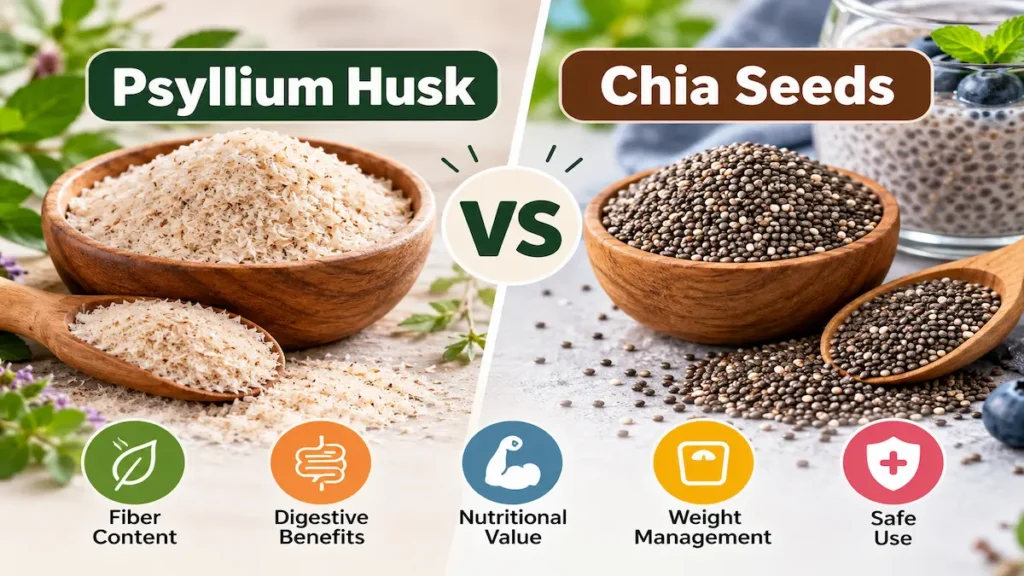
Psyllium husk vs chia seeds is a practical comparison when you want more dietary fiber but are unsure which ingredient fits your needs. Both absorb liquid and form a gel, yet they differ in nutrient content, preparation, and the evidence behind their digestive benefits. Psyllium is commonly used as a concentrated fiber supplement and bulk-forming laxative; chia is a whole food that also provides protein, fats, and minerals. Comparing equal weights and research limitations is more useful than comparing spoonfuls.
Key Takeaways
- Psyllium concentrates gel-forming fiber; chia offers a broader nutrient profile.
- Reported fiber amounts vary across products and scientific studies.
- Psyllium has better clinical evidence for treating constipation.
- Proper hydration and preparation matter for both ingredients.
What Are Psyllium Husk and Chia Seeds?
Psyllium husk, also called ispaghula or isabgol, is the outer coating of seeds from Plantago ovata. Its water-binding components create a thick gel, explaining its use in fiber supplements and some food products. Chia seeds come from Salvia hispanica. Unlike a separated husk, they are eaten as whole or ground seeds and contain dietary fiber, plant protein, unsaturated fat, and minerals. Chia develops a gel-like coating in liquid but retains its seed texture. The psyllium husk vs chia seeds comparison therefore highlights their different nutritional roles: psyllium chiefly supplies functional fiber, while chia contributes a broader range of nutrients.
Psyllium Husk vs Chia Seeds: 7 Differences
| Difference | Psyllium Husk | Chia Seeds |
|---|---|---|
| 1. Plant material | Outer seed husk | Whole edible seed |
| 2. Fiber in selected datasets, per 10 g dry weight | About 7.7 g | About 3.4 g |
| 3. Protein, per 10 g dry weight | About 0.4 g | About 1.7 g |
| 4. Fat, per 10 g dry weight | About 0.1 g | About 3.1 g |
| 5. Main use | Fiber supplement or laxative | Fiber-rich food ingredient |
| 6. Constipation research | Clinical trials and guidelines available | Less direct treatment evidence |
| 7. Preparation | Mix with sufficient liquid and drink promptly | Hydrate in foods or liquids; avoid dry spoonfuls |
Data note: These rounded estimates come from different sources, not a single head-to-head laboratory test: a 2026 psyllium composition review and USDA SR Legacy nutrient data for dried chia seeds. They do not describe every product. A 2024 Food Bioscience study found more fiber in the chia samples it tested than in its psyllium husk samples. The available abstract does not explain the disagreement. Check your product label for actual serving amounts.
Which Provides More Fiber and Other Nutrients?
The psyllium husk vs chia seeds comparison is less straightforward than a single fiber percentage suggests. One psyllium dataset reports about 77% fiber, while USDA’s dried-chia data report about 34%. These figures suggest psyllium can provide more fiber gram for gram, but a conflicting 2024 direct comparison means it would be inaccurate to claim that psyllium always contains more. Spoon measurements are also unreliable because the ingredients have different densities. For a more accurate comparison, check the grams of fiber per labeled serving, along with serving weight and other ingredients.
Chia offers greater nutritional variety. Its fat includes alpha-linolenic acid (ALA), a plant-based omega-3 fatty acid, and it provides minerals such as calcium and magnesium. ALA differs from the EPA and DHA found in fish and algae. Psyllium contains very little fat according to the cited husk composition dataset, making it primarily a fiber source rather than a replacement for nutrient-rich whole foods. Neither ingredient can substitute for a varied, balanced diet.
Which Is Better for Constipation and Gut Health?
For constipation treatment, psyllium has stronger direct evidence. It acts as a bulk-forming laxative: with adequate fluid, its fiber increases stool bulk and can make bowel movements easier. The 2025 British Dietetic Association dietary guideline gives psyllium a strong recommendation for some outcomes in adults with chronic constipation, including stool frequency and consistency, while rating the supporting evidence as low certainty. A strong recommendation is not a guarantee of benefit. The guideline is about adults with chronic constipation, not proof of benefit for every digestive symptom.
When comparing psyllium husk vs chia seeds for constipation, chia seeds can contribute to overall dietary fiber intake, but there is less direct clinical evidence supporting their use as a treatment for chronic constipation. Neither ingredient addresses every cause of constipation, and increasing fiber too quickly may lead to gas, bloating, or abdominal discomfort. Persistent constipation, new or severe abdominal pain, vomiting, or rectal bleeding should prompt professional medical assessment rather than repeated self-treatment. Adding more fiber is not always the right solution for every digestive problem.
What About Fullness and Weight Management?
Both foods may affect fullness because fiber holds water, but that does not make either a proven weight-loss shortcut. Studies of psyllium and body weight have produced mixed results, and using chia in meals does not establish a reliable weight-loss effect. Chia also provides energy through its fats, which can be nutritious but still count toward total intake. Both belong, if useful, within a balanced eating pattern. For more plant-based meal options, see HealthBel’s tofu vs tempeh comparison.
How to Use Them Safely
Psyllium: Follow the directions on your specific product rather than guessing a dose. According to MedlinePlus, psyllium powder or granules should be mixed with at least 240 mL (8 fluid ounces) of liquid immediately before use; adequate fluid is essential. Never swallow it dry. MedlinePlus also advises not using psyllium for longer than one week for constipation unless a doctor directs you otherwise. If you have difficulty swallowing, an intestinal blockage, or significant gastrointestinal symptoms, ask a clinician before using it. Avoid inhaling the powder, particularly if you are sensitive to it.
Psyllium can interact with medication timing. MedlinePlus specifies that digoxin, salicylates such as aspirin, and nitrofurantoin should not be taken within three hours of psyllium; other medicines may need different guidance. Ask a pharmacist instead of applying the three-hour rule universally. Inform your healthcare professional about psyllium use if you are pregnant, breastfeeding, or managing an ongoing condition.
Chia: Add it to moist foods such as yogurt or oats, or allow it to hydrate in sufficient liquid for puddings and drinks. Do not swallow dry spoonfuls and then chase them with water. The American College of Gastroenterology has described esophageal blockage after dry chia consumption, especially relevant to people with swallowing difficulties. This is a rare reported complication. If you cannot swallow normally, particularly if you cannot swallow saliva, seek urgent medical care.
Which One Should You Choose?
Choose psyllium when a concentrated fiber supplement suits your needs and you can follow the product’s fluid and medication precautions. Choose chia when you want fiber together with protein, unsaturated fats, and minerals in everyday food. Using both is not automatically better and may raise digestive discomfort. Consider fiber already obtained from other foods. For persistent digestive problems, individualized medical or dietetic advice matters more than a single ingredient.
Frequently Asked Questions
Is psyllium better than chia for constipation?
Psyllium has stronger direct clinical evidence as a bulk-forming laxative. Chia provides food fiber, but it should not be assumed to work as an equivalent treatment. Follow product advice and seek professional assessment for ongoing symptoms.
Can I have both psyllium and chia on the same day?
They can fit into the same dietary pattern, but begin with modest amounts, increase fiber gradually, and drink sufficient fluid. Consider medication timing for psyllium and ask for professional advice if you have digestive conditions.
Does psyllium always contain more fiber than chia?
No universal claim is justified. Some published composition datasets show higher fiber in psyllium husk, but a 2024 comparative study reported higher fiber in the chia samples it analyzed. Compare actual product labels rather than treating one figure as universal.
Do chia seeds have to be soaked?
Chia can be mixed into adequately moist foods; preparing puddings or drinks allows the seeds to hydrate before consumption. Avoid eating dry spoonfuls, especially if you have a swallowing disorder.
Conclusion
The psyllium husk vs chia seeds comparison shows that both provide dietary fiber but serve different nutritional purposes. Psyllium has stronger clinical evidence for constipation management, while chia offers fiber alongside plant protein and unsaturated fats. However, their reported fiber content varies across scientific studies and commercial products, making it important to compare nutrition labels rather than assume one always contains more. Ultimately, the better choice depends on your dietary needs, digestive tolerance, and overall health. Whichever you choose, proper preparation and adequate hydration are essential for safe use.
Sources & References
- Current Nutrition Reports — Psyllium Composition and Uses (2026)
- USDA SR Legacy — Dried Chia Nutrient Data (FDC 170554, reproduced)
- Food Bioscience — Comparative Study of Chia and Psyllium (2024)
- British Dietetic Association — Dietary Constipation Guideline (2025)
- MedlinePlus — Psyllium: Uses and Precautions
- American College of Gastroenterology — Chia Swallowing Safety

Medical Disclaimer
This content is for informational purposes only and should not be considered medical advice.