Vitamin A Benefits Best Foods Daily Needs and Deficiency
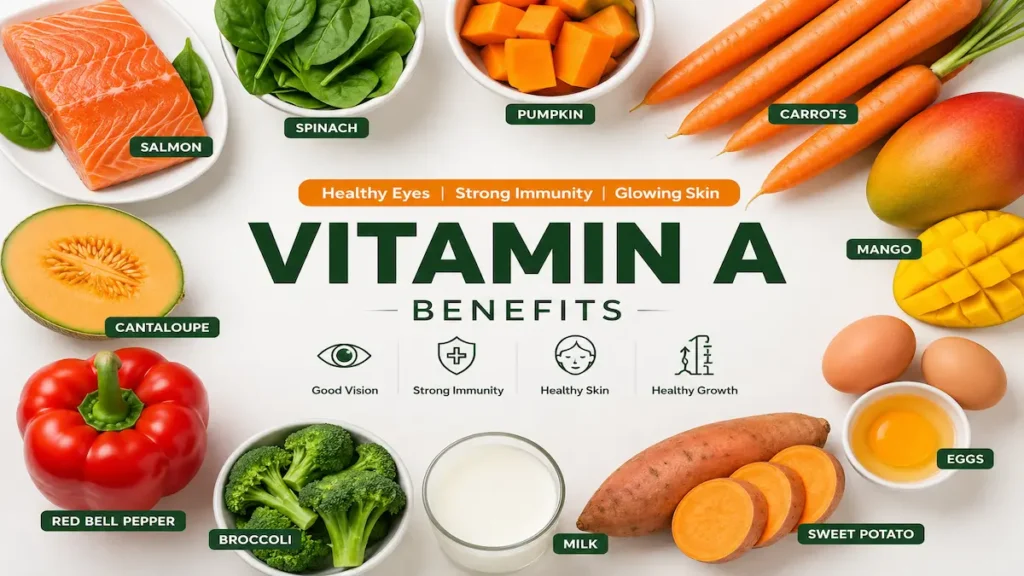
Vitamin A benefits are important for people of all ages. Learning about Vitamin A Benefits can help you choose healthier foods every day. This vitamin helps your eyes, skin, immune system, and many other parts of your body. It also helps children grow and supports good health every day.
Your body cannot make enough vitamin A by itself. You need to get it from healthy foods. Carrots, sweet potatoes, spinach, eggs, milk, fish, and many fruits are good vitamin A foods.
Many people ask, “What are the best foods for vitamin A?” or “How much vitamin A do I need each day?” This guide answers these questions in simple words.
You will also learn about vitamin A benefits, daily needs, food sources, and how vitamin A helps keep your body healthy.
Key Takeaways
- Vitamin A helps keep your eyes healthy, supports your immune system, and keeps your skin healthy.
- Carrots, sweet potatoes, spinach, pumpkin, eggs, milk, fish, and mangoes are some of the best Vitamin A foods.
- Eating enough Vitamin A every day helps support healthy vision, normal growth, and overall health.
- Most people can get enough Vitamin A from a balanced diet, while supplements should only be taken with medical advice.
What Is Vitamin A?
Vitamin A is a vitamin that your body needs every day. It helps you stay healthy from head to toe. Your eyes, skin, lungs, and immune system all need vitamin A to work well.
There are two main ways to get vitamin A.
The first is from animal foods like eggs, milk, fish, cheese, and liver.
The second is from plant foods like carrots, spinach, pumpkin, sweet potatoes, mangoes, and papaya. These foods contain beta-carotene. Your body changes beta-carotene into vitamin A when needed.
Eating different vitamin A rich foods every day is the safest way to get enough of this important vitamin. These healthy foods help you enjoy the full Vitamin A Benefits naturally.
Recommended Daily Amounts of Vitamin A
Your body needs a different amount of vitamin A at different ages.
| Age | Daily Amount |
| 1–3 years | 300 mcg RAE |
| 4–8 years | 400 mcg RAE |
| 9–13 years | 600 mcg RAE |
| Men (14 years and older) | 900 mcg RAE |
| Women (14 years and older) | 700 mcg RAE |
| Pregnancy | 770 mcg RAE |
| Breastfeeding | 1,300 mcg RAE |
Most people can get enough vitamin A by eating healthy meals every day. Getting the right daily amount helps you receive the best Vitamin A Benefits.
Vitamin A Benefits
Vitamin A does much more than help your eyesight. It supports many important jobs inside your body.
Here are the biggest vitamin A benefits.
1. Helps Keep Your Eyes Healthy
One of the best-known vitamin A benefits is healthy eyesight.
Vitamin A helps your eyes see better in dim light. It also keeps the front part of your eyes healthy.
If your body does not get enough vitamin A, you may find it hard to see at night.
Eating foods high in vitamin A can help support healthy vision.
2. Builds a Strong Immune System
Your immune system helps protect you from germs.
Vitamin A helps your body fight viruses and bacteria. It also helps your body heal after an illness.
People who eat enough vitamin A rich foods may have a stronger immune system.
3. Keeps Skin Healthy
Healthy skin needs vitamin A every day.
Vitamin A helps your body make new skin cells. It also helps keep your skin soft and healthy.
Many colorful vegetables that contain vitamin A also have other nutrients that are good for your skin.
4. Helps Children Grow
Children need vitamin A for healthy growth.
It helps build strong bones and supports the growth of body tissues.
Getting enough vitamin A is an important part of a healthy diet for growing children.
5. Supports Healthy Pregnancy
Pregnant women need vitamin A because it helps the baby grow.
The baby needs vitamin A to develop healthy eyes, lungs, and other organs.
However, too much vitamin A from supplements can be harmful during pregnancy. Pregnant women should only take supplements if their doctor advises them.
6. Helps Your Heart, Lungs, and Other Organs
Vitamin A helps many organs work properly.
It supports healthy lungs, heart, kidneys, and the digestive system.
A healthy diet with enough vitamin A helps your whole body stay strong.
Vitamin A and Health
Many studies show that people who eat plenty of fruits and vegetables enjoy better health.
Most experts say it is better to get vitamin A from food instead of high-dose supplements.
A healthy diet gives your body vitamin A along with fiber, vitamins, and minerals. Eating healthy foods every day is the easiest way to enjoy long-term Vitamin A Benefits.
Vitamin A and Cancer
Many orange and dark green vegetables contain beta-carotene.
People who eat these foods as part of a balanced diet often have better overall health.
However, experts do not recommend taking high-dose vitamin A supplements to prevent cancer.
The best choice is to eat different vitamin A foods every day.
Vitamin A and Lung Cancer
Research has found that high-dose beta-carotene supplements may not be safe for everyone.
People who smoke or smoked in the past should not take large beta-carotene supplements unless their doctor tells them to.
Eating carrots, spinach, sweet potatoes, and other foods high in vitamin A is still a healthy choice.
Vitamin A and Prostate Cancer
Scientists are still studying vitamin A and prostate cancer.
Some studies found possible benefits, while others found little or no effect.
Right now, there is no strong proof that vitamin A supplements prevent prostate cancer.
Eating healthy foods is still the best way to get vitamin A.
Vitamin A and Age-Related Macular Degeneration (AMD)
AMD is an eye disease that mostly affects older adults.
Vitamin A helps keep your eyes healthy, but it cannot cure AMD.
Some people with AMD may need special eye vitamins. These should only be taken after talking with an eye doctor.
Vitamin A and Measles
Vitamin A helps the immune system work well during illness.
Children with low vitamin A levels may become more sick if they get measles.
Doctors may give vitamin A to some children with measles, but this treatment should only be given by a healthcare professional.
Best Food Sources of Vitamin A
The easiest way to get enough vitamin A is through food.
You can get vitamin A from both animal foods and plant foods.
Eating different kinds of vitamin A rich foods every day is the best way to meet your daily needs. These foods give your body the most important Vitamin A Benefits every day.
Animal Sources of Vitamin A
Animal foods give your body vitamin A in a form that is easy to use.
Some of the best sources are:
- Beef liver
- Lamb liver
- Cod liver oil
- Salmon
- Tuna
- Mackerel
- Eggs
- Whole milk
- Cheese
- Butter
Liver has a very high amount of vitamin A. Eating it once in a while is enough for most people.
Plant Sources of Vitamin A
Plant foods are rich in beta-carotene. Your body changes it into vitamin A when needed.
Some of the best vitamin A foods include:
- Sweet potatoes
- Carrots
- Pumpkin
- Spinach
- Kale
- Swiss chard
- Red bell peppers
- Turnip greens
- Romaine lettuce
- Butternut squash
These colorful vegetables also give you fiber and other healthy nutrients.
Bright orange, yellow, and dark green vegetables are usually the best sources of vitamin A.
20 Foods High in Vitamin A
Adding foods high in Vitamin A to your daily meals is one of the easiest ways to stay healthy. These foods help you get enough vitamin A without depending on supplements.
| Food | Vitamin A Level |
| Beef liver | Very High |
| Sweet potato | Very High |
| Spinach | High |
| Pumpkin | High |
| Carrots | High |
| Salmon | Good |
| Mango | Good |
| Red bell pepper | Good |
| Eggs | Good |
| Cheese | Good |
| Whole milk | Good |
| Kale | High |
| Butternut squash | High |
| Cantaloupe | Good |
| Papaya | Good |
| Apricots | Good |
| Broccoli | Moderate |
| Tomato juice | Moderate |
| Yogurt | Moderate |
| Tuna | Moderate |
Tip: You do not need to eat all these foods. Eat a mix of fruits, vegetables, dairy, eggs, and fish to get enough vitamin A.
Vegetables High in Vitamin A
Vegetables are one of the best Vitamin A sources. They also give your body fiber, vitamins, and minerals.
Try to eat these vegetables during the week:
- Sweet potato
- Carrots
- Spinach
- Kale
- Pumpkin
- Butternut squash
- Red bell pepper
- Swiss chard
- Turnip greens
- Romaine lettuce
The brighter the color, the more beta-carotene the vegetable usually has. Colorful vegetables are one of the easiest ways to get more Vitamin A Benefits.
Fruits High in Vitamin A
Many fruits also contain beta-carotene. They are healthy, tasty, and easy to add to your diet.
Some of the best fruits are:
- Mango
- Papaya
- Cantaloupe
- Apricot
- Watermelon
- Grapefruit
- Tangerine
- Nectarine
- Guava
- Passion fruit
Eating fresh fruit every day helps your body get more vitamins. Fresh fruits also provide natural Vitamin A Benefits for your body.
Vitamin A Supplements
Most healthy people do not need Vitamin A supplements.
A balanced diet usually gives your body enough vitamin A.
Some people may need supplements if they have a medical condition or cannot absorb nutrients well.
Always talk to a doctor before taking Vitamin A supplements.
Too much vitamin A from supplements can be harmful. Most people can enjoy Vitamin A Benefits through healthy foods instead of supplements.
Vitamin A Deficiency
Vitamin A deficiency means your body does not get enough vitamin A for a long time.
This problem is more common in people with poor diets or certain health conditions.
Signs of Vitamin A Deficiency
Common symptoms include:
- Trouble seeing at night
- Dry eyes
- Dry skin
- More infections
- Slow wound healing
- Poor growth in children
- Feeling tired
- Eye problems
If these symptoms continue, speak with a healthcare professional.
Groups at Risk of Vitamin A Deficiency
Some people have a higher risk of low vitamin A.
Premature Infants
Babies born early may have low vitamin A stores.
They may need special care from their healthcare team.
People with Cystic Fibrosis
This condition can make it harder for the body to absorb fat and fat-soluble vitamins like vitamin A.
People with Digestive Disorders
People with Crohn’s disease, celiac disease, or other digestive problems may not absorb enough vitamin A from food.
A doctor may check their vitamin levels if needed.
Can Too Much Vitamin A Be Harmful?
Yes.
Too much vitamin A can cause health problems.
This usually happens from taking high-dose supplements, not from eating fruits and vegetables.
Signs of Vitamin A Toxicity
Too much vitamin A may cause:
- Headache
- Dizziness
- Nausea
- Dry skin
- Bone pain
- Blurred vision
- Liver problems
If you think you are taking too much vitamin A, stop using supplements and talk to a doctor.
Vitamin A and Medicines
Vitamin A supplements may not be safe with some medicines.
They can interact with:
- Some acne medicines
- Some cholesterol medicines
- Some blood-thinning medicines
Tell your doctor about any vitamins or supplements you take.
How to Increase Vitamin A Naturally
You can improve your Vitamin A intake with simple daily habits.
- Eat carrots with lunch.
- Add spinach to your meals.
- Eat sweet potatoes once or twice a week.
- Enjoy mango or papaya as a snack.
- Eat eggs a few times each week.
- Include milk or yogurt if you can.
- Eat colorful vegetables every day.
Small changes can make a big difference over time.
How to Improve Vitamin A Absorption
Vitamin A is a fat-soluble vitamin.
Your body absorbs it better when you eat it with healthy fats.
Good choices include:
- Olive oil
- Avocado
- Nuts
- Seeds
For example, adding a little olive oil to cooked spinach or carrots can help your body use more vitamin A.
Vitamin A and a Healthy Diet
The best way to get enough vitamin A is to eat a balanced diet.
Try to fill your plate with colorful vegetables, fresh fruits, whole grains, lean protein, and healthy fats.
Do not depend on one food or one supplement.
A healthy diet gives your body many nutrients that work together to keep you strong.
Conclusion
Vitamin A Benefits go far beyond healthy eyesight. This important vitamin supports your immune system, skin, growth, and many organs.
The good news is that most people can get enough vitamin A from food. Carrots, spinach, sweet potatoes, pumpkin, mangoes, eggs, milk, and fish are all great choices.
If you eat a variety of colorful fruits and vegetables every day, you are more likely to meet your vitamin A needs naturally.
Supplements are only needed in some cases and should be taken with medical advice.
Choosing healthy foods every day is the safest and easiest way to support your health. Eating a healthy and balanced diet every day is the best way to enjoy all Vitamin A Benefits naturally.
Frequently Asked Questions (FAQs)
1. What are the main Vitamin A Benefits?
Vitamin A helps keep your eyes healthy, supports your immune system, keeps your skin healthy, and helps your body grow and repair itself.
2. Which foods are high in Vitamin A?
Sweet potatoes, carrots, spinach, pumpkin, kale, mangoes, eggs, milk, salmon, and liver are some of the best Vitamin A foods.
3. What are the signs of Vitamin A deficiency?
Common signs include night blindness, dry eyes, dry skin, slow wound healing, and getting sick more often.
4. How can I increase Vitamin A naturally?
Eat more colorful vegetables, fresh fruits, eggs, dairy products, and fish as part of a balanced diet.
5. How do you improve Vitamin A absorption?
Eat Vitamin A-rich foods with healthy fats like olive oil, avocado, nuts, or seeds.
6. Can too much Vitamin A be harmful?
Yes. High-dose Vitamin A supplements can cause headaches, nausea, liver problems, and other health issues.
7. Is Vitamin A good for your eyes?
Yes. Vitamin A supports normal vision and helps prevent night blindness caused by vitamin A deficiency.
8. Which vegetables have the most Vitamin A?
Sweet potatoes, carrots, spinach, kale, pumpkin, and butternut squash are among the best vegetable sources.
9. Which fruits are rich in Vitamin A?
Mangoes, papayas, cantaloupes, apricots, watermelon, guava, and passion fruit are good fruit sources.
10. Should I take Vitamin A supplements every day?
Most people do not need supplements. A healthy diet usually provides enough vitamin A. Take supplements only if your healthcare provider recommends them. Healthy foods are the safest way to enjoy Vitamin A Benefits every day.

Medical Disclaimer
This content is for informational purposes only and should not be considered medical advice.