Foods Rich in Magnesium and Their Benefits
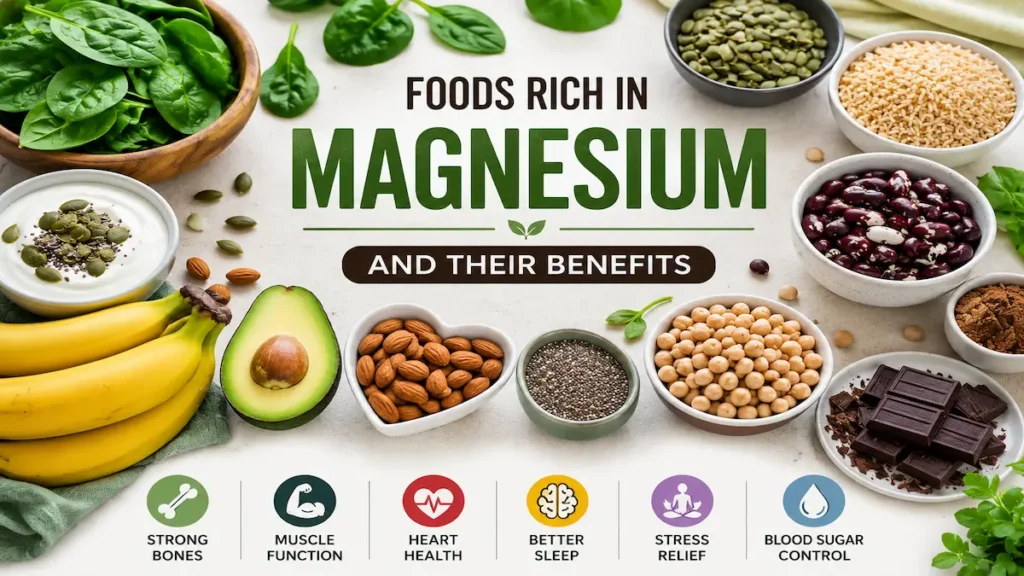
Foods Rich in Magnesium are natural foods like green leafy vegetables, nuts, seeds, fruits, legumes, and whole grains that help boost energy, support heart health, strengthen bones, and improve overall body function.
Magnesium is one of the most important minerals needed by the human body. It supports many body functions such as energy production, muscle movement, nerve signals, heart health, and strong bones. Without enough magnesium, the body can feel weak, tired, and unbalanced.
In today’s fast lifestyle, many people eat fast food, processed food, and sugary snacks. These foods do not provide enough nutrients like magnesium. That is why magnesium deficiency has become very common.
In this article, we will understand in simple words what magnesium is, why it is important, which foods are rich in magnesium, and how it helps improve overall health.
Key Takeaways
- Foods rich in magnesium help support muscle strength, nerve function, and energy production.
- A lack of magnesium-rich foods in your diet may lead to tiredness, muscle cramps, and weakness.
- Foods rich in magnesium include leafy greens, nuts, seeds, legumes, bananas, and whole grains.
- Regular intake of magnesium-rich foods supports brain health, stress management, better sleep, heart health, and overall wellness.
What is Magnesium?
Magnesium is a natural mineral found in the human body. It is present in every cell and plays a very important role in keeping the body active and healthy.
Magnesium helps the body in producing energy from food. It also helps muscles relax after movement and keeps the nervous system calm. It works together with other minerals like calcium and potassium to keep the body balanced.
If magnesium levels are low, many body functions become slow and weak.
Why is Magnesium Important for the Body?
Magnesium is needed for many essential body activities. Some of the main roles are:
1. Energy Production
Magnesium helps convert food into energy. Without it, the body feels tired and weak.
2. Muscle Function
It helps muscles contract and relax properly. This prevents cramps and stiffness.
3. Nervous System Support
Magnesium helps in sending signals between brain and body. It keeps the mind calm.
4. Heart Health
It supports a steady heartbeat and helps maintain normal blood pressure.
5. Bone Strength
Magnesium works with calcium to build strong bones and teeth.
6. Blood Sugar Control
It helps regulate insulin and supports healthy blood sugar levels.
Symptoms of Magnesium Deficiency
When the body does not get enough magnesium, it may show several warning signs. These include:
- Constant tiredness and low energy
- Muscle cramps or twitching
- Poor sleep or insomnia
- Anxiety and irritability
- Headaches or migraines
- Irregular heartbeat
- Weak concentration
If these symptoms continue for a long time, it is important to improve diet or consult a doctor.
Foods Rich in Magnesium
The best way to get magnesium is through natural foods. Below are some easy and common foods rich in magnesium:
1. Green Leafy Vegetables
Spinach, fenugreek leaves, mustard greens, and kale are rich in magnesium. These vegetables also help in cleaning the body and improving blood health.
2. Nuts and Seeds
Almonds, cashews, walnuts, pumpkin seeds, and sunflower seeds are excellent sources of magnesium. They are easy to carry and can be eaten as snacks.
3. Whole Grains
Oats, brown rice, quinoa, and whole wheat products provide a good amount of magnesium. They also give long-lasting energy and improve digestion.
4. Pulses and Legumes
Lentils, chickpeas, kidney beans, and soybeans are rich in both protein and magnesium. They help in muscle growth and strength.
5. Bananas
Bananas are a simple and affordable fruit rich in magnesium and potassium. They help reduce fatigue and improve energy quickly.
6. Dark Chocolate
Dark chocolate with at least 70% cocoa contains magnesium. It can help improve mood and reduce stress when eaten in small amounts.
7. Avocado
Avocado is a healthy fruit rich in good fats and magnesium. It supports heart health and overall body balance.
8. Dairy Products
Milk, yogurt, and cheese contain small amounts of magnesium along with calcium and protein, which are important for bones.
9. Fish
Fish like salmon and mackerel are rich in magnesium and omega-3 fatty acids. They are very good for brain and heart health.
10. Mineral Water
Some mineral water contains natural magnesium, which helps keep the body hydrated and balanced.
Magnesium Foods Guide (Scientifically Backed Overview)
| Food | Magnesium Role | Health Impact | Best Time to Eat |
|---|---|---|---|
| Spinach | High magnesium density | Supports muscle & nerve function | Lunch / Dinner |
| Almonds | Healthy fat + magnesium | Improves brain & energy levels | Morning / Snack |
| Pumpkin Seeds | One of the richest sources | Supports heart rhythm & sleep | Evening |
| Oats | Complex carb + minerals | Stable energy & digestion | Breakfast |
| Banana | Natural electrolyte balance | Reduces fatigue & stress | Anytime |
Note: Values are based on general nutritional composition of foods.
Health Benefits of Magnesium
Magnesium provides many health benefits that support overall wellness:
1. Improves Bone Health
Magnesium strengthens bones by working with calcium. It reduces the risk of weak bones in the future.
2. Supports Heart Function
It helps keep the heart beating regularly and reduces the risk of heart-related diseases.
3. Reduces Stress and Anxiety
Magnesium calms the nervous system and helps reduce stress, anxiety, and mood swings.
4. Improves Sleep Quality
It helps the brain relax, making it easier to fall asleep and stay asleep.
5. Relieves Muscle Pain
Magnesium reduces muscle cramps, especially after exercise or physical work.
6. Helps in Blood Sugar Control
It supports insulin function and may help people with diabetes manage blood sugar levels better.
How to Include Magnesium in Daily Diet
Adding magnesium-rich foods to your diet is very simple. You can follow these daily habits:
- Eat oats and bananas in breakfast
- Snack on nuts and seeds during the day
- Add green vegetables like spinach in lunch
- Include lentils or beans in dinner
- Eat fruits like avocado or banana daily
- Drink clean mineral water
Even small changes in daily food habits can make a big difference in health.
Sample Daily Magnesium Diet Plan
Here is a simple example of a daily diet:
Morning: Oats with banana and milk
Mid-morning snack: A handful of almonds or walnuts
Lunch: Rice, lentils, and spinach vegetable
Evening snack: Banana or yogurt
Dinner: Whole wheat roti with vegetables and beans
This type of diet helps maintain healthy magnesium levels naturally.
Daily Magnesium Requirement
The recommended daily intake depends on age and gender:
- Adult men: 400–420 mg per day
- Adult women: 310–320 mg per day
- Children: lower amount based on age
A balanced diet can easily fulfill this requirement.
Problems Caused by Low Magnesium
Long-term magnesium deficiency can lead to serious health issues such as:
- High blood pressure
- Frequent migraines
- Weak muscles and cramps
- Poor sleep quality
- Mental stress and depression
- Heart rhythm problems
That is why a healthy diet is very important.
Conclusion
Magnesium is a very important mineral that keeps the human body healthy and active. It supports energy production, muscle function, nerve health, heart health, and strong bones. Without enough magnesium, the body may feel tired, weak, and stressed.
By eating simple natural foods like green vegetables, nuts, seeds, fruits, and whole grains, we can easily meet our daily magnesium needs.
A healthy diet, regular exercise, and proper lifestyle choices can help prevent magnesium deficiency and improve overall well-being.
FAQs (Frequently Asked Questions)
Q1. What causes magnesium deficiency?
Magnesium deficiency happens due to unhealthy diet, stress, lack of fruits and vegetables, and excessive junk food consumption.
Q2. Can we get enough magnesium from food only?
Yes, most people can get enough magnesium from a balanced and healthy diet without supplements.
Q3. Which food is highest in magnesium?
Spinach, pumpkin seeds, almonds, beans, and whole grains are among the best sources.
Q4. Is magnesium good for sleep?
Yes, magnesium helps relax the brain and improves sleep quality naturally.
Q5. Is magnesium safe for children?
Yes, children can safely get magnesium from natural foods in their normal diet.

Medical Disclaimer
This content is for informational purposes only and should not be considered medical advice.