Smoking Effects on the Body 15 Dangerous Health Risks
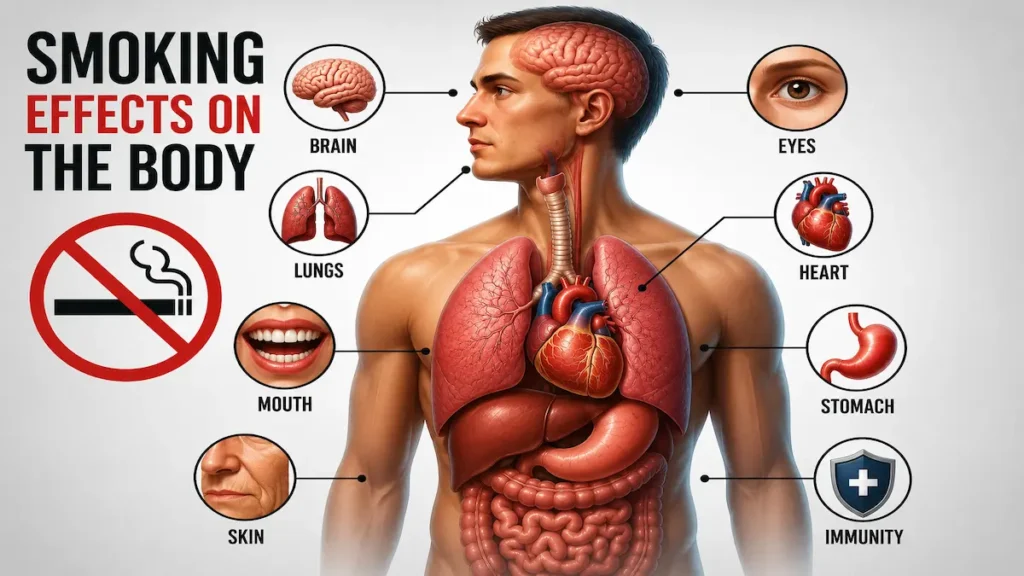
Smoking effects on the body begin with the very first cigarette. Every puff sends harmful chemicals into your lungs and blood. These chemicals travel to almost every part of your body. Over time, they damage your heart, brain, skin, eyes, teeth, and many other organs.
Many people believe smoking only harms the lungs. That is not true. Smoking can lead to serious health problems from head to toe. Some damage happens quickly, while other problems develop slowly over many years.
There is no safe way to use tobacco. Cigarettes, cigars, pipes, and hookahs all contain harmful chemicals. Even breathing someone else’s smoke can increase your risk of disease.
The good news is that your body starts to heal after you quit smoking. The sooner you stop, the better your chances of living a longer and healthier life.
In this guide, you will learn about the 15 serious health risks of smoking and why quitting is one of the best choices you can make. Understanding smoking effects on the body can help you make better choices for your health.
Key Takeaways
- Smoking harms almost every organ, including the lungs, heart, brain, and skin.
- Even light smoking and secondhand smoke can increase the risk of serious diseases.
- Quitting smoking helps your body heal and lowers the risk of heart disease, stroke, and cancer.
- The sooner you quit smoking, the better your chances of living a longer and healthier life.
1. Lung Damage
Your lungs are the first organs to face the harmful effects of smoking. Every cigarette fills your lungs with smoke and toxic chemicals.
Over time, smoking damages the tiny air sacs that help you breathe. Once these air sacs are damaged, they cannot fully heal.
You may notice:
- A cough that does not go away
- More mucus in your lungs
- Wheezing
- Shortness of breath
Smoking also raises the risk of lung infections and lung cancer.
2. Heart Disease and Smoking Effects on the Body
One of the most serious smoking effects on the body is damage to the heart.
Smoking makes your blood vessels narrow. This makes it harder for blood to carry oxygen around your body.
As a result, your heart has to work much harder.
This increases the risk of:
- High blood pressure
- Heart attack
- Poor blood flow
- Heart disease
Even people who smoke only a few cigarettes each day have a higher risk of heart problems.
3. Stroke
Smoking also affects the brain by reducing healthy blood flow.
When blood vessels become narrow or blocked, the brain may not get enough oxygen. This can cause a stroke.
A stroke can lead to:
- Weakness in the body
- Trouble speaking
- Memory problems
- Long-term disability
Quitting smoking helps lower this risk over time.
4. Lung Cancer
Smoking is the leading cause of lung cancer.
Harmful chemicals in cigarette smoke slowly damage healthy lung cells. After many years, these damaged cells can grow into cancer.
Early warning signs may include:
- A cough that lasts for weeks
- Coughing up blood
- Chest pain
- Weight loss
- Trouble breathing
The best way to lower your risk is to stop smoking.
5. Chronic Breathing Problems
Smoking can make breathing harder every year.
Many smokers develop long-term lung diseases that cannot be completely cured.
Simple activities like walking, climbing stairs, or carrying groceries may become difficult.
Common signs include:
- Chest tightness
- Wheezing
- Feeling out of breath
- Frequent chest infections
Healthy lungs need clean air, not tobacco smoke.
6. Weak Immune System
Your immune system protects you from germs.
Smoking makes this natural defense weaker.
Because of this, smokers often:
- Catch colds more often
- Get sick more easily
- Take longer to recover
- Heal more slowly after injuries
A strong immune system helps your body stay healthy.
7. Mouth and Throat Problems
Smoking can damage your mouth long before you notice serious symptoms.
It may cause:
- Bad breath
- Yellow teeth
- Gum disease
- Loose teeth
- Mouth sores
Smoking also increases the risk of cancer in the mouth and throat.
Regular dental checkups are important, but quitting smoking gives the greatest protection.
8. Skin Ages Faster
Healthy skin needs oxygen and nutrients.
Smoking reduces blood flow to the skin. This means your skin gets less oxygen.
Over time, smokers may notice:
- Wrinkles
- Dry skin
- Dull skin
- Slow healing of cuts
Many smokers look older than people of the same age who do not smoke.
9. Eye Problems
Smoking can slowly damage your eyes.
It raises the risk of serious eye diseases that may affect your vision later in life.
You may notice:
- Blurry vision
- Dry eyes
- Poor night vision
The risk of vision loss becomes higher as smoking continues.
10. Stomach and Digestive Problems
Smoking affects your digestive system from the mouth to the stomach.
It can lead to:
- Poor digestion
- Stomach ulcers
- Heartburn
- Loss of appetite
Some smokers also notice that food does not taste as good because smoking reduces the sense of taste and smell.
11. Diabetes Risk
Smoking makes it harder for your body to control blood sugar.
People who smoke are more likely to develop Type 2 diabetes.
If a smoker already has diabetes, smoking can make the disease harder to manage.
It also increases the chance of problems with the heart, eyes, kidneys, and feet.
12. Fertility Problems
Smoking affects both men and women.
In men, smoking may:
- Lower sperm quality
- Reduce fertility
- Cause erection problems
In women, smoking may:
- Make pregnancy harder
- Increase the risk of early menopause
- Affect reproductive health
Quitting smoking can improve overall health and may improve fertility.
13. Pregnancy Risks
Smoking during pregnancy can harm both the mother and the baby.
It increases the risk of:
- Early birth
- Low birth weight
- Birth defects
- Pregnancy problems
Babies who are exposed to tobacco smoke before birth may also have health problems after they are born. These smoking effects on the body can also affect the baby’s health.
14. Higher Cancer Risk
Smoking does not only cause lung cancer.
It also raises the risk of cancers of the:
- Mouth
- Throat
- Food pipe
- Bladder
- Kidney
- Pancreas
The longer a person smokes, the greater the risk becomes.
15. Harm to Family Members
Smoking does not only affect the smoker.
People nearby also breathe harmful smoke. This is called secondhand smoke.
Children who live with smokers are more likely to have:
- Asthma
- Frequent cough
- Chest infections
- Ear infections
Adults who breathe secondhand smoke also have a higher risk of heart disease and lung cancer.
Protecting your family starts with keeping your home and car smoke-free.
Smoking Effects on the Body After You Quit Smoking
Many people think the damage from smoking can never be repaired. That is not true. Your body starts to heal soon after your last cigarette. The healing process takes time, but every smoke-free day is a step toward better health.
Here is a simple timeline of what happens after you quit smoking.
| Time After Quitting | What Happens |
| 20 Minutes | Your heart rate and blood pressure begin to return to normal. |
| 12 Hours | Carbon monoxide leaves your blood, and oxygen levels improve. |
| 2–12 Weeks | Blood flow gets better. Walking and exercise become easier. |
| 1–9 Months | Your lungs work better. Coughing and shortness of breath slowly improve. |
| 1 Year | Your risk of heart disease becomes much lower than before. |
| 5 Years | Your risk of stroke continues to drop. |
| 10 Years | Your risk of lung cancer is much lower than if you kept smoking. |
Smoking Effects on the Body Improve After You Quit
Quitting smoking is one of the best gifts you can give your body. It improves both your physical and mental health.
Some of the biggest benefits include:
- You breathe more easily.
- Your lungs become stronger.
- Your heart works better.
- Your blood carries more oxygen.
- Your skin looks healthier.
- Food tastes better.
- Your sense of smell improves.
- You have more energy.
- You save money.
- Your family is protected from secondhand smoke.
Every day without smoking helps your body recover.
Simple Tips to Quit Smoking
Quitting smoking is not always easy, but many people quit successfully. A good plan can make the journey easier.
Here are some simple tips.
Choose a Quit Date
Pick a day to stop smoking. Mark it on your calendar and prepare for it.
Throw Away Smoking Items
Remove cigarettes, lighters, and ashtrays from your home, car, and workplace.
Stay Away From Triggers
Some people smoke when they drink coffee, feel stressed, or spend time with friends who smoke. Try to avoid these situations at first.
Drink More Water
Water helps your body remove harmful chemicals. It can also reduce cravings.
Stay Active
Walking, cycling, or playing sports can improve your mood and reduce the urge to smoke.
Eat Healthy Foods
Fresh fruits, vegetables, nuts, and whole grains help your body heal.
Ask for Support
Tell your family and friends about your plan. Their support can make quitting easier.
Talk to Your Doctor
If quitting feels difficult, your doctor can suggest medicines or other treatments that may help.
Quitting is the best way to reduce smoking effects on the body and improve your health.
Healthy Habits That Help Your Body Recover
Your body heals faster when you follow healthy habits.
Try to:
- Sleep for 7–9 hours each night.
- Drink plenty of water.
- Eat healthy meals every day.
- Exercise for at least 30 minutes.
- Reduce stress with deep breathing or meditation.
- Avoid alcohol if it makes you want to smoke.
- Spend time with people who support your goal.
Small daily changes can make a big difference.
Common Myths About Smoking
Many people believe things about smoking that are not true.
Myth: Smoking only harms the lungs.
Fact: Smoking harms almost every organ in your body, including the heart, brain, skin, eyes, and blood vessels.
Myth: A few cigarettes a day are safe.
Fact: Even light smoking increases the risk of heart disease and cancer.
Myth: It is too late to quit.
Fact: Your body starts healing within minutes after you stop smoking.
Myth: Secondhand smoke is harmless.
Fact: Breathing someone else’s smoke can also cause serious health problems.
When Should You See a Doctor?
Talk to a doctor if you have:
- A cough that lasts for weeks
- Coughing up blood
- Chest pain
- Trouble breathing
- Unexplained weight loss
- A lump in your neck or mouth
- A sore that does not heal
Early treatment can improve the chance of recovery.
Conclusion
The smoking effects on the body are serious, but they are also preventable. Smoking damages your lungs, heart, brain, skin, mouth, stomach, and many other organs. It also raises the risk of heart disease, stroke, diabetes, and several types of cancer.
The good news is that your body begins to heal after your last cigarette. Every day without smoking improves your health and lowers your risk of disease.
Quitting smoking may feel difficult, but it is one of the best decisions you can make for yourself and your family. No matter how long you have smoked, today is a great day to take the first step toward a healthier future. By learning about smoking effects on the body, you can take the first step toward a healthier future.
Frequently Asked Questions (FAQs)
1. What are the smoking effects on the body?
Smoking effects on the body include damage to the lungs, heart, brain, skin, eyes, and many other organs.
2. Can smoking damage the heart?
Yes. Smoking makes the heart work harder. It raises blood pressure and increases the risk of heart attack, stroke, and poor blood flow.
3. How does smoking affect the lungs?
Smoking damages the airways and tiny air sacs inside the lungs. It can lead to a long-lasting cough, breathing problems, lung disease, and lung cancer.
4. Can smoking affect pregnancy?
Yes. Smoking during pregnancy can increase the risk of miscarriage, early birth, low birth weight, and other health problems for the baby.
5. What is the best way to quit smoking?
The best way is to make a quit plan, avoid smoking triggers, stay active, eat healthy foods, and ask a doctor for help if needed.

Medical Disclaimer
This content is for informational purposes only and should not be considered medical advice.