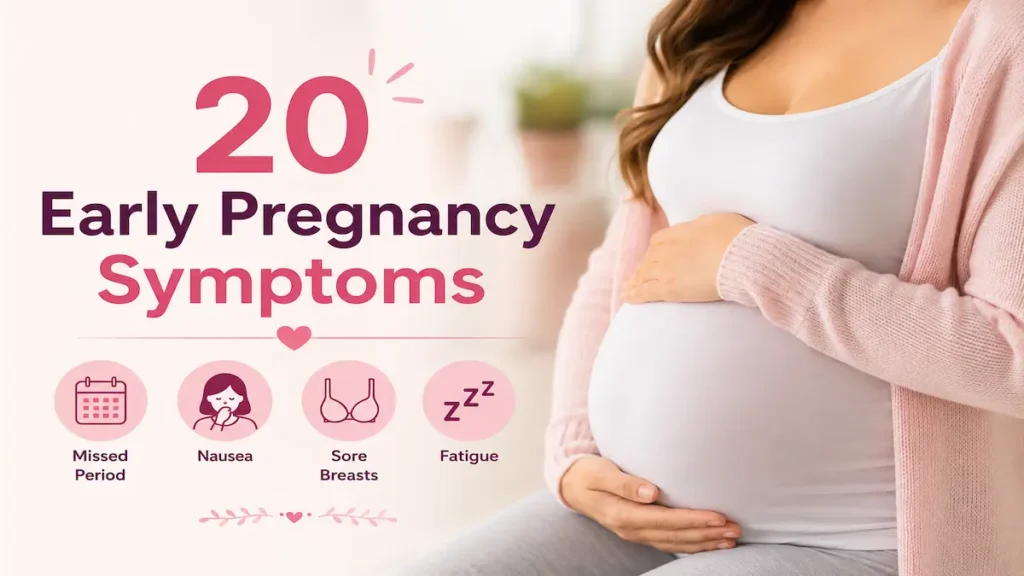
20 Early Pregnancy Symptoms Every Woman Should Know
Pregnancy is one of the biggest changes in a woman’s life. During the first few weeks, your body starts preparing to support a growing baby. Because of these changes, you may notice new feelings, physical changes, and emotional ups and downs.
Every pregnancy is different. Some women notice early pregnancy symptoms within a few days after conception, while others may not notice anything until they miss a period. It is also possible to have very few symptoms and still have a healthy pregnancy.
Knowing the common signs can help you understand what your body is telling you. However, these symptoms alone cannot confirm pregnancy. A home pregnancy test and a visit to a healthcare provider are the best ways to know for sure.
Let’s look at the 20 most common early pregnancy symptoms.
Key Takeaways
- A missed period, nausea, and fatigue are common early pregnancy symptoms.
- Every pregnancy is different, so symptoms may vary from one woman to another.
- A home pregnancy test is the best way to confirm pregnancy after a missed period.
- Early prenatal care helps support a healthy pregnancy for both mother and baby.
1. Missed Period
A missed period is usually the first sign that makes many women think they might be pregnant. Once pregnancy begins, your body stops the monthly menstrual cycle.
If your period is late and you usually have regular periods, taking a pregnancy test is a good idea. However, stress, illness, and hormone problems can also delay a period.
2. Light Spotting
Some women notice light bleeding about one or two weeks after conception. This is called implantation bleeding.
It is much lighter than a normal period and usually lasts only a few hours or a couple of days. The color may be pink, brown, or light red.
3. Mild Cramping
Light cramping can happen during the first few weeks. These cramps are usually gentle and feel different from normal period cramps.
If the pain becomes severe or comes with heavy bleeding, seek medical care right away.
4. Feeling Very Tired
Feeling tired all the time is one of the most common early pregnancy symptoms.
Your body is working hard to support your baby. At the same time, pregnancy hormones increase quickly, making you feel sleepy or low on energy.
Getting enough sleep and eating healthy meals may help.
5. Breast Changes
Many women notice breast changes early in pregnancy.
Your breasts may become:
- Sore
- Swollen
- Heavy
- More sensitive
The nipples may also become darker as pregnancy continues.
6. Morning Sickness
Morning sickness usually starts during the first few weeks.
Even though it is called morning sickness, it can happen at any time of the day.
Some women only feel mild nausea, while others may vomit often. Eating small meals and drinking enough water may help reduce discomfort.
7. Frequent Urination
You may find yourself visiting the bathroom more often.
This happens because your kidneys work harder during pregnancy, and your body produces more blood.
Frequent urination is normal unless it causes pain or burning.
8. Mood Swings
Your hormones change quickly during early pregnancy.
Because of this, you may laugh one minute and cry the next. Mood swings are common and usually improve as your body adjusts.
9. Food Cravings
You may suddenly crave foods that you never liked before.
Some women crave sweet foods, while others want salty or sour snacks.
These cravings are normal and may change throughout pregnancy.
10. Food Aversions
At the same time, foods you once enjoyed may suddenly seem unpleasant.
Even the smell of certain foods may make you feel sick.
11. Strong Sense of Smell
Many women notice that smells become much stronger.
Cooking smells, perfumes, smoke, or cleaning products may trigger nausea.
This symptom usually becomes less noticeable later in pregnancy.
12. Bloating
Hormone changes slow down digestion.
Because of this, your stomach may feel full, tight, or swollen even if you have not eaten much.
13. Constipation
Slow digestion can also make bowel movements less frequent.
Eating fruits, vegetables, whole grains, and drinking enough water can help keep your digestion healthy.
14. Dizziness
Some women feel dizzy when standing up too quickly.
This happens because pregnancy changes blood pressure and blood flow.
Move slowly when getting up and drink enough fluids during the day.
15. Headaches
Mild headaches are common in early pregnancy.
They may happen because of hormone changes, stress, tiredness, or dehydration.
Getting enough rest and staying hydrated may help reduce headaches.
16. Metallic Taste in the Mouth
Some women notice a strange metal-like taste in their mouth.
This symptom is caused by hormone changes and usually goes away after the first trimester.
17. Mild Back Pain
Lower back pain can begin during the early weeks.
Pregnancy hormones start relaxing the muscles and joints to prepare your body for the months ahead.
Gentle stretching and good posture may help reduce discomfort.
18. White Vaginal Discharge
A thin, milky-white discharge is common during pregnancy.
This discharge helps keep the vagina clean and lowers the risk of infection.
If the discharge has a bad smell, unusual color, or causes itching, contact a healthcare provider.
19. Heartburn
Pregnancy hormones relax the muscles between the stomach and food pipe.
This allows stomach acid to move upward, causing heartburn.
Eating smaller meals and avoiding spicy foods may help.
20. Higher Body Temperature
Your body temperature may stay slightly higher than usual after conception.
You may also feel warmer than normal. Drinking enough water and avoiding too much heat can help you stay comfortable.
Why Do Early Pregnancy Symptoms Happen?
Most early pregnancy symptoms happen because your hormone levels rise quickly after conception.
These hormones help your baby grow, but they also affect many parts of your body. Your digestion slows down, blood flow increases, breasts begin preparing for breastfeeding, and your emotions may change.
These changes are a normal part of pregnancy.
When Should You Take a Pregnancy Test?
If you have missed your period and notice several early pregnancy symptoms, it is a good time to take a home pregnancy test.
For the most accurate result:
- Wait until at least one week after your missed period.
- Read the instructions carefully.
- Use the first urine of the morning if possible.
If the result is positive, schedule a medical appointment to confirm the pregnancy and begin prenatal care.
Simple Tips During Early Pregnancy
If you think you may be pregnant, these simple habits can support your health:
- Eat healthy and balanced meals.
- Drink plenty of water every day.
- Get enough sleep and rest.
- Stay physically active with light exercise if approved by your healthcare provider.
- Avoid smoking, alcohol, and recreational drugs.
- Do not take medicine without medical advice.
- Start prenatal care as early as possible.
These healthy habits support both the mother and the growing baby.
Every Pregnancy Is Different
Not every woman experiences the same early pregnancy symptoms.
Some women notice many symptoms, while others notice only one or two. Some symptoms may come and go. This is completely normal.
If you have heavy bleeding, severe pain, fainting, or other unusual symptoms, seek medical care immediately.
Conclusion
Knowing the early pregnancy symptoms can help you understand the changes happening in your body. Signs such as a missed period, tiredness, nausea, breast tenderness, mood swings, frequent urination, and food cravings are common during the first few weeks.
Remember that these symptoms are only early clues. They cannot confirm pregnancy on their own. A home pregnancy test and a visit to a healthcare provider are the best ways to confirm pregnancy. Early medical care, healthy eating, and good daily habits can help support a healthy pregnancy for both the mother and the baby.
Frequently Asked Questions
What are the first early pregnancy symptoms?
The first early pregnancy symptoms often include a missed period, sore breasts, nausea, light spotting, mild cramping, and feeling very tired.
How soon do early pregnancy symptoms appear?
Many women notice symptoms within one to two weeks after conception, while others notice them after a missed period.
Can symptoms appear before a missed period?
Yes. Some women experience tiredness, sore breasts, mild cramps, or light spotting before missing their period.
When should I take a pregnancy test?
For the best accuracy, take a home pregnancy test about one week after your missed period.
Are pregnancy symptoms the same for everyone?
No. Every pregnancy is different. Some women have many symptoms, while others have only a few or none.
What should I do if I notice early pregnancy symptoms?
Take a home pregnancy test. If it is positive, visit a healthcare provider to confirm the pregnancy and begin prenatal care.
Can early pregnancy symptoms feel like PMS?
Yes. Symptoms like bloating, mood swings, sore breasts, and cramps can be similar to PMS. A pregnancy test can confirm the difference.

Medical Disclaimer
This content is for informational purposes only and should not be considered medical advice.