Pink Eye Symptoms Causes and Treatment
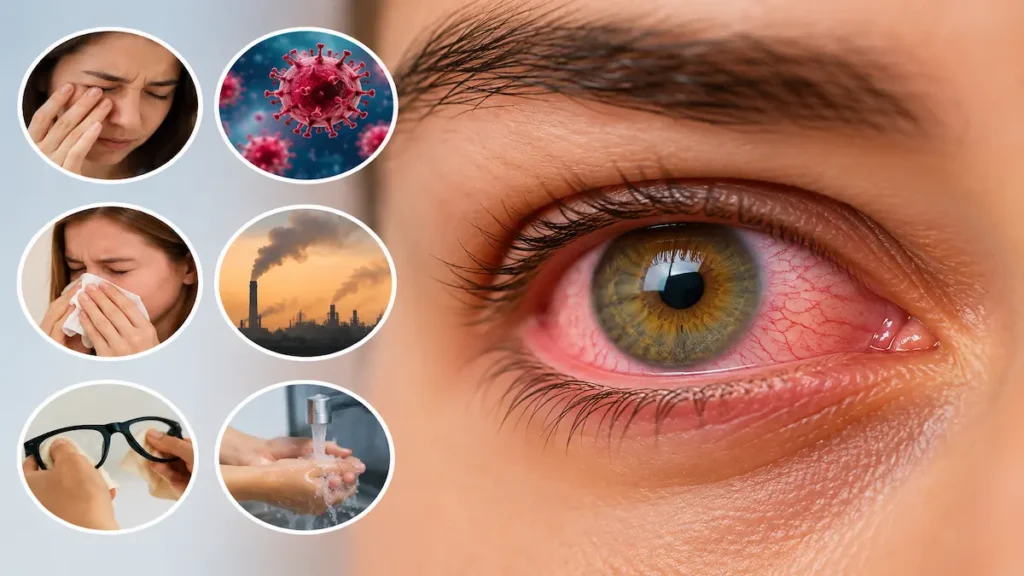
Pink eye is a common eye problem. It causes the white area of the eye to appear pink or red. This happens when the thin, clear layer that covers the white part of the eye becomes swollen or irritated. This layer is called the conjunctiva.
This condition is also called conjunctivitis.
This condition can affect one eye or both eyes. It is common in children and adults. Some types spread easily from one person to another. Other types happen because of allergies or something that irritates the eye.
Most people recover within a few days or a few weeks.The right treatment depends on what caused the problem.
Key Takeaways
- Pink eye causes red, itchy, watery eyes and can result from viruses, bacteria, allergies, or eye irritants like smoke and dust.
- Viral and bacterial pink eye can spread easily through close contact, while allergic and irritant pink eye are not contagious.
- Most mild cases improve within 1–2 weeks with proper care, but severe pain, vision changes, or heavy swelling require immediate medical attention.
- Good hygiene, avoiding eye rubbing, and not sharing towels, makeup, or contact lenses can help prevent pink eye and stop it from spreading.
Quick Answer
Pink eye is a condition that makes the eye look pink or red. It can be caused by a virus, bacteria, allergies, or things like smoke and dust. Some types spread easily, while others do not. Most cases get better with proper care.
What Does Pink Eye Look Like?
This eye condition is easy to notice. because the white part of the eye changes color.
You may see:
- A pink or bright red eye
- Watery eyes
- Sticky discharge
- Swollen eyelids
- Crust around the eyelashes after sleeping
Some people have mild redness. Others may have more swelling and discharge.
Common Symptoms
The symptoms may be different for each person. They also depend on what caused the infection or irritation.
Common symptoms include:
- Red or pink eyes
- Watery eyes
- Itchy eyes
- Burning feeling
- Sticky yellow or white discharge
- Swollen eyelids
- Crust on the eyelashes
- Feeling like sand is in the eye
- Mild pain
- Blurry vision because of tears or discharge
- Bright light may bother your eyes
Some people also have a cold, sore throat, or runny nose if the infection is caused by a virus.
Symptoms That Need Fast Medical Care
Pink eye is usually mild. However, some symptoms can be serious.
See a doctor right away if you have:
- Strong eye pain
- Sudden vision loss
- Trouble seeing clearly
- Heavy swelling around the eye
- Thick discharge that keeps coming back
- A high fever with eye swelling
- A chemical injury to the eye
- Symptoms that keep getting worse instead of getting better.
Getting early treatment can help protect your eyesight.
What Causes This Eye Condition?
This condition can happen for several reasons.Finding the cause helps doctors choose the right treatment.
The most common causes are:
1. Viral Infection
Most cases are caused by viruses.
This type often spreads when an infected person coughs or sneezes. It can also spread by touching a surface with germs and then touching your eyes.
This Eye Infection Type usually affects one eye first. After a day or two, it may spread to the other eye.
2. Bacterial Infection
Some bacteria can infect the eye.
This type often causes thick yellow, white, or green discharge. You may wake up with your eyelids stuck together.
Bacterial pink eye can spread through close contact or by sharing personal items.
3. Allergies
Allergies can also cause pink eye.
Common allergy triggers include:
- Pollen
- Dust
- Pet hair
- Mold
This allergy-related condition is not contagious.
It often affects both eyes at the same time.
4. Smoke and Dust
Smoke, dust, and air pollution can irritate the eyes.
The eyes may become:
- Red
- Watery
- Sore
- Uncomfortable
The symptoms often improve after the irritation goes away.
5. Chemicals
Some cleaning products and other chemicals can irritate the eyes.
If a chemical gets into your eye:
- Rinse your eye with clean water right away.
- Get medical help as soon as possible.
6. Contact Lenses
Wearing contact lenses for too long or not cleaning them properly can increase the risk of an eye infection.
Dirty contact lenses may allow germs to grow.
Always follow the cleaning steps and replace your lenses as recommended.
Eye Infection Type
There are four common types of pink eye. Each type has a different cause and may spread in different ways. Knowing the type can help you get the right treatment.
| Type | Cause | Does It Spread? |
|---|---|---|
| Viral | Virus | Yes |
| Bacterial | Bacteria | Yes |
| Allergic | Allergies | No |
| Irritant | Smoke, Dust, or Chemicals | No |
Tip: Knowing which type of pink eye you have can help your doctor choose the right treatment and reduce the risk of spreading the infection to others.
Who Has a Higher Risk of Pink Eye?
Anyone can develop this condition. However, some people have a higher chance.
These include:
- Young children
- School students
- Teachers
- Parents of young children
- People who wear contact lenses
- People with allergies
- People who touch their eyes often without washing their hands
- People who spend time in crowded places
Good hygiene can lower the risk.
How Does Pink Eye Spread?
Not every type is contagious.
Viral and bacterial infections can spread from one person to another.
It may spread through:
- Touching infected eyes
- Shaking hands
- Sharing towels
- Sharing pillows
- Sharing eye makeup
- Sharing eye drops
- Touching dirty surfaces
- Not washing your hands
Allergy-related and irritant eye conditions do not spread.
Can It Spread to Family Members?
Yes.
If you have a viral or bacterial eye infection, it can spread to people at home.
To protect your family:
- Wash your hands often.
- Use your own towel.
- Do not share pillows.
- Throw away used tissues.
- Clean things you touch often.
- Avoid touching your eyes.
These simple steps can help stop the infection from spreading.
How Do Doctors Diagnose Pink Eye?
A doctor can often identify the condition by looking at your eyes and asking a few simple questions.
The doctor may ask:
- When did the redness start?
- Is one eye affected or both?
- Do your eyes itch or burn?
- Is there any sticky discharge?
- Do you wear contact lenses?
- Have you had a cold recently?
- Does anyone at home have this eye infection?
These questions help the doctor find the cause.
Most people do not need special tests.
If the infection is severe, keeps coming back, or does not get better, the doctor may take a small sample of the eye discharge. This sample can help find the germ causing the problem.
Treatment Options
The treatment depends on the cause of the pink eye.
Some people get better without medicine, while others may need treatment.
Always follow your doctor’s advice.
Treatment for Viral Infection
Most cases are caused by a virus.
There is no medicine that can cure most viral infections.
The body usually fights the virus on its own.
You can feel better by:
- Resting your eyes
- Using a clean, cool cloth over closed eyes
- Using artificial tears if your doctor recommends them
- Drinking enough water
- Getting enough sleep
Most people recover within 1 to 2 weeks.
Some cases may take up to 3 weeks.
Treatment for Bacterial Infection
This bacterial infection is caused by bacteria.
A doctor may prescribe antibiotic eye drops or eye ointment.
These medicines can help the infection clear faster.
If you receive medicine:
- Use it exactly as directed.
- Finish the full course.
- Do not stop early because your eye feels better.
Using medicine the right way helps prevent the infection from returning.
Treatment for Allergy-Related Eye Irritation
This condition is caused by allergy triggers.
It is not an infection.
The best treatment is to avoid whatever causes the allergy.
Your doctor may also suggest:
- Artificial tears
- Allergy medicine
- Cool compresses
Symptoms often improve after the allergy trigger is removed.
Treatment for Eye Irritation
Smoke, dust, chemicals, and pollution can irritate your eyes.
The first step is to stay away from the irritant.
If a harmful chemical enters your eye:
- Rinse your eye with clean water right away.
- Seek medical help right away.
Do not wait if the pain is severe.
Home Care Tips
Simple home care can help your eyes feel better.
Wash Your Hands Often
Wash your hands with soap and water before and after touching your eyes.
Clean hands help stop germs from spreading.
Do Not Rub Your Eyes
Rubbing your eyes can make the redness and swelling worse.
It can also spread germs to the other eye.
Use a Clean Cool Cloth
Place a clean, cool cloth over your closed eyes for 5 to 10 minutes.
This may reduce swelling and help you feel more comfortable.
Always use a clean cloth each time.
Clean Away Eye Discharge
If your eyes have sticky discharge, clean it gently.
Use warm water and clean cotton or a soft cloth.
Wipe from the inside corner toward the outside.
Throw away the cotton after one use.
Drink Plenty of Water
Water helps your body stay healthy while it fights infection.
Try to drink enough fluids during the day.
Get Enough Sleep
Your body heals faster when you get enough rest.
Try to sleep for the number of hours recommended for your age.
Stay Away From Smoke
Cigarette smoke and air pollution can make your eyes feel worse.
Stay in clean air whenever possible.
What Should You Avoid?
While you have pink eye, avoid things that may slow healing or spread the infection.
Do not:
- Rub your eyes
- Share towels
- Share pillows
- Share eye drops
- Share eye makeup
- Wear contact lenses
- Touch your eyes with dirty hands
These simple steps help protect both you and others.
Should You Wear Contact Lenses?
No.
Stop wearing contact lenses until your eyes are fully healed.
Using contact lenses during an infection may make the problem worse.
Ask your doctor when it is safe to wear them again.
Can You Wear Eye Makeup?
It is best not to wear eye makeup while you have pink eye.
Eye makeup may carry germs.
If you used makeup during the infection, replace it after you recover.
This helps lower the chance of getting pink eye again.
How Long Does Pink Eye Last?
The recovery time depends on the cause of pink eye. Some people recover within a few days, while others may need a few weeks.
| Type of Pink Eye | Recovery Time |
| Viral | About 1–2 weeks |
| Bacterial | A few days to about 2 weeks |
| Allergic | Until the allergy is under control |
| Irritant | Usually improves after the irritant is removed |
Good to Know: Some people recover quickly, while others may need more time. Recovery depends on the cause, your overall health, and whether you follow the recommended treatment and care.
Can You Go to School or Work?
It depends on the cause.
If you have viral or bacterial pink eye, you may spread it to others.
It is usually best to stay home until your doctor says it is safe to return.
If your pink eye is caused by allergies or irritation, you can often return once you feel well enough.
Can the Infection Return?
Yes.
Pink eye can return if:
- You touch infected eyes.
- You do not wash your hands.
- You share personal items.
- You keep using old eye makeup.
- You wear dirty contact lenses.
- Your allergies are not under control.
Good hygiene can lower the chance of getting pink eye again.
How to Prevent Eye Infections
You cannot prevent every case of pink eye. However, simple daily habits can lower your risk.
Wash Your Hands Often
Clean hands help stop the spread of germs.
Wash your hands:
- Before touching your eyes
- After cleaning your eyes
- Before wearing contact lenses
- After coughing or sneezing
Use soap and water for at least 20 seconds whenever possible.
Avoid Touching Your Eyes
Your hands pick up germs during the day.
Touching your eyes with dirty hands can spread those germs.
Try not to rub or touch your eyes unless your hands are clean.
Do Not Share Personal Items
Some items can carry germs.
Do not share:
- Towels
- Washcloths
- Pillowcases
- Eye makeup
- Eye drops
- Contact lens cases
Using your own personal items helps protect you and others.
Keep Contact Lenses Clean
If you wear contact lenses:
- Wash your hands before handling them.
- Clean them as directed.
- Store them in a clean case.
- Replace old lenses on time.
Never wear damaged or dirty contact lenses.
Clean Frequently Touched Surfaces
Germs can live on objects that people touch every day.
Clean items such as:
- Door handles
- Mobile phones
- Computer keyboards
- Light switches
- Tables
Regular cleaning can reduce the spread of infection.
Stay Away From Infected People
If someone around you has viral or bacterial pink eye, avoid close contact until they recover.
Good hygiene can help stop the infection from spreading.
Possible Complications
Most people recover without any problems.
However, a small number of people may develop complications, especially if they do not get proper care.
Possible complications include:
- Eye pain that gets worse
- Long-lasting redness
- Blurry vision
- Infection of the clear front part of the eye (cornea)
- Increased sensitivity to light
- Vision problems in rare cases
Getting medical care early can help prevent these problems.
When Should You See a Doctor?
Most mild cases improve on their own.
However, you should see a doctor if:
- Your eye pain is severe.
- Your vision becomes blurry.
- You have trouble seeing.
- Your symptoms get worse.
- Your eye stays red for more than two weeks.
- Thick discharge keeps coming back.
- You have a high fever with eye swelling.
- You wear contact lenses and develop an eye infection
- A baby has signs of pink eye.
Do not ignore symptoms that become worse or affect your vision.
Is This Eye Condition Serious?
Most cases are mild.
Many people recover within a few weeks without lasting problems.
Still, some infections can become serious if they are not treated.
Getting the right care at the right time helps protect your eyesight.
Final Thoughts
this eye condition is a common condition that affects people of all ages. While it often looks alarming, most cases are mild and improve with proper care. Knowing the cause of your symptoms is important because the treatment is different for viral, bacterial, allergic, and irritant pink eye.
Simple habits, such as washing your hands, avoiding eye rubbing, and not sharing personal items, can help protect your eyes and reduce the spread of infection. If your symptoms become severe, last longer than expected, or affect your vision, seek medical care as soon as possible.
Simple habits, such as washing your hands, avoiding eye rubbing, and not sharing personal items, can help protect your eyes and reduce the spread of infection. If your symptoms become severe, last longer than expected, or affect your vision, seek medical care as soon as possible.
Frequently Asked Questions (FAQs)
1. What are the first signs of pink eye?
The first signs often include red eyes, watery eyes, itching, burning, and sticky discharge.
2. What causes pink eye?
Pink eye can be caused by viruses, bacteria, allergies, smoke, dust, chemicals, or other eye irritants.
3. Is pink eye contagious?
Yes. Viral and bacterial pink eye can spread from one person to another. Allergic and irritant pink eye are not contagious.
4. How long does pink eye last?
Most people recover within one to three weeks. The exact recovery time depends on the cause and the type of pink eye.
5. When should I see a doctor for pink eye?
See a doctor right away if you have severe eye pain, vision changes, heavy swelling, thick discharge, or symptoms that do not improve after a few days.

Medical Disclaimer
This content is for informational purposes only and should not be considered medical advice.