5 Easy Ways to Quit Smoking for Better Health
Smoking is one of the leading causes of preventable health problems around the world. Most people know that cigarettes can harm their health, yet quitting smoking is often easier said than done. This is because cigarettes contain nicotine, a highly addictive substance that affects both the brain and the body.
The good news is that quitting smoking is possible. Millions of people have successfully stopped smoking and improved their health. While the journey may be challenging, the right plan, support, and healthy habits can make a big difference.
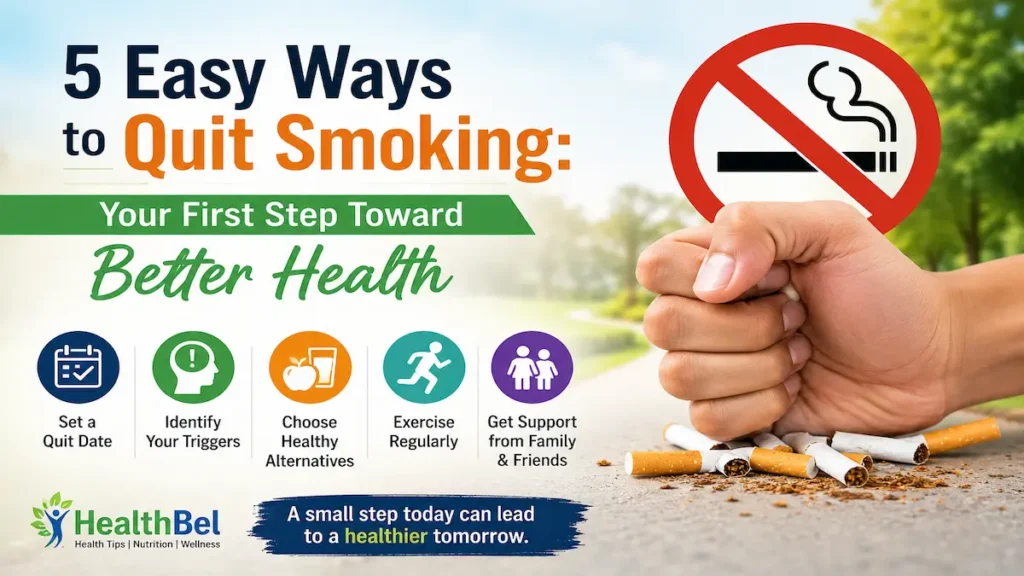
In this article, we will explore 5 easy ways to quit smoking and take your first step toward a healthier and happier life.
Why Is It Important to Quit Smoking?
Smoking affects almost every organ in the body. Over time, it may increase the risk of several serious health conditions, including:
- Lung disease
- Heart disease
- Stroke
- High blood pressure
- Certain types of cancer
- Weak immune system
- Breathing difficulties
Quitting smoking can provide benefits at any age. Even if you have smoked for many years, your body can begin to recover after you stop. The sooner you quit, the sooner your body can start healing.
Benefits of Quitting Smoking Over Time
Your body begins to recover soon after you stop smoking. The table below shows some of the possible health benefits that may occur over time after quitting smoking.
| Time After Quitting | Possible Benefits |
|---|---|
| 20 Minutes | Heart rate starts improving |
| 24 Hours | Carbon monoxide levels decrease |
| 2–12 Weeks | Better circulation and lung function |
| 3–9 Months | Reduced coughing and breathlessness |
| 1 Year | Lower risk of heart disease |
| 5+ Years | Reduced risk of stroke and smoking-related diseases |
1. Set a Quit Date and Stick to It
One of the most effective ways to quit smoking is to choose a specific date to stop.
Many people try to quit smoking without a clear plan and often return to cigarettes after a few days. Choosing a quit date gives you time to prepare mentally and physically, helping you stay focused and committed to your goal.
What You Can Do
- Choose a quit date within the next one or two weeks.
- Tell your family and friends about your goal.
- Remove cigarettes, lighters, and ashtrays from your home, car, and workplace.
- Prepare yourself for possible cravings.
A clear goal can help you stay focused and motivated during difficult moments.
2. Identify Your Smoking Triggers
Many smokers have certain situations, emotions, or habits that make them want to smoke. These are known as smoking triggers.
Common triggers include:
- Drinking tea or coffee
- Feeling stressed
- Spending time with friends who smoke
- After meals
- Feeling bored or lonely
How to Manage Triggers
Try to replace smoking-related habits with healthier alternatives.
For example:
- Drink water instead of reaching for a cigarette.
- Take a short walk after meals.
- Practice deep breathing during stressful situations.
- Spend less time around smoking environments, especially in the early weeks.
Recognizing your triggers is an important step toward controlling them.
3. Choose Healthy Alternatives
Cravings are common when quitting smoking. Instead of giving in to the urge, try replacing cigarettes with healthier options.
Healthy Alternatives to Try
- Sugar-free chewing gum
- Fresh fruits
- Carrot or cucumber sticks
- Fennel seeds
- Herbal tea
- Plenty of water
Many smokers miss the habit of holding or chewing something. Healthy snacks can help keep your hands and mouth busy while reducing the urge to smoke.
Stay Hydrated
Drinking enough water may help you feel refreshed and support your body as it adjusts to life without nicotine. Water can also help reduce dry mouth and keep you feeling energized throughout the day.
4. Exercise Regularly and Practice Deep Breathing
Physical activity can be a powerful tool when quitting smoking.
Exercise releases chemicals called endorphins, often known as “feel-good” hormones. These chemicals may help improve mood, reduce stress, and decrease cigarette cravings.
Good Activities for Beginners
- Brisk walking
- Cycling
- Jogging
- Stretching exercises
- Yoga
- Light workouts
You do not need to spend hours exercising. Even 20 to 30 minutes of activity most days of the week can make a positive difference.
Try Breathing Exercises
Deep breathing can help you manage cravings and relax your mind.
A simple method is:
- Breathe in slowly through your nose.
- Hold your breath for a few seconds.
- Exhale slowly through your mouth.
Repeating this process several times may help you feel calmer when cravings appear.
5. Get Support from Family and Friends
Quitting smoking does not have to be a journey you take alone.
Support from family members, friends, or trusted people can help you stay motivated and accountable.
Why Support Matters
- Encouragement during difficult moments
- Motivation to continue your progress
- Emotional support when cravings occur
- Greater confidence in your ability to quit
You may also consider joining a support group or talking to a healthcare professional if you need extra guidance.
Remember, asking for help is a sign of strength, not weakness.
Common Challenges When Quitting Smoking
Many people experience temporary withdrawal symptoms after they stop smoking.
These may include:
| Challenge | What You May Feel |
| Irritability | Mood changes |
| Anxiety | Feeling restless |
| Headaches | Temporary discomfort |
| Trouble sleeping | Difficulty falling asleep |
| Cravings | Strong desire to smoke |
These symptoms are usually temporary and often improve over time as your body adjusts.
Positive Changes After Quitting Smoking
One of the most encouraging parts of quitting smoking is seeing how your body begins to recover.
Within 20 Minutes
- Heart rate may start returning to a healthier level.
Within 24 Hours
- Carbon monoxide levels in the body begin to decrease.
Within a Few Weeks
- Blood circulation may improve.
- Physical activities may become easier.
- Breathing may feel more comfortable.
Within Several Months
- Coughing may decrease.
- Lung function may improve.
Over the Long Term
- Risk of heart disease may decrease.
- Risk of smoking-related illnesses may become lower.
- Overall health and quality of life may improve.
Extra Tips for Success
Manage Stress in Healthy Ways
Stress is one of the most common reasons people smoke.
Healthy stress-management techniques include:
- Meditation
- Yoga
- Reading books
- Listening to music
- Spending time with loved ones
- Getting enough sleep
Track Your Progress
Keeping a journal can help you stay motivated.
Write down:
- How many days you have been smoke-free
- Money you have saved
- Positive health changes you notice
Small victories can help keep you moving forward.
Reward Yourself
Celebrate your milestones.
If you complete one week, one month, or several months without smoking, reward yourself with something you enjoy. Positive reinforcement can help strengthen your commitment.
When Should You Talk to a Doctor?
Some people find it very difficult to quit smoking on their own.
Consider speaking with a healthcare professional if:
- You have tried quitting several times without success.
- Withdrawal symptoms are affecting your daily life.
- You need extra support or guidance.
A doctor can recommend evidence-based strategies and support that may help you quit successfully.
Conclusion
Quitting smoking is one of the best decisions you can make for your health. While it may not always be easy, every smoke-free day is a step toward a healthier future.
By setting a quit date, identifying your triggers, choosing healthy alternatives, staying active, and seeking support from loved ones, you can increase your chances of success.
Remember that progress takes time. Do not be discouraged by setbacks. Many successful non-smokers needed several attempts before quitting for good.
Start today, stay committed, and give yourself the opportunity to enjoy a healthier, smoke-free life.
Frequently Asked Questions (FAQs)
1. What is the easiest way to quit smoking?
Setting a quit date, avoiding triggers, and getting support from family and friends can make it easier to quit smoking and reduce the chances of returning to old habits.
2. How soon does the body start recovering after quitting smoking?
The body may begin showing positive changes within hours of quitting, and benefits continue to grow over time.
3. Why do cravings happen after quitting smoking?
Cravings occur because the body is adjusting to life without nicotine, which is the addictive substance found in cigarettes.
4. Can exercise help reduce smoking cravings?
Yes. Regular exercise may improve mood, reduce stress, and help manage cravings.
5. Is weight gain common after quitting smoking?
Some people may gain a small amount of weight, but healthy eating and regular exercise can help manage it.
6. Can long-term smokers successfully quit?
Yes. Many long-term smokers have successfully quit with determination, support, and the right strategies.

Medical Disclaimer
This content is for informational purposes only and should not be considered medical advice.