Hard of Hearing vs Deaf Complete Guide to Symptoms and Treatment
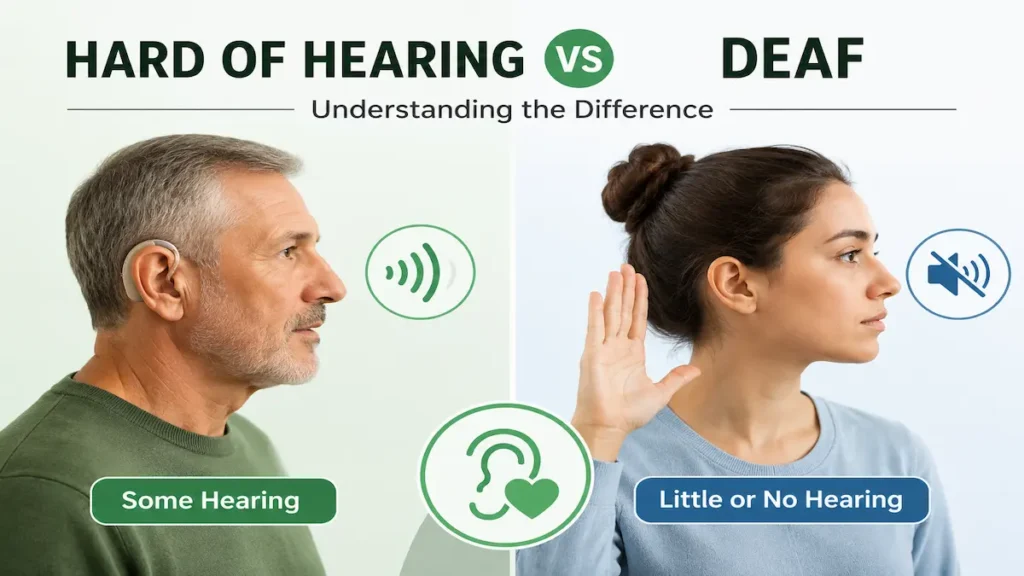
Hard of Hearing vs Deaf is a common topic that many people misunderstand. Although these terms are often used interchangeably, they describe different levels of hearing loss. Knowing the difference can help people choose the right care, treatment, and communication support.
Hearing helps us connect with people, enjoy music, learn new things, and stay safe. When hearing becomes weaker, everyday activities can become more difficult. Some people have mild hearing loss, while others have very little or no hearing.
In this guide, you will learn what hard of hearing and deaf mean, their symptoms, common causes, treatment options, and simple ways to protect your hearing.
Understanding the Hard of Hearing vs Deaf difference can help people make informed decisions about hearing care and communication support.
Key Takeaways
- Hard of hearing means a person still has some hearing, while deaf usually means very little or no hearing.
- Hearing loss can range from mild to profound.
- Common causes include aging, loud noise, infections, injuries, and genetics.
- Early diagnosis, treatment, and hearing protection can help improve hearing and prevent further damage.
What Does Hard of Hearing Mean?
Knowing the Hard of Hearing vs Deaf difference can help people understand hearing loss more clearly. A person is called hard of hearing when they still have some hearing but cannot hear sounds clearly. They may hear people speaking but have trouble understanding words, especially in noisy places.
Many people who are hard of hearing use hearing devices or other communication methods to improve daily life.
Hearing loss can affect one ear or both ears. It may happen slowly over many years or appear suddenly.
What Does Deaf Mean?
A person is considered deaf when they have very little hearing or cannot hear at all. Some people are born deaf, while others lose their hearing later because of illness, injury, aging, or other causes.
People who are deaf may communicate in different ways. Some use sign language, some read lips, and others use written communication or technology.
Being deaf does not affect intelligence. People who are deaf can study, work, and live independent lives with the right support.
Hard of Hearing vs Deaf Difference
The main difference between hard of hearing and deaf is the amount of hearing a person has.
| Hard of Hearing | Deaf |
|---|---|
| Some hearing is still present. | Very little or no hearing. |
| May hear loud or nearby sounds. | May not hear even loud sounds. |
| Often benefits from hearing devices. | May rely more on visual communication methods. |
| Speech may still be understood with support. | Communication methods may vary depending on the person. |
Both conditions are forms of hearing loss, but the amount of hearing a person has is different.
Levels of Hearing Loss
Doctors often describe hearing loss in different stages. Understanding Hard of Hearing vs Deaf starts with knowing the different levels of hearing loss.
Mild Hearing Loss
Soft voices and quiet sounds become difficult to hear. Conversations may still be possible in quiet places.
Moderate Hearing Loss
Normal conversations become harder to understand. They often need people to repeat what they said.
Severe Hearing Loss
Only loud speech or loud sounds may be heard.
Profound Hearing Loss
Very little hearing remains, or there may be no hearing at all.
Symptoms of Hearing Loss
Recognizing the signs of Hard of Hearing vs Deaf early can improve treatment outcomes and daily communication. Hearing loss does not always happen suddenly. It often develops slowly, making it difficult to notice at first.
Common symptoms include:
- Difficulty understanding everyday conversations.
- People’s voices may sound unclear or muffled.
- Often needing others to repeat what they said.
- Difficulty hearing in crowded or noisy places.
- Turning up the TV or phone volume higher than normal.
- Missing phone calls or doorbells.
- Feeling tired after long conversations because hearing takes more effort.
- Hearing ringing sounds in the ears.
- Avoiding social events because conversations become difficult.
Early treatment may help reduce the impact of hearing loss.
Signs of Hearing Loss in Children
Children may not realize they have hearing problems. Parents and teachers should watch for these common signs:
- Speech may develop later than expected.
- Not responding when called.
- Speaking very loudly.
- Difficulty understanding and following directions.
- Frequently saying “What?” or asking others to repeat.
- Turning the television volume very high.
- Poor performance at school because they cannot hear clearly.
Finding hearing problems early can improve language and learning development.
Signs of Hearing Loss in Babies
Babies also show warning signs.
Possible signs include:
- Not responding to loud noises.
- Not turning toward voices after several months of age.
- Not recognizing familiar voices.
- Delayed speech milestones.
- Making fewer sounds than other babies of the same age.
Regular health checkups can help detect hearing problems early.
Common Causes of Hearing Loss
Many different conditions can affect hearing.
Aging
As people grow older, the parts of the ear naturally become less effective. This is one of the most common reasons for hearing loss.
Loud Noise
Listening to loud sounds for a long time can harm the inner ear.
Common examples include:
- Loud music
- Fireworks
- Heavy machinery
- Power tools
- Traffic noise
- Personal audio devices used at high volume
The damage may happen slowly over time.
Ear Infections
Repeated ear infections may affect hearing, especially if they are not treated properly.
Earwax Build-Up
Too much earwax can block sound from reaching the eardrum. This usually causes temporary hearing loss.
Head or Ear Injury
A serious injury can damage the ear or hearing nerves.
Certain Medicines
Some medicines may affect hearing, especially when taken for a long time or in high doses. Always take medicines only as directed by a healthcare professional.
Birth Conditions
Some babies are born with hearing loss because the ears or hearing system did not develop normally.
Family History
Some types of hearing loss can run in families because of inherited genetic factors.
Knowing the causes of Hard of Hearing vs Deaf may help people protect their hearing and reduce future hearing problems.
How Doctors Diagnose Hearing Loss
If hearing problems continue, a healthcare professional may recommend hearing tests.
Diagnosis may include:
- Asking about symptoms.
- Examining the inside of the ear.
- Checking for earwax buildup or signs of infection.
- Hearing tests using different sounds and tones.
- Recommending further tests if needed.
Identifying the cause helps determine the right treatment.
Treatment Options for Hard of Hearing and Deaf People
The right treatment for Hard of Hearing vs Deaf depends on the cause and severity of hearing loss.
Hearing Devices
Many people with mild to severe hearing loss benefit from hearing devices that make sounds louder and clearer.
Earwax Removal
If earwax is blocking the ear, safe removal can improve hearing quickly.
Medicines
Medicines may help if an infection or inflammation is causing the hearing loss.
Surgery
Some ear conditions can be treated with surgery to improve hearing.
Hearing Implants
People with severe or profound hearing loss may benefit from special hearing implant systems if recommended by a specialist.
Communication Support
Some people learn sign language, lip reading, or use speech-to-text technology to communicate more easily.
Treatment for Hard of Hearing vs Deaf depends on the cause, the level of hearing loss, and the person’s individual needs.
How to Protect Your Hearing
Simple daily habits can help prevent many cases of hearing loss.
Keep the Volume Low
Keep the volume at a safe level when listening to music or watching videos.
Wear Hearing Protection
Use ear protection in loud workplaces or during noisy activities.
Take Listening Breaks
Give your ears time to rest after spending time in noisy places.
Keep Ears Clean Safely
Do not insert sharp objects or cotton swabs deep inside the ear. This can push earwax deeper or damage the ear.
Treat Ear Infections Early
Do not ignore ear pain, fluid coming from the ear, or changes in hearing. Getting treatment early can help prevent complications.
Protect Children
Children’s ears are more sensitive to loud sounds. Keep the volume of headphones at a safe level.
Get Regular Hearing Checks
People who work in noisy environments or older adults should have hearing checked regularly.
Simple lifestyle changes can lower the risk of Hard of Hearing vs Deaf caused by preventable hearing damage.
Living with Hearing Loss
Many people with Hard of Hearing vs Deaf continue to live active and independent lives.
Helpful habits include:
- Sit closer during conversations.
- Face the speaker.
- Choose quiet places for important discussions.
- Use captions while watching television.
- Inform family and friends about your hearing needs.
- Follow the treatment plan provided by your healthcare professional.
Support from family makes communication much easier.
Tips for Talking with Someone Who Is Hard of Hearing
Good communication benefits everyone.
- Get the person’s attention before speaking.
- Face them while talking.
- Speak clearly and at a natural pace.
- Do not shout.
- Reduce background noise.
- Choose simple words when necessary.
- Repeat or rephrase sentences when necessary.
- Always be patient and show respect.
Small changes can greatly improve conversations.
When Should You See a Doctor?
Do not ignore hearing changes.
Seek medical advice if you notice:
- A sudden loss of hearing.
- Hearing that becomes worse over time.
- Ear pain along with hearing problems.
- Ringing in the ears that continues.
- Fluid or blood draining from the ear.
- Trouble understanding everyday conversations.
Early diagnosis often leads to better treatment results.
Conclusion
Understanding the Hard of Hearing vs Deaf difference can help people recognize hearing loss early and choose the right support. While a person who is hard of hearing still has some hearing ability, a deaf person has very little or no hearing. Both conditions affect people differently, and the right care depends on the cause and severity of the hearing loss.
If you notice hearing changes, such as difficulty understanding conversations, needing others to repeat themselves, or a sudden loss of hearing, do not ignore these signs. Early diagnosis and proper treatment can improve communication, protect your remaining hearing, and enhance your quality of life. Taking simple steps like keeping the volume at a safe level, protecting your ears from loud noise, and getting regular hearing checks can also help maintain healthy hearing for years to come.
Learning about Hard of Hearing vs Deaf is the first step toward protecting your hearing and seeking timely medical care when needed.
Frequently Asked Questions
Can hearing loss be cured?
Some types of hearing loss can be treated, especially when caused by earwax, infection, or certain ear problems. Permanent hearing loss may not be completely reversible, but treatments can improve hearing and communication.
Is hearing loss only a problem for older adults?
No. Hearing loss can affect babies, children, adults, and older people.
Can loud music damage hearing?
Yes. Listening to loud music for long periods can permanently damage the inner ear.
Can hearing loss happen suddenly?
Yes. Although many cases develop slowly, sudden hearing loss is possible and should be treated as a medical emergency.
Can children be born with hearing loss?
Yes. Some babies are born with hearing loss because of inherited conditions or problems that affect hearing before birth.

Medical Disclaimer
This content is for informational purposes only and should not be considered medical advice.