Cold Hands and Feet Causes: Why Your Hands and Feet Stay Cold
Have you ever wondered why your hands and feet stay cold even when everyone else feels comfortable? While it’s common during winter, constantly cold hands and feet aren’t always caused by the weather. Sometimes it’s simply your body’s natural way of conserving heat. In other cases, it may be linked to an underlying health condition that affects blood circulation, nerve function, or hormone balance.
Understanding the cold hands and feet causes can help you decide whether simple lifestyle changes are enough or if it’s time to seek medical advice.
Key Takeaways
- Cold hands and feet are usually caused by reduced blood flow to the fingers and toes.
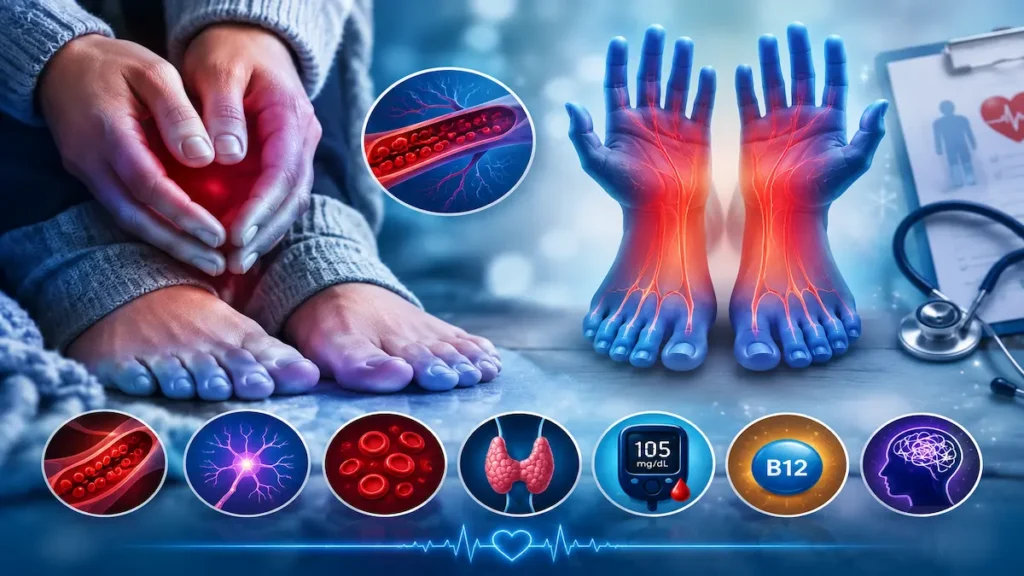
- Common cold hands and feet causes include poor circulation, Raynaud’s phenomenon, anemia, hypothyroidism, diabetes, and vitamin B12 deficiency.
- Smoking, inactivity, stress, and prolonged exposure to cold weather can make symptoms worse.
- Seek medical care if cold hands and feet occur with pain, numbness, skin color changes, or slow-healing sores.
Quick Answer
Cold hands and feet are most commonly caused by poor circulation, cold temperatures, Raynaud’s phenomenon, anemia, hypothyroidism, diabetes, or vitamin B12 deficiency. While occasional cold hands and feet are normal, persistent symptoms—especially with pain, numbness, or skin color changes—should be evaluated by a healthcare provider.
Why Do Hands and Feet Feel Cold?
Your body naturally keeps vital organs like the heart, brain, and lungs warm before sending blood to your hands and feet. During cold weather, blood vessels narrow to reduce heat loss, which is why your fingers and toes often feel colder first.
However, if your hands and feet remain cold even in warm weather, it could indicate an underlying health condition affecting circulation, metabolism, or nerve function.
Common Cold Hands and Feet Causes
1. Poor Blood Circulation
Poor circulation is one of the leading cold hands and feet causes. Reduced blood flow means less oxygen and warmth reach your fingers and toes.
Other symptoms may include:
- Tingling or numbness
- Muscle cramps
- Pale or bluish skin
- Slow-healing wounds
Smoking, high cholesterol, high blood pressure, obesity, and peripheral artery disease (PAD) can all contribute to poor circulation.
2. Raynaud’s Phenomenon
Raynaud’s phenomenon causes small blood vessels in the fingers and toes to overreact to cold temperatures or emotional stress.
During an episode, fingers may turn white, blue, and then red as blood flow returns. Tingling, numbness, and throbbing pain are common.
3. Anemia
Anemia occurs when your body doesn’t have enough healthy red blood cells to carry oxygen throughout the body. As oxygen delivery decreases, your hands and feet may feel cold.
Common symptoms include fatigue, weakness, dizziness, pale skin, and shortness of breath.
4. Hypothyroidism
An underactive thyroid slows your metabolism, making it harder for your body to produce heat.
People with hypothyroidism often experience cold hands and feet along with dry skin, constipation, weight gain, and fatigue.
5. Diabetes
High blood sugar can damage nerves and blood vessels over time, reducing blood flow to the hands and feet.
If you have diabetes, seek medical advice if you notice numbness, tingling, burning sensations, or slow-healing wounds.
6. Vitamin B12 Deficiency
Vitamin B12 supports healthy nerves and red blood cells. Low levels may reduce oxygen delivery and affect nerve function, leading to cold hands and feet.
Older adults, vegans, and people with digestive disorders have a higher risk of deficiency.
7. Stress and Anxiety
Stress causes your body to release adrenaline, temporarily narrowing blood vessels and reducing blood flow to your hands and feet.
Fortunately, symptoms often improve as stress levels decrease.
When Should You See a Doctor?
See a healthcare provider if your cold hands and feet:
- Occur regularly without cold exposure
- Cause severe pain or persistent numbness
- Turn blue, purple, or black
- Develop sores that heal slowly
- Are accompanied by dizziness, chest pain, unexplained weight loss, or extreme fatigue
These symptoms may indicate an underlying medical condition requiring treatment.
How Are Cold Hands and Feet Diagnosed?
Your healthcare provider may recommend:
- Blood tests for anemia or vitamin deficiencies
- Thyroid function tests
- Blood sugar testing
- Blood pressure measurement
- Circulation tests
A proper diagnosis helps identify the exact cause and guides the right treatment.
Treatment
Treatment depends on the underlying cause.
- Improve circulation through regular exercise and quitting smoking.
- Treat iron or vitamin B12 deficiency if confirmed by blood tests.
- Manage diabetes and thyroid disorders as advised by your healthcare provider.
- For Raynaud’s phenomenon, protecting your hands from cold and avoiding smoking may reduce attacks.
Never start iron or vitamin supplements without medical advice.
Can You Prevent Cold Hands and Feet?
In many cases, yes. Healthy lifestyle habits can lower your risk.
- Stay physically active.
- Wear warm gloves and socks during cold weather.
- Eat a balanced diet rich in iron and vitamin B12.
- Stay hydrated.
- Avoid tobacco products.
- Maintain a healthy weight.
- Manage stress through relaxation techniques.
Frequently Asked Questions
Can dehydration cause cold hands and feet?
Yes. Dehydration may reduce blood volume, making circulation slightly less efficient.
Are cold hands and feet always caused by poor circulation?
No. Other cold hands and feet causes include anemia, hypothyroidism, diabetes, Raynaud’s phenomenon, and vitamin B12 deficiency.
Which vitamin deficiency causes cold hands and feet?
Iron deficiency and vitamin B12 deficiency are the most common nutritional causes.
Can anxiety make your hands cold?
Yes. Anxiety can temporarily narrow blood vessels, reducing blood flow to your hands and feet.
Is it normal to have cold hands in winter?
Yes. Cold weather naturally reduces blood flow to the hands and feet as your body preserves heat for vital organs.
The Bottom Line
Most cold hands and feet causes are harmless and improve with simple lifestyle changes such as staying active, eating a balanced diet, and keeping your body warm. However, persistent cold hands and feet—especially when accompanied by pain, numbness, skin color changes, or slow-healing wounds—should not be ignored. Early diagnosis can help identify conditions like poor circulation, anemia, hypothyroidism, diabetes, or Raynaud’s phenomenon before complications develop.
References
- British Heart Foundation. *When should I worry about cold hands and feet in winter?*
- ColumbiaDoctors. *Why Do Your Hands Get Cold?*
- Healthline. *Cold Feet and Hands: What to Do and Causes*
- Max Healthcare. *Got Unusually Cold Hands? Here are the Possible Causes*

Medical Disclaimer
This content is for informational purposes only and should not be considered medical advice.