Yoga for Beginners: Best Easy Yoga Poses, Benefits & Daily Routine
Yoga for Beginners is one of the best ways to improve both physical and mental health. People of all ages practice yoga to become stronger, more flexible, and less stressed. If you are new to yoga, you may feel nervous or unsure about where to begin. Many beginners think they need to be flexible before starting yoga, but this is not true.
Yoga is for everyone. You do not need special skills, expensive equipment, or years of experience. All you need is a little space, comfortable clothing, and a willingness to learn. By practicing simple Beginner Yoga Poses regularly, you can improve your fitness, reduce stress, and develop healthy habits that support your overall well-being.
This Yoga for Beginners guide explains the Yoga Benefits, Easy Yoga Poses for Beginners, a Daily Yoga Routine, and important safety tips. The information is based on widely accepted yoga practices and beginner-level instruction, making it suitable for people who are just starting their yoga journey.
What Is Yoga for Beginners?
Yoga is an ancient practice that began in India thousands of years ago. It combines physical postures, breathing techniques, and mindfulness. The word “yoga” means union, referring to the connection between the body, mind, and spirit.
Today, yoga is practiced around the world because of its many health benefits. It can help improve flexibility, strength, balance, concentration, and emotional well-being.
Unlike some forms of exercise that focus only on physical fitness, Yoga for Beginners encourages both physical and mental health. This makes it a valuable activity for people who want a balanced and healthy lifestyle.
Why Yoga for Beginners Is a Great Choice
One of the biggest advantages of Yoga for Beginners is that it can be adapted to different fitness levels. Whether you are young, older, active, or just beginning an exercise routine, yoga offers a safe way to improve your health.
Beginners often choose yoga because:
• It is gentle on the joints.
• It requires very little equipment.
• It can be practiced at home or in a class.
• It helps improve flexibility and strength.
• It supports mental relaxation.
• It can be adjusted to suit different abilities.
The goal of yoga is not perfection. The goal is to move safely, breathe deeply, and gradually improve over time.
Top Yoga Benefits for Beginners
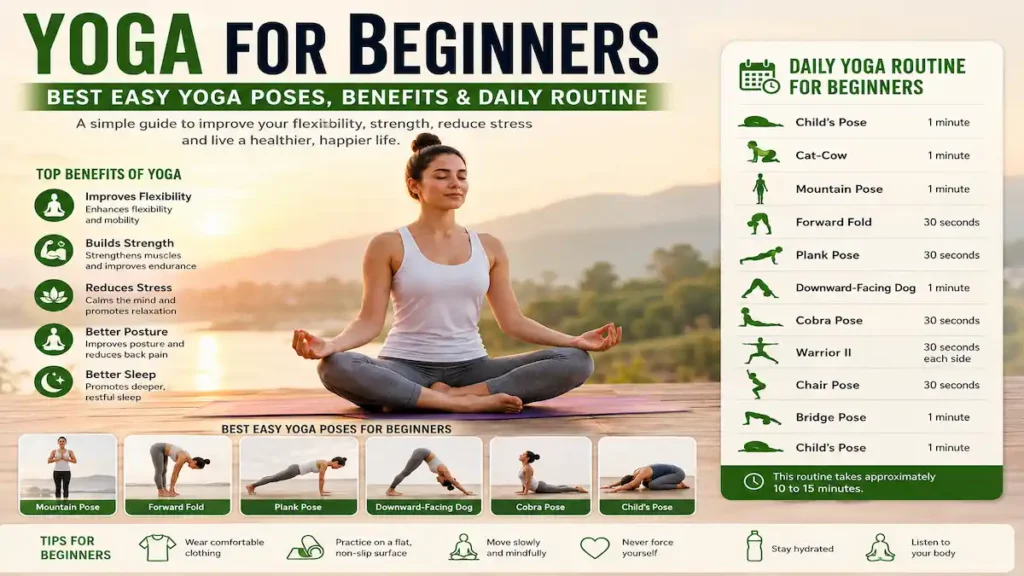
Yoga for Beginners offers many benefits for both the body and mind. Regular practice can improve flexibility, build strength, reduce stress, support better posture, and help improve overall health. Even a few minutes of yoga each day can make a positive difference.
How Yoga for Beginners Improves Flexibility
Many people spend long hours sitting at desks, using computers, or looking at phones. This can make muscles tight and stiff. Yoga for Flexibility includes stretching movements that help improve flexibility over time.
With regular practice, you may notice that bending, reaching, and moving become easier. Improved flexibility can also reduce muscle tension and improve overall mobility.
How Beginner Yoga Poses Build Strength
Yoga is not only about stretching. Many Beginner Yoga Poses require you to support your body weight using your muscles. This helps strengthen the arms, legs, back, shoulders, and core.
Building strength through yoga can improve daily activities such as lifting, walking, climbing stairs, and maintaining good posture.
Yoga Benefits for Better Posture
Poor posture is common in modern life. Sitting for long periods can cause rounded shoulders and back discomfort.
Yoga encourages proper body alignment and strengthens the muscles that support the spine. This can help improve posture and reduce strain on the neck and back.
How Daily Yoga Practice Reduces Stress
Stress affects both physical and mental health. Yoga combines movement with controlled breathing, which helps calm the nervous system.
Many people report feeling more relaxed, focused, and emotionally balanced after a yoga session.
Yoga for Beginners and Better Sleep
People who practice yoga regularly often experience improved sleep quality. Relaxation techniques used in yoga can help the body and mind prepare for restful sleep.
Safety Tips Before Starting Yoga for Beginners
To make your yoga practice safe and enjoyable, follow these guidelines:
• Wear comfortable clothing.
• Practice on a flat, non-slip surface.
• Use a yoga mat if available.
• Move slowly and carefully.
• Never force yourself into a position.
• Stop immediately if you feel sharp pain.
• Focus on breathing throughout each pose.
• Stay hydrated during the day.
If you have a medical condition, recent injury, or ongoing health concern, consult a healthcare professional before starting a new exercise program.
Mountain Pose (Tadasana): One of the Best Yoga Poses for Beginners
How to Do Mountain Pose
- Stand tall with your feet together or hip-width apart.
- Distribute your weight evenly on both feet.
- Relax your shoulders and keep them away from your ears.
- Lengthen your spine.
- Keep your chin parallel to the floor.
- Breathe deeply and steadily.
Benefits of Mountain Pose for Beginners
• Improves posture
• Strengthens the legs
• Increases body awareness
• Encourages confidence and stability
Forward Fold (Uttanasana): Easy Yoga Pose for Flexibility
How to Do Forward Fold
- Start in Mountain Pose.
- Raise your arms overhead while inhaling.
- Exhale and bend forward from your hips.
- Allow your hands to reach toward the floor.
- Keep a slight bend in your knees if necessary.
Benefits of Forward Fold
• Stretches the hamstrings
• Relieves tension in the back
• Improves flexibility
• Promotes relaxation
Plank Pose (Phalakasana): Beginner Yoga Exercise for Strength
How to Do Plank Pose
- Place your hands under your shoulders.
- Step your feet back.
- Form a straight line from your head to your heels.
- Engage your abdominal muscles.
- Hold the position while breathing normally.
Benefits of Plank Pose
• Builds core strength
• Strengthens the arms and shoulders
• Improves balance
• Increases endurance
Downward-Facing Dog (Adho Mukha Svanasana): Classic Yoga Pose for Beginners
How to Do Downward-Facing Dog
- Begin in a plank position.
- Lift your hips upward.
- Create an upside-down “V” shape with your body.
- Press your hands firmly into the floor.
- Keep your spine long and your neck relaxed.
Benefits of Downward-Facing Dog
• Stretches the entire body
• Strengthens the shoulders
• Improves circulation
• Helps reduce stress
Child’s Pose (Balasana): Relaxing Yoga Pose for Beginners
How to Do Child’s Pose
- Kneel on the floor.
- Sit back on your heels.
- Lower your chest toward your thighs.
- Rest your forehead on the mat.
- Extend your arms forward or place them beside your body.
Benefits of Child’s Pose
• Relaxes the body
• Reduces stress and tension
• Stretches the lower back
• Encourages deep breathing
Cat-Cow Pose: Easy Yoga Exercise for Beginners
How to Do Cat-Cow
- Start on your hands and knees.
- Inhale and lift your head while lowering your belly.
- Exhale and round your back toward the ceiling.
- Continue moving slowly between the two positions.
Benefits of Cat-Cow
• Improves spinal flexibility
• Reduces back stiffness
• Warms up the body
• Encourages healthy movement
Cobra Pose (Bhujangasana): Beginner Yoga Pose for Back Strength
How to Do Cobra Pose
- Lie face down on the floor.
- Place your hands beneath your shoulders.
- Press gently into your hands.
- Lift your chest while keeping your hips on the floor.
- Look forward and breathe steadily.
Benefits of Cobra Pose
• Strengthens back muscles
• Opens the chest
• Improves posture
• Increases spinal flexibility
Chair Pose (Utkatasana): Best Yoga Pose for Leg Strength
How to Do Chair Pose
- Stand with your feet together.
- Raise your arms overhead.
- Bend your knees as though sitting in a chair.
- Keep your chest lifted.
- Hold the position while breathing normally.
Benefits of Chair Pose
• Strengthens the thighs
• Improves balance
• Builds endurance
• Activates core muscles
Warrior II Pose (Virabhadrasana II): Powerful Yoga Pose for Beginners
How to Do Warrior II
- Stand with your feet wide apart.
- Turn one foot outward.
- Bend the front knee.
- Extend your arms to the sides.
- Look over your front hand.
Benefits of Warrior II
• Strengthens the legs
• Opens the hips
• Improves balance
• Builds confidence
Bridge Pose (Setu Bandhasana): Easy Yoga Pose for a Strong Lower Body
How to Do Bridge Pose
- Lie on your back.
- Bend your knees.
- Place your feet flat on the floor.
- Lift your hips upward.
- Hold the position while breathing deeply.
Benefits of Bridge Pose
• Strengthens the glutes
• Activates the hamstrings
• Supports the lower back
• Improves posture
Easy Daily Yoga Routine for Beginners
If you are looking for a simple Daily Yoga Routine for Beginners, try the following beginner-friendly yoga sequence. These Easy Yoga Poses can help improve flexibility, balance, strength, and overall fitness.
| Pose | Time |
|---|---|
| Child’s Pose | 1 minute |
| Cat-Cow | 1 minute |
| Mountain Pose | 1 minute |
| Forward Fold | 30 seconds |
| Plank Pose | 30 seconds |
| Downward-Facing Dog | 1 minute |
| Cobra Pose | 30 seconds |
| Warrior II | 30 seconds each side |
| Chair Pose | 30 seconds |
| Bridge Pose | 1 minute |
| Child’s Pose | 1 minute |
This Daily Yoga Routine takes approximately 10 to 15 minutes and can be practiced most days of the week.
Common Yoga Mistakes Beginners Should Avoid
Holding Your Breath During Yoga
Breathing is an essential part of Yoga for Beginners. Focus on slow, steady breaths throughout each pose.
Forcing Beginner Yoga Poses
Flexibility develops gradually. Avoid pushing yourself beyond your comfort level.
Skipping Warm-Up Exercises
Simple movements help prepare the body for exercise and reduce the risk of injury.
Comparing Yourself to Others
Every person’s body is different. Focus on your own progress instead of comparing yourself to others.
Practicing Yoga Inconsistently
Regular practice produces the best results. Even short daily sessions can make a difference.
Expert Recommendations for Yoga Beginners
According to certified yoga instructors and fitness professionals, the best approach to Yoga for Beginners is to start with basic poses and focus on proper form. Learning correct techniques can improve safety and help beginners enjoy the full Yoga Benefits.
Experts also emphasize the importance of consistency. Practicing yoga regularly for a few minutes each day is often more effective than practicing occasionally for longer periods.
Listening to your body, maintaining proper breathing, and progressing gradually can help create a safe and successful yoga experience.
Conclusion: Why Yoga for Beginners Is Worth Starting Today
Yoga for Beginners is a safe and effective way to improve physical fitness, flexibility, balance, and mental well-being. Beginner Yoga Poses such as Mountain Pose, Child’s Pose, Cobra Pose, Warrior II, and Bridge Pose provide an excellent foundation for long-term health and wellness.
You do not need to be flexible or highly athletic to begin. The key is to practice consistently, move mindfully, and enjoy the journey.
By making yoga part of your Daily Yoga Routine, you can build healthier habits, reduce stress, and support long-term wellness.
FAQs About Yoga for Beginners
Is yoga suitable for complete beginners?
Yes. Yoga for Beginners is suitable for people of all fitness levels. Many Beginner Yoga Poses are simple, safe, and easy to learn.
How often should beginners practice yoga?
Beginners can start with 10–15 minutes of yoga three to five times per week and gradually increase their practice.
Can yoga help improve flexibility?
Yes. Yoga for Flexibility stretches muscles and joints, helping improve flexibility over time.
Do I need special equipment for yoga?
No. Comfortable clothing and a safe practice space are enough to get started. A yoga mat can provide additional comfort and support.
Can yoga help reduce stress?
Yes. One of the biggest Yoga Benefits is stress reduction. Yoga combines movement, breathing, and mindfulness techniques that may help promote relaxation.
Is yoga a good workout?
Yes. Yoga can improve strength, flexibility, balance, endurance, and overall fitness.
How long does it take to see results from yoga?
Many people notice improvements in flexibility, posture, and relaxation within a few weeks of regular practice.
Which yoga pose is best for beginners?
Child’s Pose is often recommended as one of the Best Yoga Poses for Beginners because it is gentle, relaxing, and easy to perform.

Medical Disclaimer
This content is for informational purposes only and should not be considered medical advice.