10 Early Chronic Lung Disease Symptoms Causes and Treatment
Chronic lung disease is a health problem that affects the lungs for a long time. It can make breathing harder and can slowly reduce lung health.
Many people ignore early signs because they seem small. A little cough, feeling tired, or getting out of breath quickly may not look serious. But these signs can show that the lungs are not working well.
Knowing the early chronic lung disease symptoms can help people get help at the right time. Early care, healthy habits, and proper treatment can help manage the problem.
Some common chronic lung diseases are COPD, asthma, and pulmonary fibrosis. These diseases can make it harder for a person to breathe and do daily activities.
Key Takeaways
- Spot Early Signs: Know the common chronic lung disease symptoms early.
- Protect Your Lungs: Avoid smoking, smoke, and harmful dust.
- Choose Healthy Habits: Exercise, eat well, and support lung health.
- Get Help Early: Proper care can help manage lung problems.
What Is Chronic Lung Disease?
Chronic lung disease is a lung problem that lasts for a long time. It can continue for many months or even years.
Our lungs help us breathe. They take oxygen from the air and send it to our body. When the lungs become weak or damaged, they cannot work properly.
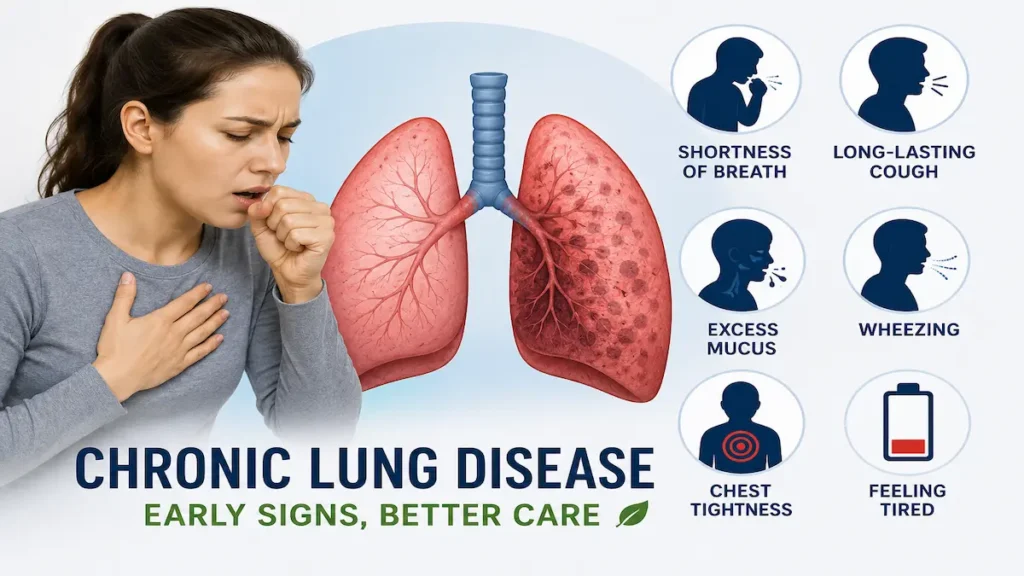
This can cause problems like:
- Trouble breathing
- Long-lasting cough
- Chest tightness
- Feeling tired easily
Many things can increase the risk of chronic lung disease. These include smoking, air pollution, dust, harmful chemicals, and some health problems.
Finding lung problems early can help control symptoms and protect lung health.
Chronic Lung Disease Symptoms
1. Shortness of Breath
Shortness of breath means having trouble getting enough air.
It is one of the most common early signs of chronic lung disease. A person may feel breathless while walking, climbing stairs, or doing simple activities.
At first, this problem may happen only during exercise. But over time, some people may feel breathing problems even while resting.
If you often feel short of breath, you should talk to a doctor.
2. Cough That Lasts a Long Time
A cough that does not go away can be an early sign of a lung problem.
Some people may have a dry cough. Others may cough up mucus.
A cough that lasts for many weeks should not be ignored because it may mean that the lungs or airways are irritated.
3. More Mucus Than Normal
The lungs make a small amount of mucus to protect themselves from dust and germs.
But when the lungs have a problem, they may make too much mucus.
A person may notice:
- Coughing up mucus often
- Thick mucus
- Need to clear the throat often
- Changes in mucus color
These signs may mean that the lungs need a check-up.
4. Wheezing
Wheezing is a whistling sound that happens while breathing.
It usually happens when the air paths inside the lungs become narrow. This makes it harder for air to move in and out.
Some people notice wheezing during exercise, cold weather, or after a chest infection.
If wheezing happens often, it is important to get medical advice.
5. Chest Tightness
Chest tightness means feeling pressure or heaviness in the chest.
Some people feel like their chest is being squeezed or that breathing is not comfortable.
This can happen when air does not move easily through the lungs.
Frequent chest tightness should be checked by a healthcare professional.
Causes of Chronic Lung Disease
Many factors can cause chronic lung disease. Some common causes are given below.
1. Smoking
Smoking is one of the main causes of chronic lung disease.
Cigarette smoke contains harmful chemicals. These chemicals can damage the lungs slowly over time.
People who smoke for many years have a higher risk of lung problems like COPD.
Avoiding smoking is one of the best ways to keep your lungs healthy.
2. Air Pollution
Air pollution can harm the lungs. Smoke from cars, factories, and burning waste can contain harmful particles.
When people breathe polluted air for a long time, it can damage the lungs and increase the risk of breathing problems.
Trying to avoid polluted areas and using protection when needed can help protect lung health.
3. Dust and Chemicals
Some people work in places where they breathe dust, smoke, or chemicals.
For example, workers in factories, construction, and mining may be exposed to harmful substances.
Breathing these substances for many years can damage the lungs.
Using safety equipment like masks can help lower the risk.
4. Repeated Lung Infections
Some lung infections can cause damage if they happen again and again.
Frequent infections may weaken the lungs and increase the chance of long-term lung problems.
Getting proper treatment for infections can help protect lung health.
5. Family History
Some people may have a higher risk of chronic lung disease because of their family history.
Certain genes can make the lungs weaker or more sensitive.
People with a family history of lung problems should take care of their lung health and get regular check-ups.
6. Feeling Tired All the Time
Feeling tired often can be a sign of chronic lung disease.
When the lungs do not work well, the body may not get enough oxygen. Because of this, a person may feel weak or tired.
Simple activities like walking, climbing stairs, or doing housework may feel harder than before.
If you feel tired for a long time without a clear reason, it is better to talk to a doctor.
7. Trouble Doing Normal Activities
People with lung problems may find daily activities more difficult.
Things like walking, playing, exercising, or carrying things may make them feel tired or short of breath.
A person may need more breaks while doing normal work.
This change can be an early sign that the lungs need care.
8. Getting Chest Infections Often
Some people with chronic lung disease may get chest infections again and again.
A lung infection can cause problems like cough, fever, mucus, and breathing trouble.
If chest infections happen many times, it is important to get medical advice.
9. Losing Weight Without Trying
Some people with chronic lung disease may lose weight without making changes to their diet.
Breathing problems can make eating difficult because the person may feel tired while eating.
Sudden weight loss should not be ignored. It is important to find the reason behind it.
10. Blue Color on Lips or Fingers
In serious lung problems, some people may notice a blue color on their lips, nails, or fingers.
This can happen when the body does not get enough oxygen.
This is a serious sign and needs medical help.
How Doctors Find Chronic Lung Disease
Doctors use simple tests and ask questions to understand lung problems.
Health Check
First, the doctor asks about symptoms and health history.
The doctor may ask:
- Do you have trouble breathing?
- How long have you had a cough?
- Do you smoke?
- Are you around dust or smoke?
These answers help the doctor understand the problem.
Breathing Test
Doctors may do a breathing test to check how well the lungs work.
During this test, a person breathes into a special machine. The machine checks how much air the lungs can hold and move.
Chest Pictures
Doctors may take pictures of the lungs using an X-ray or other scans.
These pictures help doctors see if there is any problem inside the lungs.
Blood Test
A blood test may be done to check oxygen levels and look for other health problems.
Treatment for Chronic Lung Disease
Treatment depends on the type of lung problem and how serious it is.
The main goal is to make breathing easier and help people live a better life.
1. Medicines
Doctors may give medicines to help control lung symptoms.
Some medicines help open the airways so air can move more easily.
Always take medicines only as advised by your doctor.
2. Breathing Exercises
Simple breathing exercises may help people control their breathing.
These exercises can help a person feel more comfortable while breathing.
A doctor can suggest exercises that are safe for you.
3. Extra Oxygen Support
Some people with serious lung problems may need extra oxygen.
This helps the body get the oxygen it needs.
Doctors decide when a person needs this type of treatment.
4. Special Lung Care Programs
Some people join special programs that help them manage lung problems.
These programs may teach:
- Simple exercises
- Better breathing methods
- Healthy habits
They can help people become stronger and handle symptoms better.
Healthy Ways to Protect Your Lungs
Small lifestyle changes can help keep your lungs healthy.
Stop Smoking
Smoking is harmful to the lungs.
Quitting smoking can help protect your lungs and reduce further damage.
Stay Active
Regular movement can help keep your body strong.
Walking and simple exercises can support better health.
Always choose activities that match your health level.
Eat Healthy Foods
Healthy foods give your body the energy it needs.
Try to eat:
- Fruits
- Vegetables
- Whole grains
- Protein-rich foods
A healthy diet supports your overall health.
Protect Yourself From Smoke and Dust
Try to stay away from smoke, dust, and harmful chemicals.
If you work in a dusty place, use proper safety equipment to protect your lungs.
Get Regular Check-Ups
Regular health checks can help find problems early.
Early care can make it easier to manage chronic lung disease.
When Should You See a Doctor?
Talk to a doctor if you have:
- Breathing problems
- A cough that lasts a long time
- Chest tightness
- Frequent chest infections
- Extreme tiredness
- Changes in mucus
Do not ignore these signs because early help can protect your lung health.
Conclusion
Chronic lung disease is a long-term lung problem that can make breathing difficult.
Early signs like coughing, breathing trouble, wheezing, and chest tightness should not be ignored.
Smoking, air pollution, and harmful dust are some common causes of lung problems.
Taking care of your lungs, following healthy habits, and getting treatment on time can help you breathe better and live a healthier life.
Frequently Asked Questions (FAQs)
1. What is chronic lung disease?
It is a long-term lung problem that makes breathing hard.
2. What are the early symptoms of chronic lung disease?
Common signs are cough, shortness of breath, wheezing, and chest tightness.
3. What causes chronic lung disease?
Smoking, air pollution, dust, chemicals, and lung infections are common causes.
4. Can chronic lung disease be treated?
Yes, it can be managed with medicines, breathing exercises, and healthy habits.
5. How can I protect my lungs?
Do not smoke, avoid dust and smoke, stay active, and get regular check-ups.

Medical Disclaimer
This content is for informational purposes only and should not be considered medical advice.