Sabja Seeds vs Chia Seeds: Benefits, Nutrition & Differences
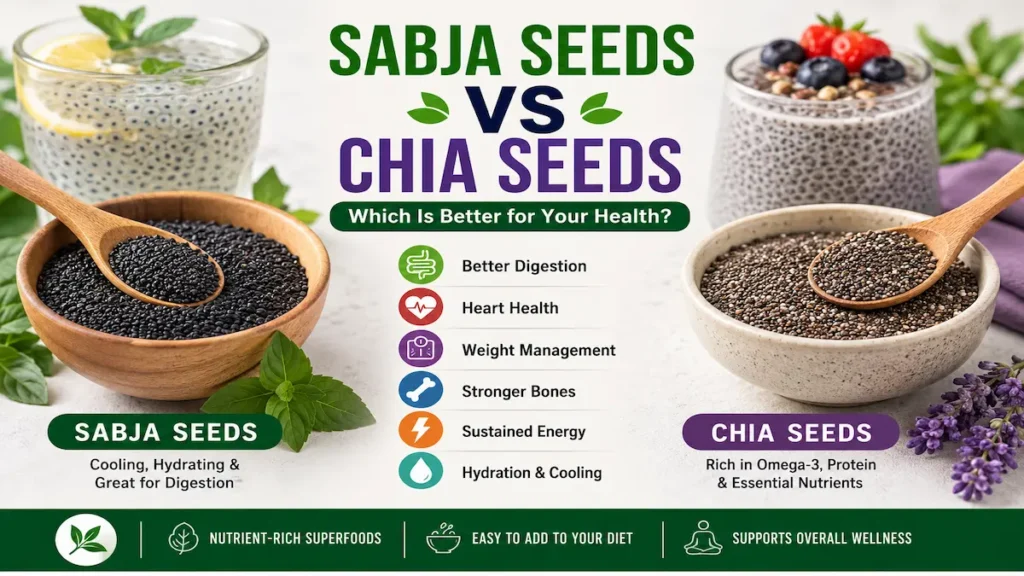
Tiny seeds can make a big difference to your health. Among the most popular superfoods today are sabja seeds (also called basil seeds or tukmaria) and chia seeds. Both are rich in fiber, antioxidants, vitamins, and minerals, making them excellent additions to a healthy diet.
At first glance, these seeds look almost identical. Once soaked in water, both develop a gel-like coating and are often used in drinks, smoothies, desserts, and healthy recipes. However, they are not the same. They come from different plants, offer different nutrients, and provide unique health benefits.
If you’ve ever wondered Sabja Seeds vs Chia Seeds: Which is better?, the answer depends on your health goals. Whether you want to lose weight, improve digestion, support heart health, stay hydrated during summer, or increase your intake of plant-based nutrients, understanding the differences will help you make the right choice.
Key Takeaways
- Both seeds are rich in dietary fiber and antioxidants that support overall health.
- Sabja seeds help improve hydration and support healthy digestion because they absorb water quickly.
- Chia seeds are higher in omega-3 fatty acids, calcium, magnesium, and plant-based protein.
- Both seeds can support healthy weight management when eaten in moderation as part of a balanced diet and regular exercise.
In this comprehensive guide, we’ll compare Sabja Seeds vs Chia Seeds based on nutrition, benefits, weight loss, digestion, heart health, preparation methods, possible side effects, and expert recommendations. By the end, you’ll know exactly which seed suits your lifestyle best.
Quick Comparison: Sabja Seeds vs Chia Seeds
| 📋 Feature | 🌿 Sabja Seeds | 🌱 Chia Seeds |
|---|---|---|
| 🧪 Scientific Name | Ocimum basilicum | Salvia hispanica |
| 👥 Common Name | Basil Seeds, Tukmaria | Chia Seeds |
| 🌍 Origin | 🇮🇳 India & Southeast Asia | 🇲🇽 Mexico & Central America |
| ⏱️ Soaking Time | 10–15 Minutes | 20–30 Minutes |
| 😋 Taste | Neutral with Slight Crunch | Mild, Nutty Flavor |
| 💧 Texture After Soaking | Soft Outer Gel with Crunchy Center | Thick Gel-like Texture |
| ❤️ Best For | Cooling, Digestion & Hydration | Heart Health, Protein & Omega-3 |
| 🥄 Daily Intake | 1–2 Tablespoons | 1–2 Tablespoons |
What Are Sabja Seeds?
Sabja seeds come from the sweet basil plant (Ocimum basilicum), the same family of herbs commonly used in cooking. In India, they are widely known as tukmaria, falooda seeds, or basil seeds.
These tiny black seeds have been used in traditional Ayurvedic practices for centuries. They are especially popular during the summer because of their natural cooling effect on the body.
Once soaked, sabja seeds quickly absorb water and develop a transparent gel around them. This gel helps improve hydration and makes the seeds easier to digest.
Nutritional Highlights of Sabja Seeds
Sabja seeds are naturally rich in:
- Dietary fiber
- Iron
- Calcium
- Plant-based protein
- Polyphenols
- Flavonoids
- Antioxidants
Because of their high fiber content, they are commonly included in diets focused on digestive health and weight management.
What Are Chia Seeds?
Chia seeds come from the flowering plant Salvia hispanica, which is native to Mexico and Central America.
Historically, chia seeds were consumed by the Aztecs and Mayans as an energy-rich food. Today, they are considered one of the world’s most nutrient-dense superfoods.
Unlike sabja seeds, chia seeds can be eaten either dry (mixed into foods) or soaked. However, soaking is generally recommended because it improves texture and digestion.
After soaking, chia seeds form a thick gel that blends well into smoothies, yogurt, oatmeal, puddings, and baked foods.
Nutritional Highlights of Chia Seeds
Chia seeds provide:
- Omega-3 fatty acids (ALA)
- Plant-based protein
- Dietary fiber
- Calcium
- Magnesium
- Phosphorus
- Potassium
- Zinc
- Powerful antioxidants
Their exceptional omega-3 content makes chia seeds one of the best plant-based foods for supporting heart and brain health.
Sabja Seeds vs Chia Seeds: Are They the Same?
Although they look alike, sabja seeds and chia seeds are not the same.
They belong to the same botanical family (Lamiaceae), but they come from different plant species and have different nutritional strengths.
Sabja seeds absorb water much faster and are traditionally used in cooling beverages. Chia seeds take longer to soak but provide higher amounts of omega-3 fatty acids, protein, calcium, and magnesium.
Another noticeable difference is texture. Sabja seeds keep a slightly crunchy center after soaking, while chia seeds become uniformly soft and gel-like.
These differences make each seed suitable for different health goals.
Nutritional Comparison (Per 100 g)
| Nutrient | 🌿 Sabja Seeds | 🌱 Chia Seeds |
|---|---|---|
| Calories | ~480 kcal | ~486 kcal |
| Protein | ~19 g | ~16.5 g |
| Total Fat | ~20 g | ~31 g |
| Dietary Fiber | ~37 g | ~34 g |
| Calcium | ~350 mg | ~630 mg |
| Magnesium | ~90 mg | ~335 mg |
| Iron | ~20 mg | ~7.7 mg |
| Omega-3 (ALA) | Low to Moderate | Very High |
| Antioxidants | High | Very High |
What does this mean?
- Choose sabja seeds if you want more iron and fast hydration.
- Choose chia seeds if you need more omega-3 fats, calcium, and magnesium.
- Both are excellent sources of dietary fiber that support digestive health.
Sabja Seeds vs Chia Seeds: Key Differences
Here are the most important differences at a glance:
1. Plant Source
Sabja seeds come from the sweet basil plant, while chia seeds come from Salvia hispanica.
2. Soaking Time
Sabja seeds swell within about 10–15 minutes.
Chia seeds usually require 20–30 minutes to fully absorb water.
3. Texture
Sabja seeds remain slightly crunchy inside.
Chia seeds become completely soft and gelatinous.
4. Nutritional Strength
Sabja seeds are particularly rich in iron and fiber.
Chia seeds stand out for their omega-3 fatty acids, calcium, magnesium, and complete plant protein.
5. Traditional Uses
Sabja seeds are commonly added to:
- Falooda
- Lemon water
- Rose milk
- Sherbets
- Buttermilk
Chia seeds are popular in:
- Smoothies
- Overnight oats
- Yogurt bowls
- Chia pudding
- Protein shakes
- Healthy baking
Which Seed Is More Nutritious?
There is no single winner because both offer different nutritional advantages.
If your priority is cooling the body, staying hydrated, and improving digestion, sabja seeds are an excellent choice.
If your goal is better heart health, stronger bones, higher protein intake, or more omega-3 fatty acids, chia seeds provide greater nutritional value.
For many healthy adults, including both seeds in moderation on different days can be a practical way to enjoy the benefits of each.
Health Benefits of Sabja Seeds vs Chia Seeds
Both seeds are packed with nutrients, but they support the body in different ways. Understanding their individual benefits makes it easier to choose the right one based on your health goals.
Health Benefits of Sabja Seeds
1. Naturally Cools the Body
One of the biggest advantages of sabja seeds is their natural cooling effect.
For generations, sabja seeds have been used in traditional diets during hot weather. After soaking, they absorb water and help the body stay hydrated. This is one reason they are commonly added to summer drinks such as lemon water, rose milk, falooda, and buttermilk.
People who spend long hours outdoors during summer may find soaked sabja seeds refreshing when included as part of a balanced diet.
2. Supports Healthy Digestion
Sabja seeds are an excellent source of soluble fiber.
After soaking, the gel surrounding the seeds helps food move smoothly through the digestive tract. Regular consumption may help reduce constipation, improve bowel movements, and support overall digestive health.
The fiber also feeds beneficial gut bacteria, contributing to a healthier digestive system.
3. Helps with Weight Management
Sabja seeds expand quickly after soaking and create a feeling of fullness.
This may help reduce unnecessary snacking and make it easier to control calorie intake throughout the day.
Although sabja seeds are not a magic weight-loss food, they can support healthy weight management when combined with regular exercise and a balanced diet.
4. May Help Maintain Healthy Blood Sugar Levels
The soluble fiber in sabja seeds slows the digestion of carbohydrates.
As a result, glucose enters the bloodstream more gradually after meals, which may help reduce sudden blood sugar spikes.
People with diabetes should still consult their healthcare provider before making major dietary changes.
5. Rich in Antioxidants
Sabja seeds contain natural plant compounds such as flavonoids and polyphenols.
These antioxidants help protect the body’s cells from oxidative stress caused by free radicals and contribute to overall wellness.
Health Benefits of Chia Seeds
1. Excellent Source of Plant-Based Omega-3
One of the biggest strengths of chia seeds is their exceptionally high omega-3 fatty acid content.
Omega-3 fats support heart health, help reduce inflammation, and contribute to normal brain function.
Among plant-based foods, chia seeds are considered one of the richest natural sources of alpha-linolenic acid (ALA).
2. High-Quality Plant Protein
Chia seeds contain all nine essential amino acids, making them a complete plant protein.
This makes them especially valuable for vegetarians, vegans, athletes, and anyone looking to increase their protein intake naturally.
Protein also supports muscle repair and helps you stay full longer.
3. Supports Strong Bones
Chia seeds are naturally rich in calcium, magnesium, and phosphorus.
These minerals are essential for maintaining strong bones and healthy teeth.
For people who consume little or no dairy, chia seeds can be a useful plant-based source of these nutrients.
4. Promotes Heart Health
Besides omega-3 fatty acids, chia seeds provide fiber and antioxidants that support cardiovascular health.
Regular consumption as part of a healthy lifestyle may help maintain healthy cholesterol levels and support normal blood pressure.
5. Long-Lasting Energy
Because chia seeds contain healthy fats, protein, and fiber, they release energy slowly.
This makes them an excellent addition to breakfast, helping you stay energized for longer without frequent hunger.
Sabja Seeds vs Chia Seeds for Weight Loss
Many people ask which seed is better for weight loss.
The answer depends on your eating habits and fitness goals.
Choose Sabja Seeds If:
- You want to control hunger before meals.
- You prefer low-calorie summer drinks.
- You need quick hydration.
- You often experience constipation.
Sabja seeds absorb water within minutes and quickly increase in size, helping create a feeling of fullness.
Choose Chia Seeds If:
- You want a high-protein breakfast.
- You exercise regularly.
- You need sustained energy.
- You want more healthy fats and omega-3.
Because chia seeds digest more slowly, they provide longer-lasting satiety and steady energy throughout the day.
Verdict
Both seeds support weight management.
Sabja seeds work well for quick appetite control, while chia seeds are better for long-term satiety and balanced nutrition.
Sabja Seeds vs Chia Seeds for Digestion
Fiber is one of the main reasons both seeds are considered digestive superfoods.
Sabja Seeds
Sabja seeds produce a soft mucilage after soaking that helps lubricate the digestive tract.
Benefits include:
- Easier bowel movements
- Relief from occasional constipation
- Better hydration of the digestive system
- Gentle support for sensitive stomachs
Chia Seeds
Chia seeds provide both soluble and insoluble fiber.
Their benefits include:
- Improved gut microbiome
- Better stool bulk
- Healthy digestion
- Longer-lasting fullness
Which Is Better?
If your main concern is constipation or digestive comfort, sabja seeds may provide quicker relief.
If your goal is long-term gut health and increased fiber intake, chia seeds are an excellent choice.
Sabja Seeds vs Chia Seeds for Heart Health
Heart health is another area where these two superfoods differ.
Sabja Seeds
Sabja seeds contain antioxidants and plant compounds that help reduce oxidative stress.
Their fiber content also supports healthy cholesterol levels.
Chia Seeds
Chia seeds are one of the richest plant sources of omega-3 fatty acids.
These healthy fats help support:
- Healthy cholesterol levels
- Normal blood pressure
- Healthy blood vessels
- Reduced inflammation
Winner
For cardiovascular health, chia seeds have a clear nutritional advantage because of their significantly higher omega-3 content.
Which Seed Is Better for Diabetes?
Both seeds may support blood sugar management due to their high fiber content.
Sabja Seeds
The gel formed by soaked sabja seeds slows carbohydrate digestion, helping glucose enter the bloodstream more gradually.
Chia Seeds
Chia seeds also slow digestion while providing healthy fats and protein that support balanced energy levels.
Verdict
Neither seed replaces diabetes treatment.
However, both can be healthy additions to a diabetes-friendly diet when consumed in moderation and under medical guidance.
Skin and Hair Benefits
Sabja Seeds
The antioxidants found in sabja seeds help protect skin cells from oxidative damage.
Good hydration also contributes to healthier-looking skin.
Chia Seeds
Chia seeds provide omega-3 fatty acids, zinc, and antioxidants that support skin elasticity and healthy hair growth.
The healthy fats also help maintain the skin’s natural moisture barrier.
Which Seed Should You Choose?
Your health goal can help you decide.
| Health Goal | Better Choice |
| Summer Hydration | Sabja Seeds |
| Better Digestion | Sabja Seeds |
| Quick Fullness | Sabja Seeds |
| Heart Health | Chia Seeds |
| Omega-3 Intake | Chia Seeds |
| Strong Bones | Chia Seeds |
| Plant Protein | Chia Seeds |
| Long-Lasting Energy | Chia Seeds |
| Overall Wellness | Both (in moderation) |
Instead of choosing one over the other, many nutrition experts recommend including both in a balanced diet on different days to enjoy their unique nutritional benefits.
How to Eat Sabja Seeds and Chia Seeds Correctly
Both sabja seeds and chia seeds are easy to add to your daily diet. However, proper soaking and the right serving size are important to get their full nutritional benefits.
How to Consume Sabja Seeds
Sabja seeds should always be soaked before eating.
Step-by-Step Guide
- Take 1–2 teaspoons of sabja seeds.
- Add them to one cup of clean water.
- Let them soak for 10–15 minutes.
- Once they develop a transparent gel coating, they are ready to eat.
Best Ways to Enjoy Sabja Seeds
- Lemon water
- Coconut water
- Buttermilk
- Falooda
- Rose milk
- Fruit smoothies
- Yogurt
- Fresh fruit bowls
Because they absorb water quickly, sabja seeds are an excellent ingredient for refreshing summer drinks.
How to Consume Chia Seeds
Chia seeds can be eaten either soaked or mixed into foods. However, soaking improves texture and makes them easier to digest.
Step-by-Step Guide
- Mix 1 tablespoon of chia seeds with ½ cup of water or milk.
- Leave for 20–30 minutes, or refrigerate overnight.
- Stir well before eating.
Best Ways to Enjoy Chia Seeds
- Overnight oats
- Chia pudding
- Smoothies
- Yogurt bowls
- Oatmeal
- Homemade energy bars
- Protein shakes
- Healthy baking
Their mild flavor makes them easy to combine with almost any healthy meal.
Best Time to Eat Sabja Seeds vs Chia Seeds
Although both seeds can be eaten at any time of the day, choosing the right time may help you enjoy their benefits even more.
Morning
Starting your day with soaked chia seeds in oatmeal or yogurt provides long-lasting energy and keeps you full for longer.
Before Meals
A small serving of soaked sabja seeds about 20–30 minutes before lunch or dinner may help control appetite.
After Exercise
Chia seeds are a good post-workout option because they provide plant protein, healthy fats, and minerals.
During Summer
Sabja seeds are especially refreshing in cooling drinks and can help support hydration during hot weather.
Recommended Daily Intake
Moderation is important, even with healthy foods.
| Seed | Recommended Daily Amount |
| Sabja Seeds | 1–2 tablespoons |
| Chia Seeds | 1–2 tablespoons |
If you are eating these seeds for the first time, begin with 1 teaspoon per day and gradually increase the amount while drinking enough water.
Can You Eat Sabja and Chia Seeds Together?
Yes.
There is no scientific evidence that healthy adults cannot consume both seeds together.
In fact, combining them may provide a wider range of nutrients because each seed offers unique benefits.
For example:
- Sabja seeds improve hydration and digestion.
- Chia seeds provide more omega-3 fatty acids and protein.
You can combine small amounts of both in smoothies, yogurt bowls, or healthy breakfast recipes.
Possible Side Effects and Precautions
Although both seeds are considered safe for most healthy adults, excessive intake may cause unwanted effects.
1. Digestive Discomfort
Eating too much fiber suddenly may cause:
- Bloating
- Gas
- Stomach discomfort
- Mild cramps
Increase your intake gradually and drink plenty of water.
2. Choking Risk
Never swallow large amounts of dry sabja or chia seeds with little water.
Both seeds absorb water and expand significantly.
Always soak them properly before consumption, especially for children and older adults.
3. Medication Interactions
People taking medications for:
- Diabetes
- High blood pressure
- Blood thinning
should consult a healthcare professional before consuming these seeds regularly, as they may influence blood sugar or blood pressure levels.
4. Allergic Reactions
Although uncommon, some individuals may be allergic to basil seeds or chia seeds.
Stop consuming them immediately and seek medical advice if you notice symptoms such as itching, swelling, difficulty breathing, or skin rash.
Who Should Be Careful?
Consult your healthcare provider before regular consumption if you:
- Are pregnant or breastfeeding
- Have difficulty swallowing
- Have chronic digestive disorders
- Are taking prescription medications
- Have known food allergies
Most healthy adults can safely enjoy these seeds in moderate amounts.
Common Mistakes to Avoid
Many people unknowingly reduce the benefits of these superfoods.
Avoid these common mistakes:
Eating Them Dry
Always soak sabja seeds.
Although chia seeds can be eaten dry in some recipes, soaking generally improves digestion and safety.
Eating Too Much
More is not always better.
Excessive fiber intake may cause digestive discomfort instead of improving gut health.
Not Drinking Enough Water
Since both seeds absorb large amounts of water, staying hydrated is essential.
Expecting Instant Weight Loss
Neither sabja nor chia seeds can burn fat on their own.
They work best as part of a balanced diet, regular exercise, and a healthy lifestyle.
Expert Tips
Nutrition experts often recommend these simple habits:
- Soak seeds before eating whenever possible.
- Combine them with fruits, yogurt, or whole grains.
- Maintain a balanced diet rather than relying on one “superfood.”
- Drink enough water throughout the day.
- Stay physically active for the best health results.
Consistency matters much more than consuming large quantities occasionally.
Myths vs Facts
| Myth | Fact |
| Sabja and chia seeds are exactly the same. | They come from different plants and have different nutritional strengths. |
| Eating more seeds gives faster weight loss. | Weight loss depends on overall calorie balance and lifestyle. |
| Chia seeds are always healthier than sabja seeds. | Each seed has unique benefits depending on your health goals. |
| Dry seeds are safe for everyone. | Proper soaking is recommended for easier digestion and safety. |
| These seeds can cure diseases. | They support overall health but are not medicines. |
These facts help set realistic expectations and encourage healthy eating habits.
Quick Decision Guide: Sabja Seeds vs Chia Seeds
Still unsure which seed is right for you? This quick comparison can help.
| 🎯 If Your Goal Is… | ✅ Best Choice |
|---|---|
| Stay Cool During Summer | 🌿 Sabja Seeds |
| Improve Digestion | 🌿 Sabja Seeds |
| Relieve Occasional Constipation | 🌿 Sabja Seeds |
| Increase Omega-3 Intake | 🌱 Chia Seeds |
| Build Muscle with Plant Protein | 🌱 Chia Seeds |
| Support Heart Health | 🌱 Chia Seeds |
| Strengthen Bones | 🌱 Chia Seeds |
| Stay Full for Longer | 🌱 Chia Seeds |
| Daily Hydration | 🌿 Sabja Seeds |
| Overall Balanced Nutrition | 🌿🌱 Both (on different days) |
Sabja Seeds vs Chia Seeds: Which One Is Better?
There is no single winner because both seeds offer excellent nutritional value.
Choose sabja seeds if your priority is:
- Better digestion
- Natural body cooling
- Summer hydration
- Quick appetite control
- Traditional Indian drinks
Choose chia seeds if your goal is:
- Better heart health
- Higher omega-3 intake
- Stronger bones
- More plant protein
- Long-lasting energy
If your diet allows, including both seeds on different days is a practical way to enjoy the unique benefits of each. Variety in healthy eating often provides a broader range of nutrients than relying on a single food.
Conclusion
The comparison of Sabja Seeds vs Chia Seeds shows that both are highly nutritious superfoods with unique strengths. Sabja seeds are best known for their cooling effect, digestive support, and quick hydration, making them especially popular during hot weather. Chia seeds stand out for their impressive levels of omega-3 fatty acids, plant protein, calcium, and antioxidants, making them an excellent choice for supporting heart health, bone strength, and long-lasting energy.
Instead of asking which seed is better, consider which one best matches your health goals. For many people, enjoying both seeds in moderation on different days can provide a balanced mix of nutrients and maximize their health benefits.
Remember that no single food can replace a healthy lifestyle. A nutritious diet, regular physical activity, adequate sleep, and routine medical check-ups remain the foundation of long-term wellness.
Frequently Asked Questions (FAQs)
1. Are sabja seeds and chia seeds the same?
No. Although they look similar, they come from different plants and have different nutritional profiles. Sabja seeds are obtained from sweet basil, while chia seeds come from Salvia hispanica.
2. Which is better for weight loss: Sabja seeds or chia seeds?
Both can support weight management because they are rich in fiber and help increase fullness. Sabja seeds are useful for quick appetite control, while chia seeds provide longer-lasting satiety due to their protein and healthy fat content.
3. Can I eat sabja seeds and chia seeds together?
Yes. Healthy adults can include both seeds in their diet in moderate amounts. Together, they provide a wider range of nutrients, including fiber, antioxidants, minerals, and healthy fats.
4. Which seed contains more omega-3 fatty acids?
Chia seeds contain significantly more omega-3 fatty acids than sabja seeds, making them a better choice for supporting heart and brain health.
5. Which seed is better for digestion?
Both seeds support digestive health. Sabja seeds may provide quicker relief from constipation because they absorb water rapidly, while chia seeds promote long-term gut health through their combination of soluble and insoluble fiber.
6. Do I need to soak the seeds before eating?
Sabja seeds should always be soaked before consumption. Chia seeds can be eaten dry in certain recipes, but soaking them is generally recommended for easier digestion and a better texture.
7. How much should I eat daily?
For most healthy adults, 1–2 tablespoons per day is considered a reasonable serving. If you are new to these seeds, start with a smaller amount and increase gradually.
8. Can people with diabetes eat these seeds?
Both sabja and chia seeds may be included in a diabetes-friendly diet because of their high fiber content. However, people with diabetes should follow their healthcare provider’s advice regarding portion sizes and overall meal planning.
9. Are there any side effects?
Eating large amounts without enough water may cause bloating, gas, or digestive discomfort. Proper soaking and moderate consumption help reduce these risks.
10. Which seed is healthier overall?
Both are healthy foods. Sabja seeds are ideal for hydration and digestive support, while chia seeds provide more omega-3 fatty acids, calcium, and protein. The healthier choice depends on your individual nutritional needs.
Trusted Sources
- USDA FoodData Central
- National Institutes of Health (NIH)
- National Center for Biotechnology Information (NCBI)
- Harvard T.H. Chan School of Public Health
- Academy of Nutrition and Dietetics
- World Health Organization (WHO)

Medical Disclaimer
This content is for informational purposes only and should not be considered medical advice.