Vitamin D Deficiency: 7 Signs, Symptoms, Causes & Simple Ways to Improve It
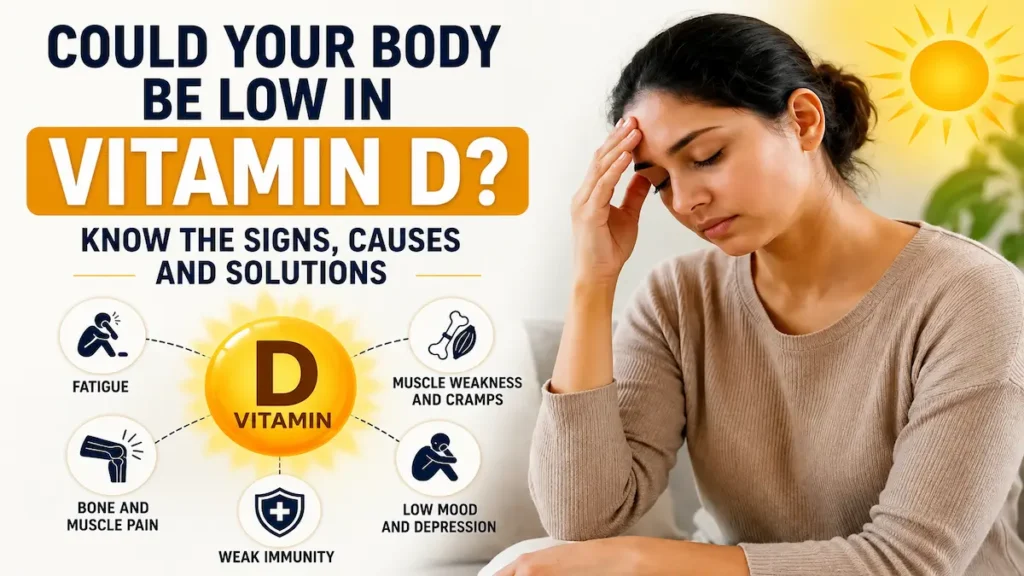
Do you often feel tired even after getting enough sleep? Do your bones or muscles hurt without doing much work? Many people ignore these problems because they seem normal. But sometimes, these can be signs of Vitamin D Deficiency. Low Vitamin D levels may affect your bones, muscles, energy, and overall health.
Today, many people spend most of their time inside homes or offices. Because of this, they do not get enough sunlight. This is one of the main reasons why Vitamin D deficiency is becoming very common in both children and adults.
In this article, we will understand what Vitamin D is, the common signs of low Vitamin D, who is at higher risk, and simple ways to manage it.
Why Is Vitamin D Important for the Body?
Vitamin D is often called the “sunshine vitamin” because our body makes it from sunlight. It helps the body absorb calcium properly, which keeps bones and teeth strong.
Vitamin D also helps in many other important body functions, such as:
- Keeping bones and muscles healthy
- Supporting the immune system
- Helping maintain energy levels
- Supporting mood and mental health
When the body does not get enough Vitamin D, small changes may start appearing slowly.
Common Signs and Symptoms of Vitamin D Deficiency
The symptoms can be different for everyone. Some people may not notice any signs in the beginning, while others may feel problems early.
1. Feeling Tired All the Time
If you still feel weak or sleepy even after proper rest, it may be a sign of low Vitamin D.
Many people think it is only because of stress or work pressure. But constant tiredness for a long time should not be ignored.
2. Bone and Back Pain
When the body has low Vitamin D, it may not use calcium properly. This can lead to weak bones or body pain.
Some common problems include:
- Lower back pain
- Leg pain
- Knee pain
- Weakness while climbing stairs
3. Getting Sick Again and Again
If you catch cold, cough, or infections very often, weak immunity may be one reason.
Vitamin D helps support the immune system. Low levels may make it harder for the body to fight infections.
4. Low Mood or Feeling Sad
Some studies suggest that Vitamin D may also affect mood and mental health.
Feeling irritated, low, or sad all the time can happen for many reasons, but in some cases, low Vitamin D may also play a role.
5. Hair Fall
Hair fall can happen because of stress, poor nutrition, or hormonal changes. But in some people, low Vitamin D may also be linked to hair loss.
If your hair is falling more than usual, it may be a good idea to speak with a doctor.
6. Muscle Weakness
Some people feel heaviness in the body or weakness while walking or standing.
Vitamin D supports normal muscle function. Low levels may lead to muscle pain or weakness.
7. Slow Healing of Wounds
If cuts or wounds are taking more time to heal, it may be a sign of poor nutrition in the body.
Some studies suggest that Vitamin D may help support the body’s healing process.
Who Is More Likely to Have Low Vitamin D?
Some people may have a higher risk of Vitamin D deficiency, such as:
- People who spend less time in sunlight
- Office workers who stay indoors for long hours
- Older adults
- People with darker skin
- People who are overweight
- People with an unhealthy diet
Some medical conditions may also affect Vitamin D levels.
Why Does Vitamin D Deficiency Happen?
There can be many reasons behind it.
Lack of Sunlight
Today, many people spend most of their time indoors or in front of screens. This reduces sunlight exposure.
Poor Diet
Not eating enough Vitamin D-rich foods may also lead to deficiency.
Lifestyle Habits
Low physical activity and unhealthy daily habits may affect overall health.
Foods That Contain Vitamin D
Some foods naturally contain Vitamin D, such as:
- Egg yolk
- Fatty fish
- Milk and dairy products
- Mushrooms
- Fortified foods
However, food alone may not always be enough for everyone.
How Important Is Sunlight?
Morning sunlight is often considered helpful for the body. Spending some time in sunlight may help the body produce Vitamin D naturally.
The needed time can be different for each person depending on weather, skin type, and location.
Can You Know About Vitamin D Deficiency Without a Test?
Symptoms may give some idea, but a proper blood test and doctor’s advice are important for correct information.
This is because many other health problems can also cause similar symptoms.
Is It Safe to Take Vitamin D Supplements?
Some people start taking supplements without medical advice. But taking too much Vitamin D can also be harmful.
So it is better to:
- Avoid high-dose supplements without advice
- Get tested if needed
- Take the correct dose only
Simple Ways to Prevent Vitamin D Deficiency
- Spend some time in sunlight daily
- Eat a balanced and healthy diet
- Stay physically active
- Get enough sleep
- Talk to a doctor if needed
Small healthy habits can help support better health in the long run.
Conclusion
Vitamin D is very important for overall health. Low Vitamin D levels may slowly affect the body, and many people may not notice the early signs.
If you often feel tired, weak, have body pain, or get sick frequently, it is better not to ignore these symptoms.
Healthy food, regular sunlight, and a good lifestyle can help support your body better. If needed, speak with a doctor for proper advice.
FAQs About Vitamin D Deficiency
1. What are the common signs of low Vitamin D?
Common signs may include tiredness, bone pain, muscle weakness, low mood, and getting sick often.
2. Why does Vitamin D deficiency happen?
Low sunlight exposure, poor diet, and unhealthy lifestyle habits are some common reasons.
3. Can sunlight help improve Vitamin D levels?
Yes, spending some time in morning sunlight may help the body make Vitamin D naturally.
4. Which foods contain Vitamin D?
Egg yolk, fatty fish, milk, mushrooms, and fortified foods contain Vitamin D.
5. Can low Vitamin D cause hair fall?
In some people, Vitamin D deficiency may be linked to hair fall and weak hair.
6. Is a blood test needed for Vitamin D deficiency?
A blood test can help confirm Vitamin D levels more accurately.
7. Should I take Vitamin D supplements without advice?
It is better not to take high-dose supplements without speaking to a doctor.
8. Who is more likely to have low Vitamin D?
People who stay indoors for long hours, older adults, and people with poor diet may have a higher risk.

Medical Disclaimer
This content is for informational purposes only and should not be considered medical advice.