25 Best Vitamin C Foods for Immunity and Healthy Body
Vitamin C is one of the most important nutrients your body needs every day. It helps your immune system fight germs, supports healthy skin, and helps wounds heal faster. It also works as a powerful antioxidant that protects your body’s cells from damage caused by harmful free radicals.
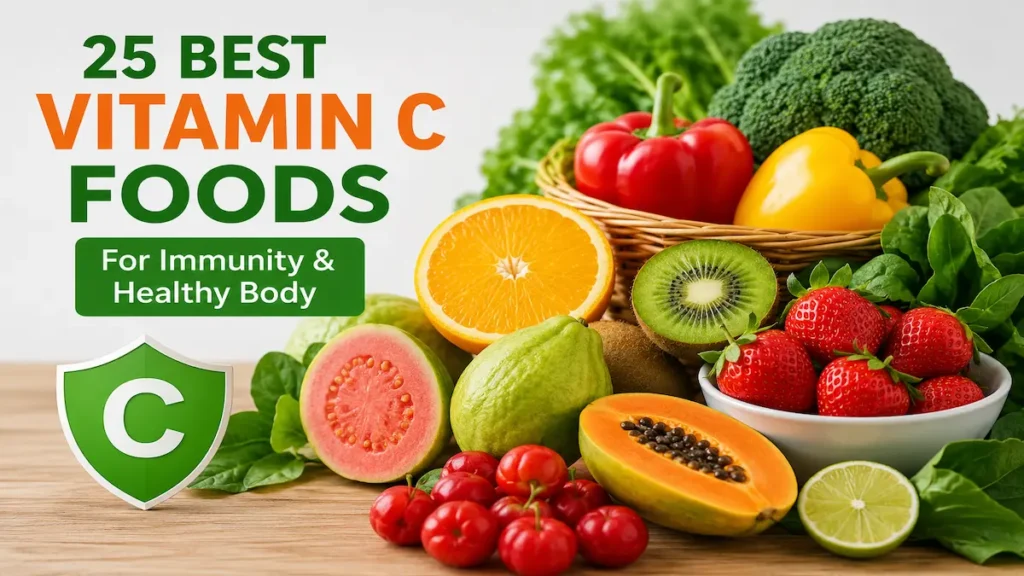
Many people think oranges are the best Vitamin C Foods.. While oranges are a great choice, many other fruits and vegetables contain even more vitamin C. Foods like guava, bell peppers, strawberries, kiwi, broccoli, and Kakadu plum are excellent natural sources.
The good news is that vitamin C is found in many fresh foods. Eating a colorful mix of fruits and vegetables each day is usually enough to meet your daily needs without taking supplements.
Key Takeaways
- Vitamin C helps support immunity, healthy skin, and faster wound healing.
- Guava, bell peppers, strawberries, oranges, kiwi, and broccoli are some of the best Vitamin C foods.
- Eating enough Vitamin C every day helps keep your body healthy and supports normal body functions.
- Most people can get enough Vitamin C from a balanced diet, while supplements should only be taken with proper advice.
What Is Vitamin C?
Vitamin C, also called ascorbic acid, is a water-soluble vitamin. Unlike some other vitamins, your body cannot make or store it. This means you need to get vitamin C from Vitamin C Foods every day.
Vitamin C helps many parts of your body work properly. It supports healthy skin, bones, blood vessels, teeth, and gums. It also helps your body absorb iron from plant-based foods, reducing the risk of iron deficiency.
Because vitamin C dissolves in water, your body removes any extra amount through urine. That is why eating vitamin C-rich foods every day is important.
Health Benefits of Vitamin C
Vitamin C Foods do much more than help your body meet its daily vitamin C needs. It supports many important body functions that keep you healthy.
1. Helps Build a Strong Immune System
Vitamin C supports your immune system by helping white blood cells fight bacteria and viruses. A healthy immune system can better protect your body from infections.
2. Protects Your Cells
Vitamin C is a powerful antioxidant. It helps protect your cells from damage caused by free radicals. This may lower the risk of some long-term health problems.
3. Supports Healthy Skin
Your body needs vitamin C from Vitamin C Foods to make collagen. Collagen is a protein that keeps your skin firm, smooth, and healthy. It also helps reduce signs of aging and supports skin repair.
4. Helps Wounds Heal Faster
Vitamin C plays an important role in healing cuts, burns, and other injuries. It helps repair damaged tissues and supports faster recovery.
5. Keeps Bones and Teeth Healthy
Collagen is also important for strong bones, teeth, and gums. Getting enough vitamin C helps keep these tissues healthy as you grow older.
6. Improves Iron Absorption
Vitamin C from Vitamin C Foods helps your body absorb iron from foods like beans, spinach, and lentils. This is especially helpful for people who eat a vegetarian or vegan diet.
7. Supports Heart Health
Eating fruits and vegetables rich in vitamin C may help support healthy blood vessels and normal blood pressure as part of a balanced diet.
8. Supports Brain Function
Vitamin C helps your body make chemicals called neurotransmitters. These chemicals allow brain cells to communicate and support memory, mood, and learning.
Signs of Vitamin C Deficiency
Vitamin C deficiency is uncommon in people who eat a balanced diet, but it can happen if you do not get enough fruits and vegetables for a long time.
Some common signs include:
- Feeling tired most of the time
- Weakness
- Bleeding or swollen gums
- Dry or rough skin
- Slow wound healing
- Easy bruising
- Joint pain
- Frequent infections
- Loose teeth in severe cases
A severe lack of vitamin C can lead to scurvy, a disease that causes serious health problems if left untreated.
How Much Vitamin C Do You Need Each Day?
Your daily vitamin C needs depend on your age, sex, and lifestyle.
| Group | Recommended Daily Intake |
| Children (1–3 years) | 15 mg |
| Children (4–8 years) | 25 mg |
| Children (9–13 years) | 45 mg |
| Boys (14–18 years) | 75 mg |
| Girls (14–18 years) | 65 mg |
| Adult Men | 90 mg |
| Adult Women | 75 mg |
| Pregnant Women | 85 mg |
| Breastfeeding Women | 120 mg |
| People Who Smoke | Need about 35 mg more each day |
Most healthy adults can meet these needs by eating a variety of fruits and vegetables every day.
Can You Get Enough Vitamin C from Food?
Yes. Most people can get all the vitamin C they need from Vitamin C Foods.
Simple foods like oranges, strawberries, kiwi, broccoli, bell peppers, tomatoes, potatoes, and papaya provide plenty of vitamin C. Eating different colorful fruits and vegetables every day is one of the easiest ways to meet your daily requirement.
Fresh Vitamin C Foods usually contain the most vitamin C. However, cooking for a long time can reduce the amount of this vitamin. Steaming or lightly cooking vegetables helps keep more nutrients.
Best Vitamin C Foods
Vitamin C Foods are found in many fruits and vegetables. Some foods contain much more vitamin C than others. Adding different vitamin C-rich foods to your meals can help support immunity, skin health, healing, and overall wellness.
Below are the 25 best foods high in vitamin C that you can include in your daily diet.
1. Kakadu Plum
Kakadu plum is considered one of the richest natural sources of vitamin C. It contains a very high amount of this nutrient compared with many common fruits.
It also provides antioxidants that help protect body cells from damage. Although it is not commonly available everywhere, it shows how powerful some natural foods can be.
Vitamin C content: Up to 2,907 mg per 100 grams
2. Acerola Cherries
Acerola cherries are small red fruits packed with vitamin C. Even a small serving can provide much more vitamin C than many regular fruits.
These cherries also contain antioxidants that help protect the body from oxidative stress and support overall health.
Vitamin C content: About 1,650 mg per half cup
3. Rose Hips
Rose hips are small fruits that grow on rose plants. They have a sweet and slightly sour taste and are naturally rich in vitamin C.
They also contain antioxidants that may support healthy skin and immunity.
Vitamin C content: About 426 mg per 100 grams
4. Sweet Yellow Bell Peppers
Yellow bell peppers are one of the best vegetable sources of vitamin C. They become richer in vitamin C as they mature.
They also contain vitamin A and antioxidants that support healthy eyes and skin.
Vitamin C content: About 342 mg per large pepper
5. Mustard Spinach
Mustard spinach is a nutrient-rich leafy green vegetable. It provides a large amount of vitamin C along with vitamin A, calcium, potassium, and fiber.
Adding leafy greens to your meals can improve overall nutrition.
Vitamin C content: About 195 mg per cup (raw)
6. Guava
Guava is one of the best Vitamin C Foods.. One guava can provide more vitamin C than many citrus fruits.
It is also rich in fiber, which supports digestion and helps maintain a healthy gut.
Vitamin C content: About 125 mg per fruit
7. Green Chili Pepper
Green chili peppers contain a good amount of vitamin C. They also contain plant compounds that may support metabolism and overall health.
Adding a small amount of chili to food can increase vitamin C intake.
Vitamin C content: About 109 mg per pepper
8. Black Currants
Black currants are dark-colored berries rich in vitamin C and antioxidants called anthocyanins.
These antioxidants help protect cells and may support heart health.
Vitamin C content: About 102 mg per half cup
9. Strawberries
Strawberries are a popular fruit that provides vitamin C, fiber, and antioxidants.
Regularly eating strawberries as part of a balanced diet can support skin health and overall wellness.
Vitamin C content: About 97 mg per cup
10. Red Bell Peppers
Red bell peppers are sweet, crunchy, and full of nutrients. They are an excellent source of vitamin C and can be eaten raw or cooked.
They also provide antioxidants that support healthy body functions.
Vitamin C content: About 95 mg per half cup
11. Kale
Kale is a green leafy vegetable packed with vitamins and minerals. It contains vitamin C, vitamin K, calcium, and antioxidants.
Including kale and other leafy greens in your diet can improve nutrient intake.
Vitamin C content: About 93 mg per 100 grams
12. Papaya
Papaya is a tropical fruit that is rich in vitamin C and vitamin A. It also contains enzymes that may support digestion.
Eating fresh papaya can be a healthy addition to breakfast or snacks.
Vitamin C content: About 88 mg per cup
13. Orange
Oranges are one of the most popular Vitamin C Foods. They are easy to find and simple to add to your daily diet.
Eating a whole orange also provides fiber, which is better than only drinking juice.
Vitamin C content: About 83 mg per medium orange
14. Kiwi
Kiwi is a small green fruit with a high nutrient value. It provides vitamin C, fiber, and antioxidants.
It may support immune health and help maintain good digestion.
Vitamin C content: About 56 mg per medium fruit
15. Broccoli
Broccoli is one of the best Vitamin C Foods and is a healthy vegetable that contains vitamin C, fiber, and many plant nutrients.
Eating broccoli regularly as part of a balanced diet can support overall health.
Vitamin C content: About 51 mg per half cup cooked
16. Brussels Sprouts
Brussels sprouts are small green vegetables that contain vitamin C and vitamin K.
Both vitamins are important for maintaining healthy bones and supporting normal body functions.
Vitamin C content: About 48 mg per half cup cooked
17. Lemon
Lemons are well known for their fresh taste and vitamin C content. Adding lemon juice to water, salads, and meals is an easy way to increase vitamin C intake.
Lemon also contains antioxidants that help protect foods from becoming brown.
Vitamin C content: About 45 mg per whole lemon
18. Grapefruit
Grapefruit is a citrus fruit that provides vitamin C and antioxidants.
It is low in calories and can be a refreshing choice for a healthy snack.
Vitamin C content: About 39 mg per half fruit
19. Cantaloupe
Cantaloupe is a sweet and refreshing fruit that contains vitamin C and vitamin A.
Because it has high water content, it can also help keep the body hydrated.
Vitamin C content: About 17 mg per cup
20. Cauliflower
Cauliflower is a versatile vegetable that provides vitamin C, fiber, and antioxidants.
It can be roasted, steamed, or added to many healthy recipes.
Vitamin C content: About 26 mg per half cup
21. Lychee
Lychee is a sweet tropical fruit containing vitamin C and natural plant compounds.
It can be enjoyed fresh as a healthy seasonal fruit.
Vitamin C content: About 7 mg per fruit
22. American Persimmon
Persimmon is an orange-colored fruit that contains vitamin C and fiber.
It is naturally sweet and can be eaten when fully ripe.
Vitamin C content: About 16.5 mg per fruit
23. Fresh Parsley
Parsley is usually used as a herb, but it also provides vitamin C. Adding fresh parsley to meals can improve both flavor and nutrition.
It also contains vitamin K and antioxidants.
Vitamin C content: About 10 mg per 2 tablespoons
24. Baked Potato
Many people do not know that potatoes can provide vitamin C. A baked potato can contribute to your daily vitamin C intake.
Potatoes also provide potassium and energy-supporting carbohydrates.
Vitamin C content: About 17 mg per medium potato
25. Tomato
Tomatoes are a common food that provides vitamin C along with lycopene, an antioxidant linked with heart and skin health. These Vitamin C Foods make it easy to meet your daily vitamin C needs.
Fresh tomatoes can be added to salads, sandwiches, and cooked dishes.
Vitamin C content: About 17 mg per medium tomato
Simple Tips to Add More Vitamin C Foods to Your Diet
Adding more Vitamin C Foods to your daily meals is a simple way to support overall health.
- Start your day with a fruit like orange, kiwi, or papaya.
- Add bell peppers and tomatoes to salads.
- Include green vegetables like broccoli and kale in meals.
- Use lemon juice to add flavor and vitamin C.
- Choose fresh fruits instead of processed snacks.
- Eat a variety of colorful fruits and vegetables.
Eating different vitamin C-rich foods is better than depending on only one food source. A balanced diet gives your body many important nutrients together.
Too Much Vitamin C: Side Effects and Things to Know
Vitamin C is important for good health, but taking too much of it is not always better. Most people can get enough vitamin C from Vitamin C Foods. Extra vitamin C from supplements is usually not needed unless advised by a health professional.
The body does not store extra vitamin C. When you take more than your body needs, it removes the extra amount through urine. However, very high amounts of vitamin C supplements may cause some problems.
Possible Side Effects of Too Much Vitamin C
Taking very high amounts of vitamin C may cause:
- Stomach pain
- Diarrhea
- Gas and bloating
- Nausea
- Stomach discomfort
These problems usually improve when a person reduces or stops taking high-dose vitamin C supplements.
Adults should avoid taking very large amounts of vitamin C supplements every day without proper advice.
Vitamin C Supplements: What to Know
Vitamin C supplements are available in many forms, such as tablets, capsules, and powders. However, most healthy people can get enough vitamin C from their daily diet.
Vitamin C Foods provide vitamin C along with other important nutrients like fiber and minerals.
You may need vitamin C supplements if:
- Your diet does not include enough fruits and vegetables.
- A doctor recommends them for a specific health reason.
- You have a higher need for vitamin C.
Before taking supplements regularly, it is better to talk with a healthcare professional.
Remember, supplements should not replace healthy food. A balanced diet is the best way to get vitamins and minerals.
Conclusion
Vitamin C is an important nutrient that helps keep our body healthy. It supports immunity, healthy skin, wound healing, and many other body functions.
Many Vitamin C Foods are rich in vitamin C. Foods like guava, oranges, strawberries, bell peppers, kiwi, broccoli, and papaya are easy to add to your daily meals.
A balanced diet with different fruits and vegetables is the best way to get enough vitamin C. Instead of depending only on supplements, focus on eating fresh and healthy foods every day.
Small changes in your eating habits can help you get more vitamin C and support better health.
Frequently Asked Questions About Vitamin C
1. Which food has the highest amount of vitamin C?
Kakadu plum is one of the foods with the highest amount of vitamin C. It contains much more vitamin C than many common fruits.
2. Are oranges the best source of vitamin C?
Oranges are a good source of vitamin C, but they are not the only option. Foods like guava, bell peppers, strawberries, kiwi, and broccoli also provide vitamin C.
3. How much vitamin C do adults need every day?
Most adult men need about 90 mg of vitamin C daily, while adult women need about 75 mg daily.
Pregnant and breastfeeding women may need more.
4. Can vitamin C improve immunity?
Vitamin C helps support a healthy immune system. Eating enough vitamin C through fruits and vegetables helps your body work properly.
5. Can I get enough vitamin C from food?
Yes. Most people can get enough vitamin C by eating a variety of Vitamin C Foods every day.
6. What happens if the body does not get enough vitamin C?
A lack of vitamin C can cause tiredness, weak immunity, slow wound healing, and gum problems. Severe deficiency can lead to a condition called scurvy.
7. Does cooking reduce vitamin C in food?
Yes, long cooking times and high heat can reduce vitamin C in some foods. Eating some fruits and vegetables fresh or lightly cooked can help keep more vitamin C.
References
National Institutes of Health (NIH) – Office of Dietary Supplements – Vitamin C Fact Sheet for Consumers
https://ods.od.nih.gov/factsheets/VitaminC-Consumer/
Harvard T.H. Chan School of Public Health – The Nutrition Source: Vitamin C
https://nutritionsource.hsph.harvard.edu/vitamin-c/
USDA FoodData Central – Food Composition Database
https://fdc.nal.usda.gov/
NHS – Vitamins and Minerals: Vitamin C
https://www.nhs.uk/conditions/vitamins-and-minerals/vitamin-c/

Medical Disclaimer
This content is for informational purposes only and should not be considered medical advice.