Tofu vs Tempeh: 5 Essential Differences for Better Meals
Tofu vs tempeh is a useful comparison for anyone looking to include more plant-based protein in their diet. Both are made from soybeans and provide all nine essential amino acids, but they differ in protein, fiber, calcium, taste, and texture. Tempeh generally offers more protein and fiber, while tofu is available in a wider range of textures and can be particularly rich in calcium. Neither is automatically healthier. The best choice depends on your nutritional needs, the product you buy, and how you plan to use it in everyday meals.
Key Takeaways
- Both tofu and tempeh provide complete plant-based protein.
- Tempeh generally contains more protein and fiber than tofu.
- Calcium-set tofu can be a rich source of calcium.
- Tofu suits creamy dishes, while tempeh works well in hearty meals.
What Is the Difference Between Tofu and Tempeh?
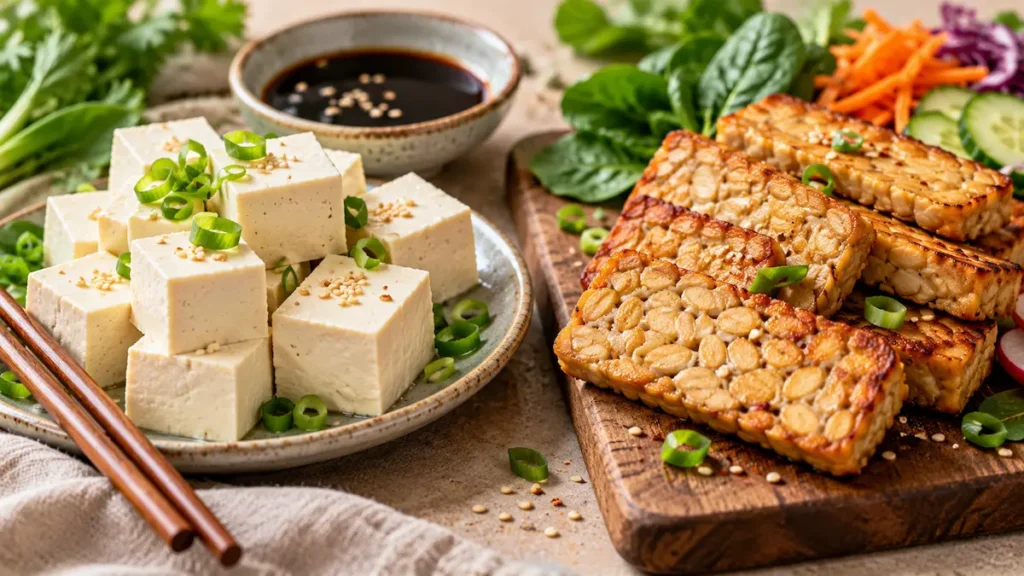
The main difference in a tofu vs tempeh comparison is how each food is made. Tofu, also known as bean curd, is produced by coagulating soy milk and pressing the curds into blocks. Depending on its moisture content, tofu can range from silken and soft to firm and extra-firm. Its mild flavor makes it suitable for creamy sauces, soups, and stir-fries. Because much of the soybean pulp is removed during production, tofu generally contains less fiber than whole-soybean foods. For more plant-based protein options, explore HealthBel’s guide to protein-rich foods.
Tempeh is a traditional Indonesian food made by fermenting cooked soybeans with a starter culture, typically containing Rhizopus fungi. Fermentation binds the whole soybeans into a firm, sliceable cake with a nutty flavor and chewy texture. Unlike tofu, tempeh retains much of the soybean’s natural fiber, contributing to its distinct nutritional profile. Some commercial varieties also contain grains, seeds, or other legumes, which may affect their nutrient content and allergen information.
Tofu vs Tempeh: Nutrition Comparison
Both foods provide substantial plant-based protein, but their nutrient values vary with ingredients, moisture content, and processing methods. The following comparison uses two specific USDA FoodData Central records: firm tofu prepared with calcium sulfate (FDC 172475) and plain tempeh (FDC 174272). These figures are useful reference values rather than guaranteed amounts for every brand.
| Nutrient (per 100 g) | Firm Tofu | Tempeh |
|---|---|---|
| Calories | 144 kcal | 192 kcal |
| Protein | 17.3 g | 20.3 g |
| Carbohydrates | 2.8 g | 7.6 g |
| Total fat | 8.7 g | 10.8 g |
| Dietary fiber | 2.3 g | Not reported |
| Calcium | 683 mg | 111 mg |
| Iron | 2.7 mg | 2.7 mg |
Source: USDA food-composition data for calcium-set firm tofu and plain tempeh. Values are rounded. “Not reported” indicates missing fiber data, not zero fiber.
Protein, Fiber, and Calcium: The Main Differences
Tempeh provides approximately 20 grams of protein per 100 grams in the reference data, compared with around 17 grams in firm tofu. Both contain complete soy protein, making them useful for vegetarian and vegan meals. However, some extra-firm tofu varieties provide comparable protein amounts, so checking labels is more reliable than assuming tempeh always contains substantially more protein.
Tempeh generally contains more fiber because it retains the whole soybean, whereas tofu production removes much of the soybean pulp. Calcium is another important difference: the firm tofu in this comparison provides 683 mg per 100 grams because it is prepared with calcium sulfate. Tofu made using other coagulants may contain considerably less calcium. If fiber or calcium is a dietary priority, compare the specific products rather than relying only on their names.
Does Fermentation Make Tempeh Healthier?
Fermentation changes the composition and characteristics of soybeans, including their flavor, texture, and certain naturally occurring compounds. It can modify proteins and phytates, which may influence nutrient availability and digestion. However, these changes do not establish that tempeh is healthier than tofu for everyone. Both foods can contribute valuable nutrients to a balanced diet, and their practical benefits depend on serving size, overall dietary patterns, and individual preferences.
Although tempeh is fermented, it should not automatically be considered a probiotic food. Probiotics are specific live microorganisms that provide demonstrated health benefits when consumed in adequate quantities. Commercial tempeh may be heat-treated, and cooking can reduce living microorganisms. Therefore, tempeh’s fermentation process alone does not establish a probiotic benefit. Its protein, fiber, and versatility remain useful nutritional reasons to include it in meals.
Tofu vs Tempeh: Taste, Texture, and Everyday Cooking
Tofu has a mild flavor and absorbs seasonings easily, making it suitable for a wide range of recipes. Silken tofu can be blended into creamy sauces, soups, and dressings, while firm and extra-firm varieties work well in stir-fries, baked dishes, and savory scrambles. For firmer tofu, draining or gently pressing excess moisture may improve browning. Cutting it into cubes, seasoning it with garlic, ginger, or other spices, and cooking until lightly golden creates a versatile ingredient for vegetable bowls and everyday meals.
Tempeh has a denser texture and stronger, nutty flavor that works particularly well in sandwiches, wraps, tacos, and grain bowls. It can be sliced, cubed, or crumbled before cooking. Some people prefer steaming tempeh briefly before marinating to soften its earthy flavor, although this step is optional and product instructions should take priority. Garlic, ginger, lemon juice, and savory marinades can complement its flavor. Both foods work well with vegetables and whole grains, but their different textures make them useful in different recipes.
| Cooking Use | Tofu | Tempeh |
|---|---|---|
| Flavor | Mild and neutral | Nutty and earthy |
| Texture | Silken to extra-firm | Dense and chewy |
| Creamy sauces | Silken tofu works well | Less suitable |
| Stir-fries | Firm or extra-firm tofu | Sliced or cubed |
| Sandwiches | Baked or grilled slices | Firm, seasoned slices |
| Savory fillings | Crumbled firm tofu | Crumbled tempeh |
Which Is Better for Your Everyday Diet?
The tofu vs tempeh decision depends on your nutritional goals rather than one food being universally superior. Tempeh is often a better choice when you prefer a dense protein source with more whole-bean fiber. Calcium-set tofu may be particularly useful when increasing calcium intake through food is a priority. Some softer tofu varieties also provide fewer calories per 100 grams than tempeh, although the final calorie content of a meal depends on portion size, cooking oil, sauces, and accompanying ingredients.
For practical meal planning, tofu offers greater flexibility because different textures suit different recipes, while tempeh is useful when a firm, chewy ingredient is preferred. Compare protein, calcium, fiber, sodium, and serving size on product labels. Plain varieties provide more control over seasonings and added ingredients than some pre-marinated products. Neither food supplies every nutrient needed for a balanced diet, so including vegetables, whole grains, fruit, and other suitable protein sources remains important.
Are Tofu and Tempeh Safe to Eat Regularly?
For most people without soy allergy, tofu and tempeh can be eaten regularly in ordinary food portions as part of a varied diet. However, both conventional products contain soy and should be avoided by people with a soy allergy. Mixed-grain tempeh may also contain wheat, barley, or other allergens, making ingredient labels especially important for people with food allergies or celiac disease. The NIH National Center for Complementary and Integrative Health discusses soy safety, allergies, and possible medication interactions.
Soy can interfere with the absorption of levothyroxine, a medicine used to treat hypothyroidism. According to Mayo Clinic, people taking levothyroxine generally do not need to avoid soy completely, but medication timing matters. Its guidance recommends taking thyroid medication on an empty stomach and waiting at least one hour before eating, including soy-containing foods. Follow your prescriber’s individual instructions rather than adjusting medication timing or dosage independently. Certain soy products can also be relevant for people taking monoamine oxidase inhibitors (MAOIs), so medication-specific dietary advice is important.
Storage and preparation are equally important. Keep tofu and tempeh according to their packaging instructions, refrigerate products that require chilling, and follow the manufacturer’s cooking guidance. Use clean utensils and preparation surfaces, refrigerate cooked leftovers promptly, and discard products showing signs of unexpected spoilage. Fermentation does not make tempeh automatically safe to store without refrigeration.
Frequently Asked Questions
Is tempeh always higher in protein than tofu?
No. Tempeh generally contains more protein per equal weight than many tofu varieties, but some firm and extra-firm tofu products provide similar amounts. The actual difference depends on processing, moisture content, and serving size.
Is tempeh better than tofu for building muscle?
Both provide complete soy protein and can help meet daily protein needs. Tempeh is often more protein-dense, but overall protein intake, sufficient calories, and resistance training matter more than choosing one specific soy food.
Does tofu need to be pressed before cooking?
Not always. Pressing may help remove excess moisture from firm tofu and improve browning. Silken tofu should not generally be pressed, and some extra-firm products can be cooked directly after draining.
Is tempeh gluten-free?
Traditional soybean tempeh may be gluten-free, but some commercial varieties contain wheat, barley, or other ingredients. People with celiac disease should choose appropriately labeled gluten-free products.
Can you eat tofu and tempeh on the same day?
Yes. People who tolerate soy can generally include both in the same day’s meals. There is no general nutritional requirement to choose only one, although individual allergies and medical considerations still apply.
Conclusion
Tofu and tempeh are both nutritious plant-based protein options with distinct advantages. Tempeh generally provides more fiber and slightly more protein than many tofu varieties, while calcium-set tofu can offer substantial calcium and greater cooking flexibility. The better choice depends on the specific product, your dietary priorities, and the dishes you enjoy. Including either or both in a varied diet can make everyday plant-based meals more interesting and practical.
Sources & References
- USDA FoodData Central – Firm Tofu Nutrition
- USDA FoodData Central – Tempeh Nutrition
- NIH – Soy: Usefulness and Safety
- Mayo Clinic – Soy and Thyroid Medication

Medical Disclaimer
This content is for informational purposes only and should not be considered medical advice.