Rheumatoid Arthritis Treatment 10 Easy Ways to Reduce Joint Pain
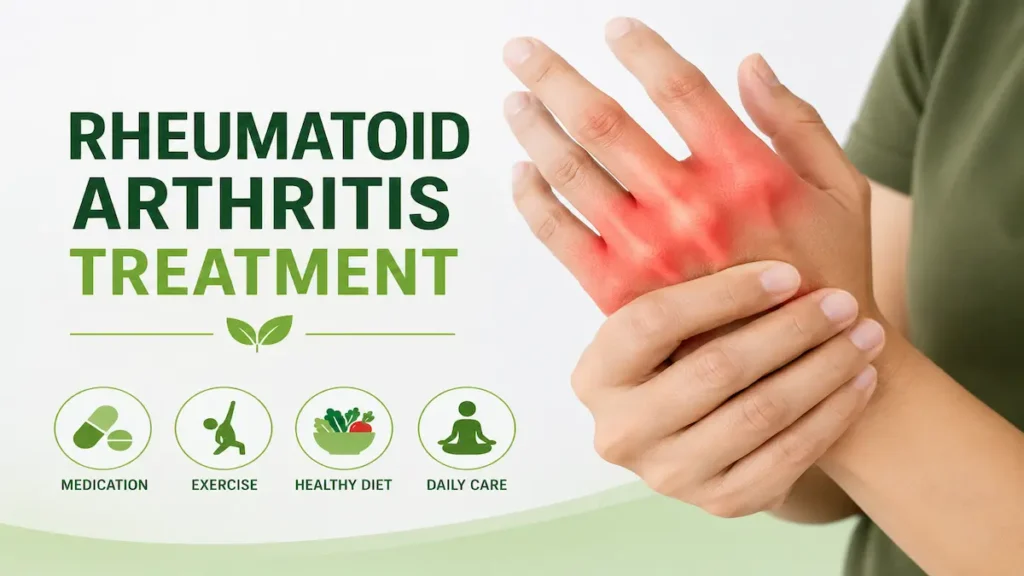
Rheumatoid arthritis (RA) is a health condition that can make your joints hurt, swell, and feel stiff. It happens when the body’s defense system attacks healthy joints by mistake. This attack causes the joints to become sore and swollen.
RA is a long-term disease. It does not go away completely. But the right rheumatoid arthritis treatment can help control the disease. It can reduce pain, protect the joints, and help people stay active.
Many people with RA can still work, exercise, and enjoy daily life. The key is to start treatment early and follow the doctor’s advice.
Doctors usually treat RA with medicines, simple exercises, healthy food, and good daily habits. Every person is different, so each treatment plan is made to fit that person’s needs.
This guide explains rheumatoid arthritis treatment in easy English. It is based on trusted medical information and current health advice.
Key Takeaways
- Rheumatoid arthritis causes joint pain and swelling.
- Early rheumatoid arthritis treatment can help protect your joints.
- Medicines help control pain and slow the disease.
- Physical therapy helps improve joint movement.
- Healthy daily habits can make a big difference.
- Regular checkups help doctors track your treatment.
What Is Rheumatoid Arthritis?
Rheumatoid arthritis is often called RA.
It is a disease that mainly affects the joints. The joints are the places where two bones meet. Your knees, fingers, wrists, ankles, and elbows all have joints.
Normally, the body’s defense system fights germs that make us sick. But in RA, it attacks healthy joints by mistake.
This causes:
- Pain
- Swelling
- Stiffness
- Warm joints
- Trouble moving
If RA is not treated, it can slowly damage the joints. This damage can make simple jobs like walking, writing, cooking, or opening a bottle much harder.
RA often affects the same joints on both sides of the body. For example, if one wrist is affected, the other wrist may also be affected. For example, if one wrist hurts, the other wrist may also hurt. Early rheumatoid arthritis treatment can help reduce joint damage and improve daily life.
What Are the Signs of Rheumatoid Arthritis?
The signs of RA often appear slowly. At first, the pain may come and go. Later, it may happen more often.
Some common signs include:
- Pain in your joints
- Swollen joints
- Stiff joints in the morning
- Tiredness
- Muscle weakness
- Trouble moving the hands or feet
- Warm or sore joints
Many people say their joints feel very stiff after they wake up. This stiffness may last for 30 minutes or even longer.
Some days may feel better than others. The days when symptoms suddenly get worse are called flare-ups.
Why Is Early Rheumatoid Arthritis Treatment Important?
Starting rheumatoid arthritis treatment early can help protect your joints.
The longer RA stays untreated, the more damage it may cause.
Early treatment can help:
- Reduce pain
- Lower swelling
- Slow joint damage
- Help you move better
- Make daily life easier
- Keep you active for longer
Many people feel better when treatment starts soon after the first symptoms appear.
That is why it is important not to ignore joint pain that lasts for several weeks.
How Do Doctors Find Rheumatoid Arthritis?
There is no single test that can tell if you have RA.
Your doctor will look at many things before making a diagnosis.
The doctor may:
- Ask about your symptoms
- Check your joints
- Ask how long the pain has lasted
- Order blood tests
- Suggest X-rays or other scans if needed
These tests help the doctor understand how much the joints are affected.
Finding RA early helps doctors start treatment before serious joint damage happens. Early diagnosis helps doctors choose the best rheumatoid arthritis treatment for each person.
Rheumatoid Arthritis Treatment
There is no cure for RA yet.
But the right rheumatoid arthritis treatment can help people live a healthy and active life.
Most treatment plans include more than one method.
Doctors may recommend:
- Medicines
- Physical therapy
- Healthy eating
- Daily exercise
- Good sleep
- Healthy lifestyle changes
Some people may also need surgery if the joints become badly damaged.
Medicines for Rheumatoid Arthritis
Medicines are one of the main parts of rheumatoid arthritis treatment.
Some medicines help slow the disease.
Others help reduce pain and swelling.
Your doctor will choose the medicine that is best for your condition.
Never stop taking your medicine without talking to your doctor first.
Medicines That Slow the Disease
Some medicines help slow down the disease.
They help calm the body’s defense system. This lowers swelling and helps protect the joints from damage.
These medicines do not work right away.
Some people start feeling better after a few weeks, while others may need a few months before they notice a change.
Your doctor may ask you to visit the clinic regularly to see how well the treatment is working.
Medicines That Help During Flare-Ups
Sometimes the pain suddenly becomes worse.
This is called a flare-up.
During a flare-up, your doctor may give medicines that help reduce pain and swelling.
These medicines can help you feel more comfortable while the flare-up settles down.
Some pain medicines are only meant for short-term use because using them for a long time may cause side effects.
Always follow your doctor’s advice when taking any medicine.
Physical Therapy
Physical therapy is another important part of rheumatoid arthritis treatment.
A physical therapist teaches simple exercises that help your joints move more easily.
These exercises may help:
- Make muscles stronger
- Reduce stiffness
- Improve balance
- Help you walk better
- Keep your joints moving
The exercises are gentle and safe for people with RA.
Doing a little exercise every day is often better than doing a lot once a week.
Occupational Therapy
RA can make daily work harder.
Simple tasks like writing, cooking, getting dressed, or opening a door may become painful.
An occupational therapist teaches easier ways to do these jobs.
They may also suggest simple tools that reduce pressure on painful joints.
These small changes can make everyday life much easier.
When Is Surgery Needed?
Most people with RA never need surgery.
But surgery may help if:
- A joint is badly damaged.
- Pain does not improve with treatment.
- Walking becomes very difficult.
- Daily work becomes hard to do.
The goal of surgery is to reduce pain and help the joint work better.
Doctors only suggest surgery after checking your condition carefully.
Best Foods for Rheumatoid Arthritis
Eating healthy food cannot cure RA. But it can help your body stay strong and may help reduce swelling.
Try to eat different healthy foods every day.
Good food choices include:
- Fresh fruits
- Green vegetables
- Whole grains
- Beans
- Nuts and seeds
- Fish
- Healthy cooking oils
These foods give your body the vitamins and minerals it needs.
Try to drink enough water during the day. Staying hydrated is good for your joints and your overall health. Healthy eating works best when it is part of your rheumatoid arthritis treatment plan.
Foods to Limit
Some foods may make inflammation worse in some people.
Try to eat less of these foods:
- Sugary drinks
- Candy
- Cakes
- Cookies
- Fried foods
- Fast food
- Packaged snacks
- Processed meat
You do not have to stop eating these foods forever. Eating them less often may help you feel better.
If you notice that a certain food makes your symptoms worse, talk with your doctor or a registered dietitian.
Can Supplements Help?
Some people ask if supplements can cure RA.
The answer is no.
Some supplements may help certain people, but they do not replace medical treatment.
Never start a supplement without talking to your doctor.
Some supplements can affect your medicines or cause side effects.
Stay Active Every Day
Many people think they should avoid exercise if they have joint pain.
This is not true.
The right exercise can actually help your joints.
Regular movement may help:
- Reduce stiffness
- Build stronger muscles
- Improve balance
- Help you move more easily
- Lower joint pain
You do not have to exercise for a long time.
Even 20 to 30 minutes of gentle activity most days can make a difference. Regular exercise is an important part of rheumatoid arthritis treatment and helps keep joints flexible.
Easy Exercises for RA
Choose activities that are easy on your joints.
Good choices include:
- Walking
- Swimming
- Cycling
- Stretching
- Gentle yoga
Start slowly.
If an exercise causes sharp pain, stop and ask your doctor or physical therapist for advice.
Get Enough Sleep
Sleep gives your body time to rest and recover.
People with RA often feel tired because their body is working hard to fight inflammation.
Good sleep may help:
- Reduce tiredness
- Improve mood
- Lower stress
- Help you feel stronger
Try to go to bed and wake up at the same time every day.
Manage Stress
Stress may make RA symptoms feel worse.
You cannot remove all stress from life, but you can learn healthy ways to manage it.
Simple ideas include:
- Take slow, deep breaths.
- Listen to calm music.
- Read a book.
- Spend time with family.
- Enjoy a hobby.
- Take short walks outside.
Even a few quiet minutes each day can help you feel calmer.
Use Heat and Cold at Home
Heat and cold therapy may help ease joint pain.
Heat Therapy
Warmth helps relax muscles and reduce stiffness.
You can try:
- A warm shower
- A warm towel
- A heating pad
Do not use too much heat or fall asleep with a heating pad.
Cold Therapy
Cold helps reduce swelling and numb sore joints.
You can use:
- An ice pack
- A cold towel
Wrap the ice pack in a cloth before placing it on your skin.
Use it for about 15 to 20 minutes at a time.
Keep a Healthy Weight
Extra body weight puts more pressure on your joints.
Keeping a healthy weight may help:
- Reduce joint pain
- Make walking easier
- Improve balance
- Lower stress on the knees and hips
Healthy eating and regular activity can help you reach and keep a healthy weight. Keeping a healthy weight can improve the results of your rheumatoid arthritis treatment.
Do Not Miss Your Checkups
RA is a long-term disease.
Even if you feel better, keep visiting your doctor.
Regular checkups help your doctor:
- See how well your treatment is working
- Watch for side effects
- Change your treatment if needed
- Help protect your joints
Never stop your medicine without asking your doctor.
Living Well with Rheumatoid Arthritis
Living with RA can be challenging, but many people continue to live full and active lives.
Small healthy habits can make a big difference.
Remember to:
- Take your medicine on time.
- Stay active.
- Eat healthy meals.
- Get enough sleep.
- Manage stress.
- Protect your joints.
- Ask for help when you need it.
Family and friends can also give support during difficult days.
When Should You See a Doctor?
See a doctor if you have:
- Joint pain that lasts for several weeks
- Swollen joints
- Morning stiffness that lasts longer than 30 minutes
- Trouble using your hands or feet
- New or worsening symptoms
- Pain that does not improve
Early care gives the best chance of protecting your joints.
Conclusion
Rheumatoid arthritis treatment can help reduce pain, lower swelling, and protect your joints. Although RA has no cure, many people live healthy and active lives with the right care.
The best results often come from a mix of medicine, regular exercise, healthy eating, good sleep, and routine medical care. Every person is different, so your treatment plan should match your needs.
If you think you may have RA, do not wait. Talk with your doctor as soon as possible. Early treatment can help protect your joints and improve your quality of life.
Frequently Asked Questions (FAQs)
1. What is the best rheumatoid arthritis treatment?
The best treatment depends on your symptoms and overall health. Doctors often use medicines, exercise, physical therapy, and healthy lifestyle changes to manage RA.
2. Can rheumatoid arthritis be cured?
No. There is no cure for rheumatoid arthritis. However, early treatment can help control symptoms and slow joint damage.
3. What foods are good for rheumatoid arthritis?
Fresh fruits, vegetables, whole grains, beans, nuts, seeds, and fish are healthy choices for people with RA.
4. Can exercise help rheumatoid arthritis?
Yes. Gentle exercise can reduce stiffness, strengthen muscles, and improve joint movement. Always choose activities that are safe for your condition.
5. Is walking good for rheumatoid arthritis?
Yes. Walking is a simple, low-impact exercise that can help keep your joints moving and improve overall fitness.
6. Does rheumatoid arthritis get worse with age?
RA may become worse over time if it is not treated. Early treatment and regular medical care can help slow the disease.
7. When should I see a doctor for joint pain?
See a doctor if your joint pain lasts for several weeks, your joints stay swollen, or morning stiffness lasts longer than 30 minutes.
8. Can stress make rheumatoid arthritis worse?
Yes. Stress may make symptoms feel worse for some people. Relaxation, good sleep, and regular exercise may help manage stress.
9. Can diet alone treat rheumatoid arthritis?
No. A healthy diet supports your overall health, but it cannot replace medical treatment.
10. Why is early rheumatoid arthritis treatment important?
Early treatment can reduce pain, slow joint damage, protect movement, and help people stay active for many years.

Medical Disclaimer
This content is for informational purposes only and should not be considered medical advice.