Hantavirus & Norovirus Health Concerns: Symptoms, Prevention Tips & Healthy Safety Guide
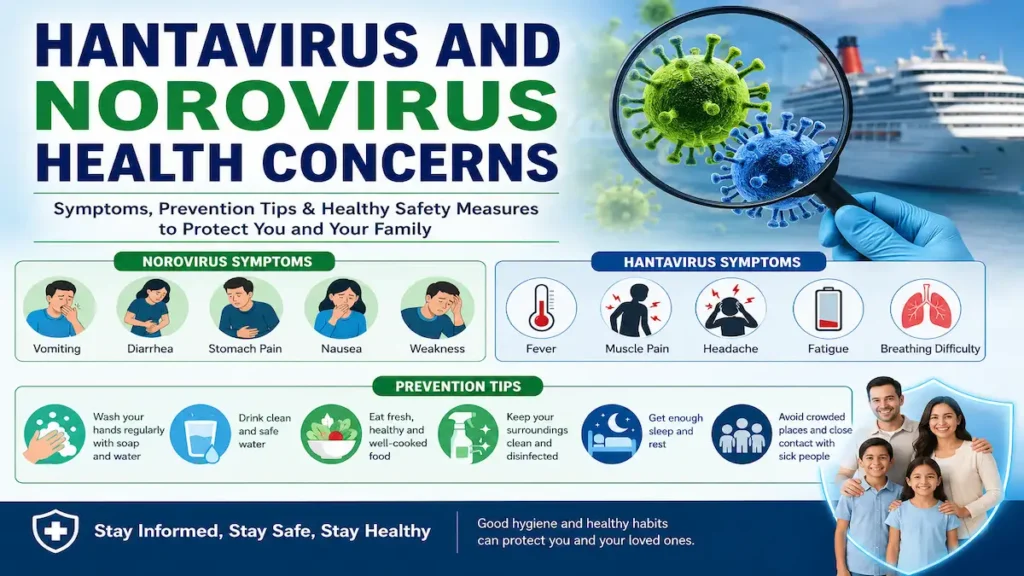
Hantavirus and norovirus health concerns are increasing around the world after recent reports of norovirus cases on a cruise ship in the United States. During the trip, many passengers suffered from vomiting, diarrhea, stomach pain, nausea, and weakness.
Medical teams quickly started treatment and deep cleaning to stop the infection from spreading and to protect other travelers.
At the same time, health experts are also warning people about hantavirus, a serious infection linked to rats and mice. Although norovirus and hantavirus are different diseases, both highlight the importance of hygiene, cleanliness, and public health awareness.
Today’s busy lifestyle, crowded public places, international travel, and changing environmental conditions make it easier for viruses to spread quickly.
Because of this, more people are focusing on their health, immunity, food safety, and personal hygiene.
Simple daily habits can help reduce the risk of infections. These habits include washing hands regularly, drinking clean water, eating healthy food, getting enough sleep, and keeping surroundings clean.
What Is Norovirus?
Norovirus is one of the most common causes of stomach infections around the world. Many people call it the “stomach flu,” but it is not related to influenza.
This virus mainly affects the stomach and intestines and spreads very easily.
A person infected with norovirus may suddenly feel sick within a short time. The illness usually lasts for one to three days, but weakness and tiredness can continue for longer.
Common Symptoms of Norovirus
People infected with norovirus may experience:
• Vomiting
• Diarrhea
• Nausea
• Stomach cramps
• Fever
• Headache
• Body pain
• Weakness
• Fatigue
• Dehydration
The virus spreads quickly through contaminated food, unsafe water, infected surfaces, and close contact with sick individuals.
Crowded places such as:
• Cruise ships
• Schools
• Restaurants
• Hotels
• Hospitals
• Offices
• Shopping malls
are common locations where norovirus outbreaks can happen rapidly.
Health experts say the virus can survive on surfaces for several hours or even days. If someone touches an infected surface and then touches their mouth or food, the infection can spread easily.
Cruise Ship Norovirus Outbreak Raises Health Concerns
Recently, more than 100 passengers reportedly became sick on a cruise ship in the United States. Many travelers experienced vomiting, diarrhea, stomach pain, and severe weakness during the journey.
Medical staff quickly isolated sick passengers and increased sanitation efforts to stop the spread of the virus. Public areas such as dining halls, elevators, bathrooms, and railings were cleaned repeatedly.
Cruise ships can become high-risk places during outbreaks because thousands of people stay together in limited spaces for several days. Shared dining spaces, pools, and common touch surfaces increase the possibility of infection.
This incident reminded people once again that viruses can spread very fast if hygiene and cleanliness are ignored.
What Is Hantavirus?
Hantavirus is a serious viral infection mainly linked to rodents such as rats and mice. Humans can become infected after coming into contact with rodent urine, saliva, droppings, or contaminated dust particles.
Unlike norovirus, hantavirus mainly affects the lungs and respiratory system. In severe cases, it may lead to breathing problems and dangerous complications.
Early Symptoms of Hantavirus
Common early symptoms include:
• Fever
• Muscle pain
• Headache
• Fatigue
• Weakness
• Chills
• Dizziness
• Nausea
As the disease progresses, some people may develop breathing difficulty and chest discomfort.
Although hantavirus infections are less common than norovirus, health experts continue to warn people about the importance of rodent control and cleanliness.
Difference Between Norovirus and Hantavirus
Many people become confused between these two viral infections, but they are very different diseases.
Norovirus
Affects the stomach and intestines
Spreads through contaminated food, water, and surfaces
Causes vomiting and diarrhea
Common in crowded public places
Usually lasts a few days
Hantavirus
Mainly affects the lungs
Spreads through infected rodents
Causes breathing-related symptoms
Linked to dirty or rodent-infested areas
Can become serious if untreated
Understanding the difference helps people follow the right prevention methods.
Why Viral Diseases Spread Quickly Today
Modern lifestyles have made viral infections spread faster than before. Travel, overcrowding, pollution, and unhealthy habits all increase infection risk.
- Crowded Public Places
Viruses spread rapidly in crowded locations like:
• Airports
• Buses
• Trains
• Schools
• Markets
• Malls
• Cruise ships
Close physical contact increases the chances of infection. - Poor Hygiene Habits
Not washing hands properly before eating or after using the washroom can allow harmful viruses and bacteria to enter the body. - Unsafe Food and Water
Food prepared in unhygienic conditions may carry dangerous germs and viruses. - Weak Immune System
People with weaker immunity often become sick more easily and may recover slowly. - Lack of Awareness
Ignoring symptoms and continuing daily activities can spread infections to others.
Common Symptoms of Norovirus Infection
Norovirus symptoms usually appear within 12 to 48 hours after infection.
Major symptoms include:
• Vomiting
• Diarrhea
• Stomach pain
• Nausea
• Fever
• Weakness
• Headache
• Dehydration
Dehydration is one of the biggest concerns because the body loses too much water through vomiting and diarrhea.
Signs of Dehydration
• Dry mouth
• Dizziness
• Dark urine
• Less urination
• Extreme tiredness
• Dry skin
Doctors usually recommend:
• Drinking enough fluids
• Oral rehydration solutions
• Proper rest
• Light foods like rice, bananas, and toast
Healthy Tips to Stay Safe From Viral Infections
Simple healthy habits can greatly reduce the risk of infections and support better immunity.
Wash Hands Properly
Washing hands with soap and water for at least 20 seconds is one of the best ways to prevent viral infections.
Hands should be washed:
• Before eating
• After using the washroom
• After touching public surfaces
• After coughing or sneezing
Drink Enough Water
Clean drinking water helps maintain hydration and supports body functions.
Proper hydration also helps the immune system work effectively.
Eat Healthy Food
Nutritious foods strengthen the immune system and improve overall health.
Healthy foods include:
• Fresh fruits
• Green vegetables
• Whole grains
• Nuts and seeds
• Protein-rich foods
Vitamin-rich foods may help the body fight infections better.
Get Proper Sleep
Good sleep allows the body to repair itself and maintain strong immunity.
Adults generally need 7–8 hours of quality sleep daily.
Exercise Regularly
Light physical activities like:
• Walking
• Yoga
• Stretching
• Cycling
can improve circulation, energy, and overall wellness.
Regular exercise also helps reduce stress.
Keep Surroundings Clean
Cleaning commonly touched surfaces can lower infection risks.
Important areas to clean include:
• Kitchen counters
• Bathrooms
• Door handles
• Mobile phones
• Dining tables
Disinfecting surfaces regularly can help stop viruses from spreading.
Avoid Touching Your Face
Viruses can enter the body through the eyes, nose, and mouth.
Avoid touching your face frequently, especially in public places.
Stay Home When Sick
People experiencing symptoms like vomiting, fever, diarrhea, or weakness should stay home to avoid spreading infections.
Resting at home also helps the body recover faster.
Importance of Personal Hygiene
Personal hygiene plays a major role in disease prevention.
Healthy hygiene habits include:
• Washing hands regularly
• Bathing daily
• Wearing clean clothes
• Keeping nails clean
• Covering the mouth while coughing
• Keeping food covered properly
Teaching children proper hygiene habits from an early age can help reduce infections in schools and homes.
Why Cruise Ships Face Higher Health Risks
Cruise ships provide enjoyable travel experiences, but they also create conditions where infections can spread quickly.
Reasons Why Outbreaks Happen on Cruise Ships
• Shared dining areas
• Close physical contact
• Shared bathrooms and pools
• Limited personal space
• Frequently touched surfaces
Health experts advise travelers to:
• Wash hands often
• Avoid sharing personal items
• Drink safe water
• Report symptoms early
Importance of Strong Immunity
A strong immune system helps the body fight infections more effectively.
Healthy Habits That Support Immunity
• Eating balanced meals
• Drinking enough water
• Regular exercise
• Quality sleep
• Stress management
• Avoiding smoking and alcohol
People with healthy lifestyles often recover faster from illnesses.
Public Awareness Is Important
Public awareness plays a major role during disease outbreaks.
Health departments help by:
• Monitoring infections
• Testing patients
• Sharing health information
• Guiding people about prevention
Today, people receive updates through television, websites, newspapers, and social media. However, it is important to trust reliable medical information and avoid false rumors online.
Schools, hospitals, and communities also help spread awareness about hygiene and healthy habits.
When to See a Doctor
Medical attention may be necessary if someone experiences:
• Severe dehydration
• High fever
• Difficulty breathing
• Chest pain
• Continuous vomiting
• Extreme weakness
• Confusion or dizziness
Prompt medical care can lower the risk of complications and support faster recovery.
Simple Daily Habits for Better Health
Small healthy routines can make a big difference in preventing illness.
Daily Healthy Habits
• Drink clean water
• Eat fresh home-cooked food
• Wash hands regularly
• Sleep on time
• Exercise daily
• Keep surroundings clean
• Manage stress properly
Following these simple habits consistently can improve physical and mental health.
Final Thoughts
The recent norovirus outbreak on a cruise ship and ongoing concerns about hantavirus have once again highlighted the importance of health awareness and hygiene.
Viral infections can spread quickly, especially in crowded places, but proper precautions can reduce the risk significantly. Washing hands, eating healthy food, drinking safe water, maintaining cleanliness, and strengthening immunity are some of the best ways to stay protected.
People should stay informed without panicking. Awareness, responsible behavior, and healthy daily habits can help protect families and communities from infections.
By following simple preventive measures every day, everyone can contribute to a healthier and safer future.
Frequently Asked Questions (FAQs)
- What is norovirus?
Norovirus is a highly contagious virus that causes stomach infection. It mainly affects the stomach and intestines and can lead to vomiting, diarrhea, nausea, and stomach pain. - What are the common symptoms of norovirus?
Common norovirus symptoms include:
• Vomiting
• Diarrhea
• Nausea
• Stomach cramps
• Fever
• Headache
• Weakness
• Dehydration
Symptoms usually appear within 12 to 48 hours after infection. - How does norovirus spread?
Norovirus spreads through the following:
• Contaminated food
• Unsafe drinking water
• Infected surfaces
• Close contact with sick people
Crowded places like schools, hotels, restaurants, and cruise ships have a higher risk of outbreaks. - What is hantavirus?
Hantavirus is a serious viral infection linked to rodents such as rats and mice. Humans may become infected through contact with rodent urine, droppings, saliva, or contaminated dust. - What are the early symptoms of hantavirus?
Early hantavirus symptoms may include the following:
• Fever
• Muscle pain
• Headache
• Fatigue
• Weakness
• Dizziness
• Chills
Severe cases may cause breathing problems and lung complications. - Is hantavirus more dangerous than norovirus?
Both viruses are different. Norovirus mainly affects the stomach and usually improves within a few days, while hantavirus can become more serious because it may affect the lungs and breathing system. - How can I protect myself from viral infections?
You can reduce infection risk by:
• Washing hands regularly
• Drinking clean water
• Eating healthy food
• Keeping surroundings clean
• Avoiding close contact with sick people
• Getting enough sleep
• Exercising regularly - Why do cruise ships face more viral outbreaks?
Cruise ships have thousands of people staying together in limited spaces. Shared dining areas, elevators, bathrooms, and close contact increase the chances of viruses spreading quickly. - Can healthy habits improve immunity?
Yes, healthy habits like balanced nutrition, regular exercise, proper sleep, hydration, and stress management help strengthen the immune system and support better health. - When should someone see a doctor?
Medical attention may be needed if a person experiences:
• Severe dehydration
• High fever
• Continuous vomiting
• Difficulty breathing
• Chest pain
• Extreme weakness
Early treatment can help prevent serious complications. - Can children and older adults be affected more easily?
Yes, young children, older adults, and people with weak immune systems may face a higher risk of dehydration and complications from viral infections. - How important is personal hygiene in preventing infections?
Personal hygiene is one of the best ways to reduce infection risk. Regular handwashing, clean clothes, safe food handling, and clean surroundings can help protect against viruses and bacteria.

Medical Disclaimer
This content is for informational purposes only and should not be considered medical advice.