12 Simple Ways to Reduce Stress at Home Naturally
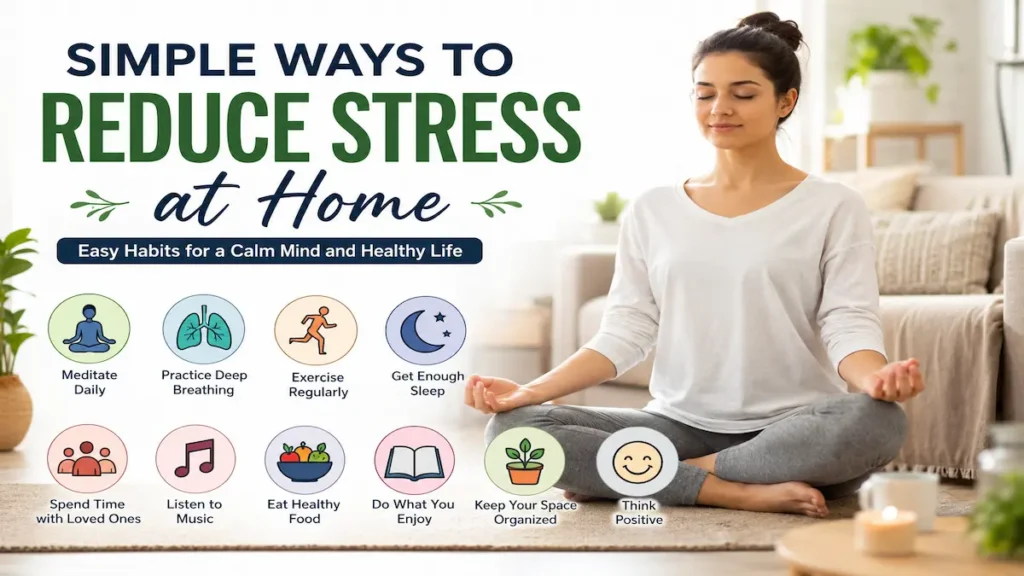
In today’s busy world, stress has become a common problem for many people. Work pressure, financial worries, family responsibilities, and spending too much time online can all increase stress levels. If stress is not managed properly, it can affect both physical and mental health.
The good news is that you do not always need expensive treatments or therapy to reduce stress. Simple daily habits and small lifestyle changes at home can help you feel calmer and healthier.
In this article, we will discuss easy and practical ways to reduce stress at home naturally.
Key Takeaways
- Deep breathing and meditation help reduce stress naturally.
- Regular exercise improves mood and lowers stress levels.
- Quality sleep is essential for better mental well-being.
- Healthy eating supports stress management and overall health.
- Small daily habits can lead to a calmer, happier life.
What Is Stress?
Stress is the body’s natural response to challenges, pressure, or difficult situations. A small amount of stress can help you stay motivated, but long-term stress can harm your health.
Common Signs of Stress
- Feeling worried all the time
- Trouble sleeping
- Frequent headaches
- Irritability or mood swings
- Feeling tired or low on energy
- Difficulty concentrating
- Changes in appetite
- Fast heartbeat
If these symptoms continue for a long time, it is important to seek professional help.
1. Practice Deep Breathing
Deep breathing is one of the easiest and most effective ways to reduce stress at home.
When you are stressed, your breathing often becomes fast and shallow. Deep breathing helps your body get more oxygen and sends calming signals to your brain. Practicing this technique regularly can help reduce stress at home, improve focus, and support better mental health.
How to Practice Deep Breathing
- Sit comfortably in a quiet place.
- Slowly breathe in through your nose.
- Hold your breath for 4 seconds.
- Slowly breathe out through your mouth.
- Repeat for 5 to 10 minutes.
Regular practice can help calm your mind and improve focus.
2. Exercise Regularly
Exercise is not only good for your body but also for your mental health.
Physical activity releases chemicals called endorphins, often known as “feel-good hormones.” These help improve mood and reduce stress at home naturally by lowering anxiety, improving sleep, and supporting overall mental well-being.
Easy Exercises You Can Do at Home
- Walking
- Yoga
- Stretching
- Jump rope
- Light cardio workouts
Even 30 minutes of activity each day can make a big difference.
3. Get Enough Sleep
Good sleep is essential for managing stress.
Lack of sleep can increase stress, and stress can make it harder to sleep. This can create a cycle that affects your health.
Tips for Better Sleep
- Go to bed and wake up at the same time every day.
- Avoid using your phone before bedtime.
- Limit caffeine in the evening.
- Keep your bedroom quiet and comfortable.
Most adults need about 7 to 9 hours of quality sleep each night.
4. Practice Yoga and Meditation
Yoga and meditation are popular natural methods for reducing stress.
Meditation helps you focus on the present moment and reduces negative thoughts.
Simple Meditation for Beginners
- Find a quiet place.
- Close your eyes.
- Focus on your breathing.
- Continue for 5 to 10 minutes.
Regular meditation can improve emotional balance and inner peace.
5. Spend Time with Family and Friends
Strong social connections can help reduce stress.
Talking to people you trust can provide emotional support and make you feel better.
Simple Ways to Connect
- Eat meals together.
- Call a friend.
- Play games with family.
- Enjoy activities together at home.
Positive relationships are important for good mental health.
6. Listen to Relaxing Music
Music can have a powerful effect on your mood.
Calm and soothing music may help lower stress levels and promote relaxation.
Good Music Choices for Relaxation
- Instrumental music
- Meditation music
- Nature sounds
- Soft devotional music
Listening to relaxing music for a few minutes daily can help you feel calmer.
7. Eat Healthy Foods
What you eat can affect how you feel mentally and physically.
Too much junk food, sugar, and processed foods may increase stress and reduce energy levels.
Foods That May Support Stress Management
- Fresh fruits
- Green vegetables
- Nuts and seeds
- Yogurt
- Whole grains
- Plenty of water
A balanced diet helps maintain energy and supports overall well-being.
8. Reduce Screen Time
Spending too much time on phones, computers, or social media can increase stress and mental fatigue.
Constant exposure to negative news and online comparisons may affect your mood.
Ways to Reduce Screen Time
- Set daily limits for device use.
- Avoid screens one hour before bed.
- Spend more time on offline activities.
- Talk with family members.
Small changes can improve mental clarity and reduce stress.
9. Make Time for Your Hobbies
Doing activities you enjoy can help you relax and feel happier.
Popular Hobbies
- Reading books
- Painting
- Gardening
- Cooking
- Writing
- Learning music
Spending even 20 to 30 minutes on a hobby can help reduce stress.
10. Keep Your Home Organized
A messy environment can sometimes increase feelings of stress.
A clean and organized home often creates a sense of calm and control.
Easy Organization Tips
- Clean one room at a time.
- Remove unnecessary items.
- Create simple daily routines.
- Make a to-do list.
Small improvements can help create a more peaceful environment.
11. Develop Positive Thinking
Negative thoughts can increase stress, while positive thinking can help you handle challenges more effectively.
Tips for Positive Thinking
- Focus on your achievements.
- Practice gratitude.
- Avoid comparing yourself to others.
- Write down something positive each day.
A positive mindset can improve emotional well-being over time.
12. Take Time to Relax
Many people stay busy throughout the day and forget to rest.
Giving yourself time to relax is important for mental health.
Relaxing Activities
- Taking a warm bath
- Reading a book
- Practicing meditation
- Sitting quietly with a cup of tea
- Spending time in nature
These activities can help recharge your mind and body.
When Should You Seek Professional Help?
Sometimes stress becomes difficult to manage on your own.
You should consider speaking with a healthcare professional if stress starts affecting your daily life.
Warning Signs
- Ongoing sadness
- Severe anxiety
- Serious sleep problems
- Difficulty concentrating
- Thoughts of self-harm
Getting help early can support better mental health outcomes.
Conclusion
Stress is a normal part of life, but it can be managed with healthy habits. Simple actions such as deep breathing, regular exercise, quality sleep, meditation, healthy eating, and spending time with loved ones can help reduce stress at home.
Making small positive changes every day can improve both mental and physical well-being. If stress continues for a long time or becomes overwhelming, seek advice from a qualified healthcare professional.
Frequently Asked Questions (FAQs)
1. What is the easiest way to reduce stress at home?
Deep breathing, light exercise, and short meditation sessions are simple and effective ways to reduce stress at home.
2. Can yoga help reduce stress?
Yes. Regular yoga and meditation can help lower stress, anxiety, and mental fatigue.
3. How much sleep is needed for stress management?
Most adults need 7 to 9 hours of quality sleep each night.
4. Does listening to music reduce stress?
Yes. Relaxing music may help calm the mind and improve mood.
5. Can stress affect physical health?
Yes. Long-term stress may contribute to headaches, high blood pressure, sleep problems, and other health concerns.
6. What foods are good for stress management?
Fruits, vegetables, nuts, yogurt, whole grains, and adequate water intake can support overall well-being.
7. Can social media increase stress?
For some people, excessive social media use may increase anxiety, comparison, and mental stress.
8. When should I talk to a mental health professional?
You should seek professional support if stress is persistent, affects daily life, or causes severe emotional difficulties.

Medical Disclaimer
This content is for informational purposes only and should not be considered medical advice.