Advanced Yoga Poses: Strength, Flexibility & Balance
Yoga helps people stay healthy. It is a simple way to exercise the body and relax the mind.
People do yoga for different reasons. Some want to become strong. Some want to make their body flexible. Others do yoga to feel calm and happy.
Most people start with easy yoga poses. These poses help the body learn stretching, breathing, and balance. After some time, people may want to try harder poses. These harder poses are called advanced yoga poses. They need more strength, balance, and flexibility. They also need practice and patience.
Advanced yoga poses can help make the body strong. They can improve balance and flexibility. They can also help people focus better.
Some advanced yoga poses include deep stretches, back bends, arm balance poses, and upside-down poses. These poses work many muscles in the body.
It is best to learn easy and medium-level poses before trying advanced poses. This helps keep the body safe and lowers the chance of injury.
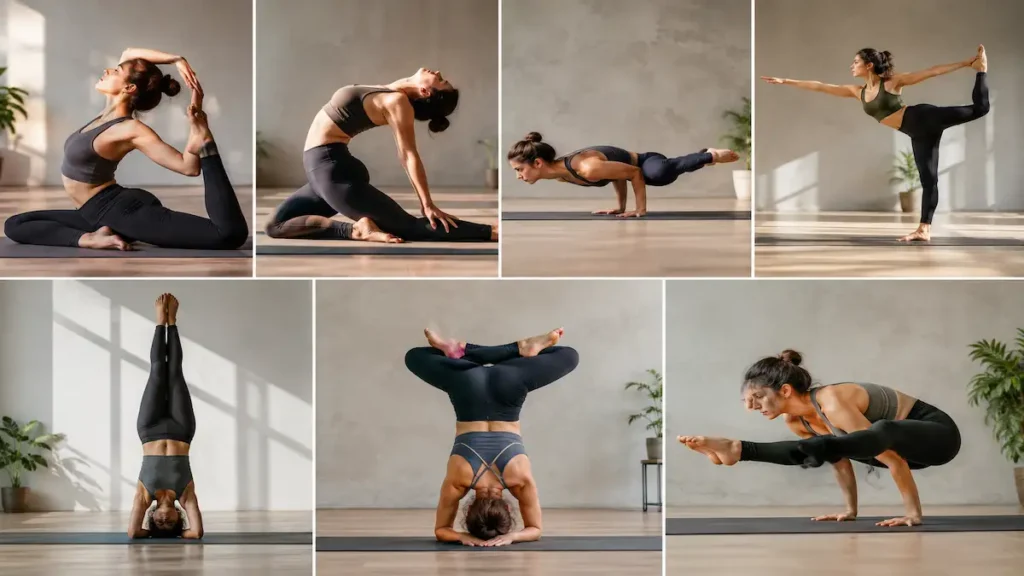
In this guide, you will learn about advanced yoga poses such as King Pigeon Pose, Dove Pose, Peacock Pose, Lord of the Dance Pose, Headstand, Headstand Lotus Pose, and Firefly Pose. You will also learn how to do these poses and why they are helpful.
What Are Advanced Yoga Poses?
Advanced yoga poses are yoga positions that are harder than basic poses. They need more strength, balance, flexibility, and body control. These poses can include deep stretches, balancing on the hands, or turning the body upside down. Because of this, they can be challenging for many people.
Unlike beginner poses, advanced poses make the muscles and joints work harder. They also need more focus to keep the body in the correct position.
Many advanced yoga poses include:
• Deep back bends
• Arm balance poses
• Upside-down poses
• Hip-opening stretches
• Core-strengthening poses
These poses may look very difficult at first. However, they become easier with regular practice.
You do not need to do them perfectly on your first try. The most important thing is to keep practicing and improve little by little.
Everyone learns at a different speed. Some people become flexible quickly, while others need more time. That is normal.
The goal of yoga is not to be perfect. The goal is to keep learning and improving.
Benefits of Advanced Yoga Poses
Advanced yoga poses can help both the body and the mind.
Makes Your Body Strong
These yoga poses help make your body strong.
When you do these poses, your arms, legs, back, and stomach work together.
With regular practice, your body becomes stronger.
Some poses, such as Peacock Pose and Firefly Pose, need strong arms and a strong stomach area.
These poses can also help make daily tasks easier.
Helps Your Body Move Better
These poses stretch your body.
They help your hips, back, shoulders, and legs move more easily.
This can make bending, reaching, and other daily movements easier.
Improves Balance
Balance is an important part of fitness.
Poses such as Lord of the Dance Pose and Headstand challenge the body’s balance.
Regular practice can improve stability and coordination.
Strengthens the Core
The core includes the stomach, lower back, and pelvic muscles.
These muscles help support the spine and keep good posture.
Most advanced yoga poses use the core muscles. A strong core can make everyday activities easier.
Improves Focus
Advanced yoga is not only about the body. It also helps train the mind.
Holding a difficult pose needs focus and concentration.
You must pay attention to your breathing, balance, and body position at the same time.
This can help improve focus in daily life.
Helps Improve Posture
Many people sit for long hours every day.
This can lead to poor posture.
Advanced yoga helps strengthen the muscles that support good posture. It also stretches tight muscles.
As a result, many people stand and sit better after regular practice.
Helps Reduce Stress
Yoga uses slow breathing and calm movements.
These habits can help relax the mind and body.
Many people feel calm, refreshed, and less stressed after doing yoga.
Safety Tips Before Doing Advanced Yoga
Before you try advanced yoga poses, follow these safety tips.
Warm Up First
Do not start with hard poses right away.
Begin with easy stretches and simple yoga poses.
A warm-up helps prepare your muscles and joints.
It can also help prevent injuries.
Listen to Your Body
Yoga should not hurt.
If you feel pain, stop the pose.
Move slowly and choose a position that feels comfortable.
Breathe Slowly
Breathing is an important part of yoga.
Take slow and steady breaths.
Good breathing can help you stay calm and balanced.
Use a Yoga Mat
A yoga mat helps keep you steady.
It can stop you from slipping.
Wear comfortable clothes so you can move easily.
Choose a Safe Place
Practice yoga in a place with enough space.
Remove anything that could cause you to trip or fall.
Learn From a Teacher
Advanced yoga poses can be difficult.
A trained yoga teacher can help you learn the correct way to do each pose.
They can also help you stay safe.
King Pigeon Pose
King Pigeon Pose is a difficult yoga pose.
It stretches many parts of the body.
It works the hips, chest, shoulders, and back.
This pose needs balance, flexibility, and practice.
Muscles Worked
King Pigeon Pose works:
• Arms
• Shoulders
• Back
• Hips
• Stomach muscles
How to Do King Pigeon Pose
- Start in Pigeon Pose.
- Keep one leg bent in front.
- Stretch the other leg behind you.
- Slowly bend the back leg.
- Bring the foot toward your head.
- Raise your arms.
- Hold your foot with both hands.
- Lift your chest.
- Breathe slowly.
Benefits of King Pigeon Pose
This pose helps open the hips.
It stretches the chest and shoulders.
It can help improve posture.
It can also help make the back more flexible.
Because this pose needs focus, it can help improve body control.
Dove Pose
Dove Pose is a yoga pose that stretches the front of the body.
It helps make the back more flexible.
It also stretches the chest, hips, and legs.
Many people add this pose to their yoga routine.
Muscles Worked
Dove Pose works:
• Shoulders
• Front thigh muscles
• Back thigh muscles
• Hip muscles
• Lower back
• Stomach muscles
How to Do Dove Pose
- Kneel on the floor.
- Keep your knees apart.
- Place your hands behind you.
- Lean back slowly.
- Lower onto your arms if comfortable.
- Lift your hips a little.
- Open your chest.
- Let your head move back gently.
- Keep breathing slowly.
Benefits of Dove Pose
Dove Pose helps stretch the body.
It can make the back more flexible.
It can help improve posture.
Many people find that it helps reduce stiffness from sitting too long.
It can also help improve focus and body control.
Peacock Pose
Peacock Pose is a hard yoga pose.
In this pose, your body is balanced on your hands.
It needs strong arms and good balance.
At first, this pose may seem difficult.
With practice, it becomes easier.
Muscles Worked
Peacock Pose works:
• Forearms
• Wrists
• Arms
• Stomach muscles
• Lower back
• Hips
• Back of the legs
How to Do Peacock Pose
- Kneel on the yoga mat.
- Keep your knees apart.
- Place your hands on the floor.
- Point your fingers toward your body.
- Bend your elbows a little.
- Press your elbows into your stomach.
- Lean forward slowly.
- Stretch your legs behind you.
- Lift your feet off the floor.
- Hold the pose and breathe slowly.
Benefits of Peacock Pose
This pose helps make the upper body stronger.
It works the arms, wrists, shoulders, and stomach muscles.
It can also help improve balance.
Because it needs focus, it may help improve concentration.
Lord of the Dance Pose
Lord of the Dance Pose is a standing balance pose.
It helps improve balance and flexibility.
This pose also stretches the front of the body.
Muscles Worked
This pose works:
• Front thigh muscles
• Back thigh muscles
• Hip muscles
• Stomach muscles
• Back muscles
• Shoulders
How to Do Lord of the Dance Pose
- Stand straight.
- Put your weight on one leg.
- Bend the other knee.
- Hold that foot with one hand.
- Stretch your other arm forward.
- Lift the bent leg behind you.
- Open your chest.
- Look at one spot in front of you.
- Breathe slowly.
Benefits of Lord of the Dance Pose
This pose helps improve balance.
It can make the legs stronger.
It stretches the chest, shoulders, and thighs.
It can also help improve focus.
Headstand
Headstand is a yoga pose where the body is upside down.
The head and arms help support the body.
Many people think of Headstand as one of the most famous yoga poses.
Muscles Worked
Headstand works:
• Arms
• Shoulders
• Back
• Stomach muscles
• Legs
How to Do Headstand
- Start on your hands and knees.
- Place your forearms on the floor.
- Join your fingers together.
- Place the top of your head on the mat.
- Lift your hips.
- Walk your feet closer.
- Lift one leg slowly.
- Lift the other leg.
- Balance carefully.
- Keep breathing normally.
Benefits of Headstand
Headstand helps make the shoulders and stomach muscles stronger.
It can improve balance and body control.
It may also help improve focus.
Learning this pose takes time and patience.
Safety Note
Do not try Headstand if you have a neck injury.
People with serious health problems should talk to a doctor before trying this pose.
Headstand Lotus Pose
Headstand Lotus Pose is a harder form of Headstand.
In this pose, the legs move into the Lotus position while balancing upside down.
This pose needs balance, flexibility, and control.
Muscles Worked
This pose works:
• Stomach muscles
• Shoulders
• Arms
• Back
• Legs
How to Do Headstand Lotus Pose
- Start in a steady Headstand.
- Bend one leg slowly.
- Place the foot on the opposite thigh.
- Bend the other leg.
- Complete the Lotus position.
- Stay balanced.
- Breathe slowly.
Benefits of Headstand Lotus Pose
This pose helps improve balance.
It can make the stomach muscles stronger.
It also helps stretch the hips and legs.
Many people feel more confident after learning this pose.
Firefly Pose
Firefly Pose is a challenging yoga pose.
In this pose, the body is lifted off the floor using the hands.
It needs arm strength, balance, and practice.
Many people enjoy learning this pose because it tests their skills.
Muscles Worked
Firefly Pose works:
• Shoulders
• Arms
• Chest
• Stomach muscles
• Hips
• Back
How to Do Firefly Pose
- Start in a squat position.
- Lean your upper body forward.
- Place your hands on the floor.
- Keep your upper arms close to your legs.
- Put your weight on your hands.
- Lift your feet off the floor.
- Stretch your legs forward.
- Tighten your stomach muscles.
- Hold the pose for a few breaths.
Benefits of Firefly Pose
This pose helps make the upper body stronger.
It can improve balance and body control.
It also stretches the hips and legs.
Learning this pose can help build confidence.
Common Mistakes When Doing Advanced Yoga Poses
Even skilled people can make mistakes.
Try to avoid these common problems.
Skipping the Warm-Up
Do not start with difficult poses right away.
Always warm up first.
Warm muscles are safer than cold muscles.
Holding Your Breath
Some people stop breathing during hard poses.
Keep breathing slowly and calmly.
Good breathing helps you stay relaxed.
Moving Too Fast
Do not rush.
Move slowly and carefully.
Slow movements help improve balance and control.
Ignoring Pain
Stretching may feel uncomfortable at times.
Pain is different.
If a pose causes pain, stop and rest.
Comparing Yourself to Others
Everyone learns at a different speed.
Do not worry about what others can do.
Focus on your own progress.
Practicing Alone Without Help
A yoga teacher can help you learn the correct way to do a pose.
This can help keep you safe.
Sample Advanced Yoga Routine
Try this routine only if you are comfortable with intermediate yoga poses.
Warm-Up (5–10 Minutes)
• Cat-Cow Stretch
• Downward Dog
• Cobra Pose
• Child’s Pose
Main Practice
- King Pigeon Pose – 30 seconds on each side
- Dove Pose – 30 seconds
- Peacock Pose – 15–20 seconds
- Lord of the Dance Pose – 30 seconds on each side
- Headstand – 20–30 seconds
- Headstand Lotus Pose – 15–20 seconds
- Firefly Pose – 15–20 seconds
Cool-Down
• Seated Forward Fold
• Supine Twist
• Corpse Pose (Savasana)
This routine can help improve strength, balance, and flexibility.
Conclusion
Advanced Yoga Poses are an excellent way to improve strength, flexibility, balance, posture, and mental focus. Poses such as King Pigeon Pose, Dove Pose, Peacock Pose, Lord of the Dance Pose, Headstand, Headstand Lotus Pose, and Firefly Pose challenge the body while helping you develop better control and confidence.
Regular practice of these advanced yoga poses can strengthen the core, increase mobility, improve stability, and support overall physical fitness. In addition, yoga promotes relaxation, reduces stress, and helps create a stronger mind-body connection. Whether your goal is to improve flexibility, build muscle strength, enhance balance, or take your yoga practice to the next level, advanced yoga can provide lasting benefits.
Remember to progress gradually, follow proper technique, and listen to your body during every session. Consistent practice, patience, and mindful breathing are the keys to mastering challenging yoga poses safely. With dedication and the right approach, advanced yoga can help you achieve better health, greater flexibility, improved balance, and a more active lifestyle.
Frequently Asked Questions (FAQs)
1. What are advanced yoga poses?
Advanced yoga poses are difficult yoga positions that need strength, balance, flexibility, and practice.
2. Who can do advanced yoga poses?
People who already know beginner and intermediate yoga poses can try advanced yoga poses.
3. How often should I practice advanced yoga?
Many people practice advanced yoga 2 to 4 times each week.
4. Can advanced yoga make the body stronger?
Yes. Many advanced yoga poses help strengthen the arms, legs, back, and stomach muscles.
5. Which pose is good for flexibility?
King Pigeon Pose and Dove Pose are good for improving flexibility.
6. Which pose is good for balance?
Lord of the Dance Pose and Headstand are good for balance.
7. Can yoga help improve posture?
Yes. Yoga can help strengthen the muscles that support good posture.
8. Is Headstand safe for everyone?
No. People with neck problems or certain health conditions should talk to a doctor first.
9. What should I do before advanced yoga?
Warm up, wear comfortable clothes, use a yoga mat, and breathe slowly.
10. Which advanced yoga pose is the hardest?
Many people find Headstand Lotus Pose, Peacock Pose, Firefly Pose, and King Pigeon Pose very challenging.

Medical Disclaimer
This content is for informational purposes only and should not be considered medical advice.