Intermediate Yoga Routine: 6 Best Poses for Strength and Flexibility
An intermediate yoga routine is a great way to improve your strength, flexibility, balance, and overall health. If you already know some basic yoga poses, this routine can help you take your yoga practice to the next level.
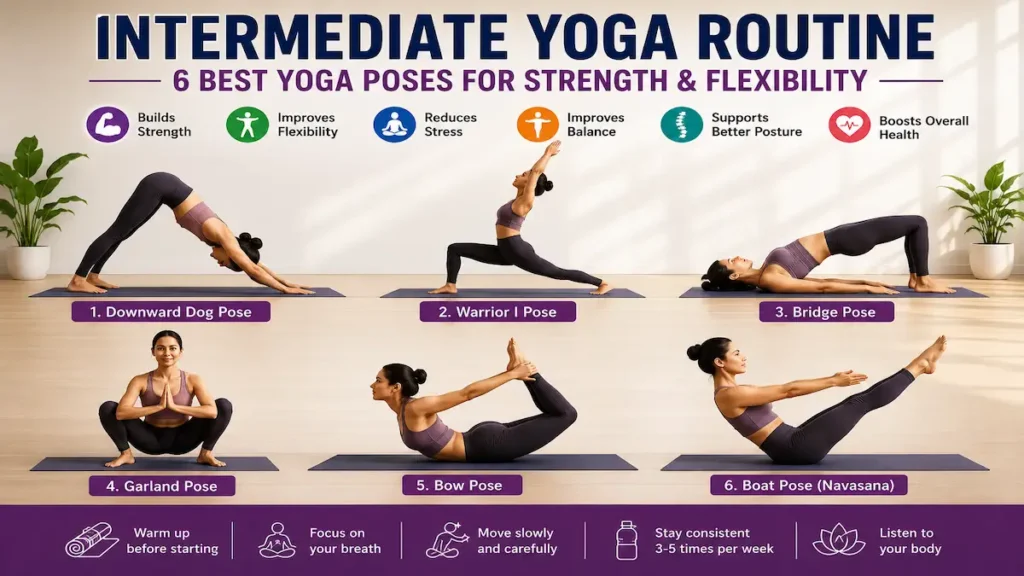
This intermediate yoga routine includes six powerful yoga poses that work different muscle groups throughout your body. These poses help stretch tight muscles, build strength, improve posture, and increase body control.
In this guide, you will learn how to do each pose correctly, the muscles it targets, and the benefits of adding these poses to your regular yoga workout.
Why Follow an Intermediate Yoga Routine?
An intermediate yoga routine combines strength training and flexibility exercises. It helps your body become stronger while improving movement and mobility.
Benefits of an Intermediate Yoga Routine
• Builds full-body strength
• Improves flexibility and mobility
• Supports better posture
• Strengthens core muscles
• Improves balance and stability
• Reduces stress and tension
• Increases body awareness
• Supports joint health
Before starting this intermediate yoga workout, spend 2–3 minutes doing simple warm-up stretches.
1. Downward Dog Pose
The Downward Dog Pose is one of the most popular poses in any intermediate yoga routine. It stretches the back of the body while strengthening the arms and legs.
Muscles Worked
• Quadriceps
• Abdominals
• Deltoids
• Calves
• Hamstrings
How to Do Downward Dog Pose
- Start on all fours.
- Place your hands under your shoulders.
- Keep your knees under your hips.
- Take a deep breath in.
- Exhale and lift your knees off the floor.
- Push your hips toward the ceiling.
- Press your heels toward the ground.
- Keep your head between your arms.
- Hold the pose and breathe slowly.
Benefits of Downward Dog Pose
• Stretches the back, calves, and hamstrings
• Strengthens shoulders and arms
• Improves posture
• Reduces body stiffness
• Boosts blood circulation
Common Mistakes
• Rounding the back
• Locking the knees
• Putting too much pressure on the wrists
2. Warrior I Pose
The Warrior I Pose is an important part of an intermediate yoga routine because it builds lower-body strength and improves balance.
Muscles Worked
• Abdominals
• Hamstrings
• Quadriceps
• Glutes
How to Do Warrior I Pose
- Stand with your feet together.
- Step your left foot forward into a lunge.
- Keep your right leg straight.
- Turn your right foot outward at a 45-degree angle.
- Raise both arms overhead.
- Pull your shoulders down and back.
- Look toward your fingertips.
- Hold the pose while breathing deeply.
Benefits of Warrior I Pose
• Strengthens the legs
• Improves balance
• Opens the hips
• Builds core strength
• Improves focus and concentration
Common Mistakes
• Leaning too far forward
• Moving the knee beyond the toes
• Raising the shoulders too high
3. Bridge Pose
The Bridge Pose is one of the best yoga poses for strengthening the back side of the body.
Muscles Worked
• Hamstrings
• Glutes
• Quadriceps
• Lower back muscles
How to Do Bridge Pose
- Lie on your back.
- Bend your knees.
- Place your feet flat on the floor.
- Keep your arms beside your body.
- Take a deep breath.
- Press through your feet.
- Lift your hips toward the ceiling.
- Hold for a few breaths.
- Slowly lower your hips.
Benefits of Bridge Pose
• Strengthens glutes and hamstrings
• Improves spinal flexibility
• Opens the chest
• Supports better posture
• Helps lower back health
Common Mistakes
• Turning the knees outward
• Lifting the hips too high
• Holding your breath
4. Garland Pose
The Garland Pose is a deep squat that improves flexibility in the hips, thighs, and ankles.
Muscles Worked
• Deltoids
• Abdominals
• Hip muscles
• Inner thighs
How to Do Garland Pose
- Squat down with your feet close together.
- Turn your toes slightly outward.
- Lower your hips toward the floor.
- Place your elbows inside your knees.
- Press your palms together.
- Lift your chest upward.
- Hold the pose comfortably.
Benefits of Garland Pose
• Improves hip flexibility
• Stretches the ankles
• Strengthens the core
• Supports digestion
• Improves lower-body mobility
Common Mistakes
• Rounding the back
• Dropping the chest
• Rising onto the toes
5. Bow Pose
The Bow Pose is a powerful yoga pose that stretches the front of the body and strengthens the back muscles.
Muscles Worked
• Latissimus dorsi (Lats)
• Triceps
• Glutes
• Hamstrings
• Back muscles
How to Do Bow Pose
- Lie face down on your yoga mat.
- Keep your arms beside your body.
- Bend your knees.
- Reach back and hold your ankles.
- Take a deep breath in.
- Lift your chest and thighs off the floor.
- Pull your feet away from your hips.
- Look forward and breathe normally.
Benefits of Bow Pose
• Improves spinal flexibility
• Strengthens back muscles
• Opens the chest and shoulders
• Improves posture
• Increases energy levels
Common Mistakes
• Spreading the knees too wide
• Holding the breath
• Straining the neck
6. Boat Pose (Navasana)
The Boat Pose is one of the best poses in an intermediate yoga routine for building a strong core.
Muscles Worked
• Abdominal muscles
• Hip flexors
• Lower back muscles
How to Do Boat Pose
- Sit on the floor with your legs straight.
- Lean back slightly.
- Lift your feet off the floor.
- Bring your knees toward your chest.
- Balance on your sitting bones.
- Extend your arms forward.
- Straighten your legs if possible.
- Hold the pose while breathing normally.
Benefits of Boat Pose
• Strengthens core muscles
• Improves balance
• Supports spinal health
• Increases stability
• Improves posture
Common Mistakes
• Rounding the back
• Holding the breath
• Leaning too far backward
Best Intermediate Yoga Routine for Daily Practice
Follow this intermediate yoga routine in the order below:
- Downward Dog Pose – 30 seconds
- Warrior I Pose – 30 seconds each side
- Bridge Pose – 30 seconds
- Garland Pose – 30 seconds
- Bow Pose – 20–30 seconds
- Boat Pose – 20–30 seconds
Repeat the complete routine 2–3 times based on your fitness level.
Safety Tips for an Intermediate Yoga Routine
To get the best results from your intermediate yoga routine, follow these safety tips:
• Always warm up first
• Move slowly and carefully
• Focus on proper form
• Never force a stretch
• Breathe deeply during each pose
• Stop if you feel pain
• Use a quality yoga mat
• Drink enough water
If you have an injury or medical condition, talk to a healthcare professional before starting a new yoga program.
How Often Should You Practice an Intermediate Yoga Routine?
For the best results, practice this intermediate yoga routine 3–5 times per week.
Regular practice can help improve:
• Strength
• Flexibility
• Balance
• Posture
• Overall fitness
Even short yoga sessions can provide great health benefits when done consistently.
Conclusion
This intermediate yoga routine is perfect for people who want to improve strength, flexibility, and overall fitness. The six yoga poses—Downward Dog, Warrior I, Bridge Pose, Garland Pose, Bow Pose, and Boat Pose—work together to strengthen your entire body while improving balance and mobility.
By practicing this intermediate yoga routine regularly, you can build a stronger body, improve posture, reduce stress, and enjoy better overall health.
Frequently Asked Questions (FAQs)
1. What is an intermediate yoga routine?
An intermediate yoga routine includes yoga poses that are slightly more challenging than beginner poses. It helps improve strength, flexibility, and balance.
2. Is this intermediate yoga routine good for beginners?
This routine is best for people who already know basic yoga poses. Beginners should start with easier yoga exercises first.
3. How long should I hold each yoga pose?
Most poses can be held for 20–30 seconds. As you become stronger, you can increase the time.
4. Can an intermediate yoga routine build muscle strength?
Yes. Many yoga poses use your body weight to strengthen muscles throughout the body.
5. Is yoga helpful for weight loss?
Yes. Regular yoga practice can support weight loss by increasing activity levels and improving muscle tone.
6. How many times a week should I do this intermediate yoga routine?
Practicing 3–5 times per week is ideal for improving strength, flexibility, and balance.
7. Which yoga pose is best for core strength?
Boat Pose (Navasana) is one of the best yoga poses for strengthening the core muscles.
8. What should I do if I cannot perform a yoga pose correctly?
Modify the pose according to your fitness level and flexibility. With regular practice, your form will improve over time.

Medical Disclaimer
This content is for informational purposes only and should not be considered medical advice.