Home Workout Without Equipment: 25 Best Bodyweight Exercises for Fast Fitness Results
Introduction
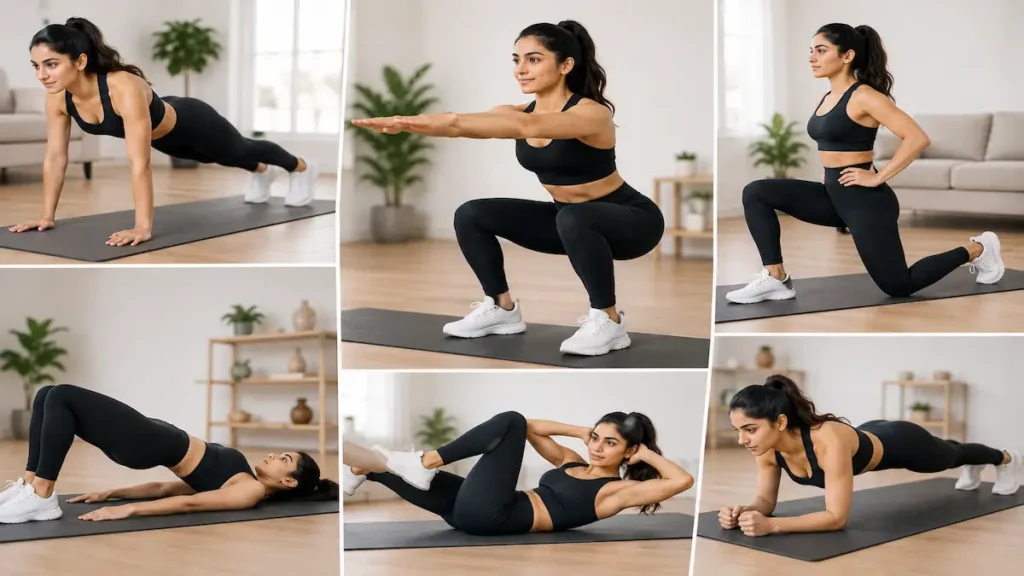
Home Workout Without Equipment is one of the easiest and most effective ways to stay fit. A 20-minute home workout is better than no physical activity, builds strength, and improves overall health without joining a gym. Whether you’re just starting out or looking to push your limits, these 25 bodyweight exercises require nothing but floor space and the willingness to move. You can improve your fitness, build strength, and stay healthy right at home. All you need is a small space, comfortable clothes, and the desire to exercise regularly.
Home workouts have become very popular because they are easy, affordable, and convenient. You do not need to travel to a gym or spend money on equipment. Instead, you can use your own body weight as resistance. These exercises are called bodyweight exercises.
Bodyweight exercises can help make your muscles stronger, improve balance, increase flexibility, and build endurance. People of any age or fitness level can perform these exercises. Whether you are new to exercise or have been working out for some time, bodyweight training can help you improve your fitness and achieve your goals.
Another great benefit of home workouts is flexibility. You can work out at any time that is convenient for you. Even if you have only 15 to 20 minutes available, you can still complete a good workout.
This guide explains beginner-friendly bodyweight exercises that can help strengthen your whole body. By practicing these exercises regularly, you can build a strong fitness foundation and prepare yourself for more challenging workouts later.
Benefits of a Home Workout Without Equipment
Saves Money
One of the biggest advantages of home workouts is that they cost very little. Gym memberships, exercise machines, and fitness classes can be expensive. With bodyweight exercises, you only need your own body and a small workout area.
Saves Time
Many people do not exercise because they feel they do not have enough time. Going to a gym often requires travel time. Home workouts remove this problem because you can exercise immediately without leaving your house.
Easy for Beginners
Some people feel shy or uncomfortable exercising in front of others. Home workouts allow beginners to learn and practice in a private and comfortable environment.
Improves Overall Health
Regular exercise helps improve heart health, muscle strength, flexibility, and mental well-being. It can also lower the risk of many health problems and help you feel more energetic.
Suitable for Everyone
Bodyweight exercises can be adjusted to match different fitness levels. Beginners can start with easy versions and slowly move to harder exercises as they become stronger. A Home Workout Without Equipment is a simple and affordable way to improve overall fitness.
How to Prepare for a Home Workout Without Equipment
Preparing properly before a Home Workout Without Equipment can improve performance and reduce injury risk. Before you start exercising, it is important to prepare your body.
Warm Up First
A warm-up gets your muscles ready for exercise by improving blood circulation throughout your body. It also lowers the risk of injury.
Simple warm-up activities include:
• Walking in place
• Light jogging
• Arm circles
• Shoulder rolls
• Leg swings
Spend about five minutes warming up before each workout.
Wear Comfortable Clothes
Wear comfortable clothing that lets you move easily during your workout. Comfortable shoes can also provide support during exercise.
Drink Water
Drink water before, during, and after your workout. Staying hydrated helps your body perform better.
Listen to Your Body
Exercise should make your body work harder, but it should never hurt or cause pain. If you feel dizzy or uncomfortable, stop and rest.
Beginner Home Workout Without Equipment Routine
This Home Workout Without Equipment routine is perfect for beginners who want to build strength safely. This beginner routine works your whole body and helps build basic strength and stability.
Workout Plan
• Complete 10 to 15 reps of every exercise.
• Complete 2 sets.
• Rest for 30 seconds to 1 minute between exercises.
• The workout should take about 15 to 20 minutes.
Now let’s learn each exercise in detail.
1. Bridge Exercise
The bridge is a simple exercise that helps activate the core and the muscles on the back side of the body. It is often used as a warm-up exercise.
Benefits of Bridge Exercise
• Strengthens the glutes
• Activates core muscles
• Supports the lower back
• Improves posture
• Increases hip movement
How to Do a Bridge
- Lie on your back.
- Bend your knees and place your feet flat on the floor.
- Keep your arms beside your body.
- Tighten your stomach muscles.
- Push through your feet and lift your hips upward.
- Raise your hips until your body forms a straight line.
- Squeeze your glutes at the top.
- Slowly lower your hips back to the floor.
Common Mistakes
• Lifting the hips too high
• Arching the lower back too much
• Moving too fast
Always move slowly and with control.
2. Chair Squat
Squats are one of the most important exercises for building lower-body strength. Using a chair makes the movement easier for beginners.
Benefits of Chair Squats
• Strengthens legs
• Improves balance
• Builds endurance
• Supports healthy joints
• Helps with daily activities
How to Do a Chair Squat
- Stand in front of a chair.
- Keep your feet shoulder-width apart.
- Point your toes slightly outward.
- Push your hips backward.
- Bend your knees and lower your body.
- Gently lower yourself until your hips lightly touch the chair.
- Push through your heels and stand up.
Common Mistakes
• Allowing your knees to go too far past your toes
• Rounding the back
• Standing up too quickly
Keep your chest lifted and maintain a straight back throughout the movement.
3. Knee Push-up
The knee push-up is an easier version of the standard push-up. It helps beginners build upper-body strength.
Benefits of Knee Pushups
• Strengthens the chest
• Builds arm strength
• Improves shoulder stability
• Increases upper-body endurance
How to Do a Knee Push-Up
- Get into a high plank position on your knees.
- Keep your body straight from your head to your knees.
- Bend your elbows.
- Lower your chest toward the floor.
- Make sure your elbows stay at about a 45-degree angle.
- Push yourself back up.
Tips for Success
• Move slowly.
• Keep your stomach muscles tight.
• Do not let your hips drop.
With regular practice, you will become ready for standard push-ups.
4. Stationary Lunge
Lunges are excellent exercises for building strength in the legs and improving balance.
Benefits of Stationary Lunges
• Strengthens the legs
• Builds glute muscles
• Improves balance
• Supports healthy joints
• Increases coordination
How to Do a Stationary Lunge
- Place one foot in front of you and the other foot behind you.
- Keep your front foot flat on the floor.
- Stay on the toes of your back foot.
- Bend both knees.
- Lower your body until your front thigh is almost parallel to the floor.
- Push through your front foot and return to the starting position.
- Complete all repetitions before changing sides.
Common Mistakes
• Leaning too far forward
• Allowing the front knee to move inward
• Taking very short steps
Maintain a straight posture with your upper body while performing the exercise.
5. Plank to Downward Dog
This exercise combines strength and flexibility. It is especially helpful for the shoulders and core muscles.
Benefits
• Strengthens the shoulders
• Improves flexibility
• Activates core muscles
• Builds stability
How to Do It
- Start in a high plank position.
- Position your hands right below your shoulders.
- Tighten your stomach muscles.
- Push your hips upward and backward.
- Form an upside-down “V” shape.
- Hold for a moment.
- Return to the plank position.
Tips
• Move slowly.
• Keep your back straight.
• Breathe normally.
6. Straight-Leg Donkey Kick
The Straight-Leg Donkey Kick focuses mainly on the glute muscles.
Strong glutes help support posture, balance, and lower-body strength.
Benefits
• Strengthens glutes
• Improves hip stability
• Supports lower back health
• Helps athletic performance
How to Do It
- Get on your hands and knees.
- Keep your hands below your shoulders.
- Keep your knees below your hips.
- Extend one leg straight behind you.
- Lift the leg upward.
- Squeeze your glute muscles.
- Slowly lower the leg.
- Repeat before changing sides.
Common Mistakes
• Arching the lower back
• Twisting the hips
• Moving too quickly
Focus on muscle control rather than speed.
7. Bird Dog
The Bird Dog is a full-body exercise that improves balance and coordination.
Benefits
• Strengthens the core
• Improves balance
• Supports spinal health
• Improves body control
How to Do It
- Start on your hands and knees.
- Keep your back straight.
- Extend your left arm forward.
- Extend your right leg backward.
- Hold for two seconds.
- Return to the starting position.
- Repeat with the opposite arm and leg.
Tips
• Keep your hips level.
• Do not twist your body.
• Move slowly and carefully.
Although it looks simple, the Bird Dog requires focus and control.
8. Forearm Plank
The Forearm Plank is one of the best exercises for building core strength.
Benefits
• Strengthens the stomach muscles
• Improves stability
• Supports good posture
• Helps prevent injuries
• Improves overall fitness
How to Do It
- Place your forearms on the floor.
- Extend your legs behind you.
- Maintain a straight alignment from head to toe.
- Tighten your stomach muscles.
- Hold the position for 30 seconds to 1 minute.
Common Mistakes
• Letting the hips drop
• Raising the hips too high
• Holding your breath
Try to keep your body straight from head to heels.
9. Side-Lying Hip Abduction
Many people sit for long hours every day. This can weaken the hip muscles. Side-Lying Hip Abduction helps strengthen these important muscles.
Benefits
• Strengthens the hips
• Improves balance
• Supports knee health
• Increases lower-body stability
How to Do It
- Lie on one side.
- Rest your head comfortably on your lower arm for support.
- Keep both legs straight.
- Lift the top leg upward.
- Pause for a moment.
- Lower the leg slowly.
- Complete all repetitions before changing sides.
Tips
• Keep your hips facing forward.
• Move slowly.
• Avoid swinging your leg.
10. Bicycle Crunch
The Bicycle Crunch is a popular exercise for strengthening the stomach muscles.
Benefits
• Strengthens abdominal muscles
• Improves core stability
• Builds coordination
• Supports posture
How to Do It
- Lie on your back.
- Raise your legs into a tabletop position.
- Place your hands behind your head.
- Move your right elbow toward your left knee.
- Extend your right leg.
- Switch sides in a cycling motion.
- Continue alternating sides.
Common Mistakes
• Pulling on the neck
• Moving too fast
• Using momentum instead of muscle strength
Perform each movement slowly and with control to get the best results.
Sample Beginner Weekly Schedule
Following a structured Home Workout Without Equipment schedule helps maintain consistency. If you are new to exercise, you can follow this simple weekly plan.
Monday
Complete the Beginner Workout
Tuesday
Light Walking and Stretching
Wednesday
Complete the Beginner Workout
Thursday
Rest or Gentle Yoga
Friday
Complete the Beginner Workout
Saturday
Walking, Cycling, or Light Activity
Sunday
Rest and Recovery
This schedule gives your body enough time to recover while helping you stay active.
Intermediate Home Workout Without Equipment Routine
An Intermediate Home Workout Without Equipment helps increase strength, balance, and endurance. Once the beginner exercises start feeling easy, you can move to the intermediate level. These exercises require more strength, balance, and control. They help your muscles work harder and prepare your body for advanced workouts.
Intermediate Workout Plan
• Do 10 to 15 reps for each exercise.
• Complete 2 sets of every exercise.
• Rest for about 1 minute between exercises.
• Focus on good form instead of speed.
Remember, doing an exercise correctly is more important than doing many repetitions.
1. Bridged March
The Bridged March is a more challenging version of the basic bridge exercise. It improves balance and strengthens the muscles in your hips and core.
Benefits
• Strengthens glutes and core muscles
• Improves balance
• Builds lower-body strength
• Increases stability
How to Do It
- Start in a bridge position.
- Lift your hips off the floor.
- Raise one foot a few inches from the ground.
- Hold for a moment.
- Lower the foot back down.
- Repeat with the other leg.
- Continue alternating legs.
Keep your hips level throughout the exercise.
2. Bodyweight Squat
After learning chair squats, you can move to regular bodyweight squats.
Benefits
• Strengthens the legs
• Improves mobility
• Builds endurance
• Supports healthy joints
How to Do It
- Stand with your feet shoulder-width apart.
- Keep your chest up.
- Push your hips backward.
- Bend your knees and lower your body.
- Go down as far as comfortable.
- Push through your heels and stand up.
Imagine you are sitting down on an invisible chair.
Tips
• Keep your back straight.
• Keep your knees from turning inward during the movement.
• Move slowly and with control.
3. Standard Push-up
The standard push-up is one of the best bodyweight exercises for upper-body strength.
Benefits
• Strengthens the chest
• Builds arm strength
• Improves shoulder stability
• Works the core muscles
How to Do It
- Start in a high plank position.
- Place your hands slightly wider than shoulder-width.
- Keep your body straight.
- Bend your elbows.
- Lower your chest toward the floor.
- Push yourself back up.
Common Mistakes
• Dropping the hips
• Raising the hips too high
• Moving too quickly
Try to keep your body in one straight line throughout the exercise.
4. Forward and Backward Lunges
Adding movement to lunges makes them more challenging and improves coordination.
Benefits
• Builds leg strength
• Improves balance
• Increases flexibility
• Helps athletic performance
How to Do It
- Stand with your feet together.
- Step forward with one leg and perform a lunge.
- Return to the starting position.
- Step backward with the same leg into a reverse lunge.
- Return to the center.
- Repeat several times before switching legs.
This movement trains your body in different directions.
5. Pike Pushups
Pike push-ups place more focus on the shoulders.
Benefits
• Strengthens shoulders
• Builds upper-body strength
• Improves stability
How to Do It
- Begin in a pike position.
- Keep your hips raised.
- Bend your elbows.
- Lower your head toward the floor.
- Push back to the starting position.
Move slowly and stay in control.
6. Kneeling Squats
Kneeling Squats keep your muscles working for a longer time.
Benefits
• Strengthens the legs
• Builds endurance
• Improves balance
• Challenges the core
How to Do It
- Lower into a squat position.
- Bring one knee to the floor.
- Bring the other knee down.
- Return to the squat position.
- Continue repeating the movement.
Try to maintain proper form during the entire exercise.
7. Superman Exercise
The Superman exercise strengthens the muscles along the back of the body.
Benefits
• Strengthens the lower back
• Improves posture
• Supports spinal health
• Builds back strength
How to Do It
- Lie on your stomach.
- Stretch your arms forward.
- Keep your legs straight.
- Lift your arms and legs at the same time.
- Hold briefly.
- Slowly lower back down.
Move slowly to get the best results.
8. Plank with Alternating Leg Raises
This exercise makes the regular plank more difficult.
Benefits
• Strengthens the core
• Improves balance
• Builds stability
• Challenges multiple muscle groups
How to Do It
- Start in a plank position.
- Lift one leg.
- Hold for about five seconds.
- Lower the leg.
- Lift the other leg.
- Repeat.
Keep your hips as steady as possible.
9. Side Plank with Knee Support
This exercise strengthens the sides of the body and improves stability.
Benefits
• Strengthens the core
• Improves balance
• Builds hip strength
• Supports posture
How to Do It
- Lie on one side.
- Support yourself on one forearm.
- Bend your knees.
- Lift your hips off the floor.
- Raise the top leg.
- Lower it slowly.
- Repeat and switch sides.
10. Dead Bug Exercise
The Dead Bug is excellent for strengthening deep core muscles.
Benefits
• Improves core strength
• Supports the lower back
• Improves coordination
• Helps posture
How to Do It
- Lie on your back.
- Raise your arms toward the ceiling.
- Lift your knees to 90 degrees.
- Slowly lower one leg and the opposite arm.
- Return to the starting position.
- Repeat on the other side.
Make sure your lower back stays flat against the floor during the movement.
Advanced Home Workout Without Equipment Routine
An Advanced Home Workout Without Equipment can challenge experienced fitness enthusiasts. After several months of training, you may be ready for advanced exercises. These movements require strength, balance, coordination, and good exercise technique.
Advanced Workout Plan
• Perform 10 to 15 repetitions.
• Complete 2 sets.
• Rest for 30 seconds to 1 minute between exercises.
Always warm up properly before advanced workouts.
1. Single-Leg Bridge
This exercise increases the challenge of the regular bridge.
Benefits
• Builds glute strength
• Improves balance
• Strengthens the core
How to Do It
- Lie on your back.
- Lift one leg straight.
- Push through the foot on the floor.
- Raise your hips.
- Lower slowly.
- Repeat and switch sides.
2. Overhead Squat
The Overhead Squat combines lower-body strength with upper-body mobility.
Benefits
• Improves flexibility
• Strengthens the legs
• Activates the core
• Improves balance
How to Do It
- Stand with your arms overhead.
- Keep your arms straight.
- Perform a squat.
- Return to standing.
Try to keep your arms raised throughout the movement.
3. One-Leg Push-Up Position
Raising one leg while doing a push-up makes the exercise more challenging.
Benefits
• Builds upper-body strength
• Challenges the core
• Improves balance
How to Do It
- Get into a push-up position.
- Raise one foot off the floor.
- Perform the push-up.
- Switch legs after completing your repetitions.
4. Jumping Lunges
Jumping Lunges are a powerful exercise that develops strength and speed.
Benefits
• Improves leg power
• Builds endurance
• Burns calories
• Increases athletic ability
How to Do It
- Start in a lunge position.
- Jump upward.
- Switch legs in the air.
- Land softly.
- Repeat.
Always land with bent knees to protect your joints.
5. Elevated Pike Pushups
This is a more advanced shoulder exercise.
Benefits
• Builds shoulder strength
• Improves upper-body power
• Challenges stability
How to Do It
- Place your feet on a step or bench.
- Move into a Pike position.
- Lower your head toward the floor.
- Push back up.
The higher your feet are, the harder the exercise becomes.
6. Advanced Bird Dog
This version is performed from a plank position.
Benefits
• Improves balance
• Strengthens the core
• Builds body control
How to Do It
- Start in a high plank.
- Raise one arm.
- Raise the opposite leg.
- Hold briefly.
- Return and switch sides.
Keep your body as stable as possible.
7. Single-Leg Forearm Plank
This exercise adds a balance challenge to the forearm plank.
Benefits
• Strengthens the core
• Improves stability
• Builds endurance
How to Do It
- Get into a forearm plank.
- Lift one leg.
- Hold for several seconds.
- Lower and switch sides.
8. Side Plank with Hip Abduction
This exercise works the core and hip muscles together.
Benefits
• Strengthens the hips
• Improves balance
• Builds core stability
How to Do It
- Get into a side plank.
- Lift the top leg.
- Hold briefly.
- Lower the leg.
- Repeat on both sides.
9. Hollow Hold to Jackknife
This is one of the most difficult basic exercises.
Benefits
• Builds strong abdominal muscles
• Improves control
• Strengthens the entire core
How to Do It
- Lie on your back.
- Raise your arms and legs off the floor.
- Hold the position.
- Lift your legs higher.
- Reach your hands toward your toes.
- Return slowly.
Perform the movement with control.
Can a 20-Minute Home Workout Be Effective?
Yes. A 20-minute workout is much better than doing no exercise at all.
A short workout can:
• Improve fitness
• Build strength
• Increase energy
• Support weight management
A Home Workout Without Equipment can still provide excellent results even if you only have 20 minutes. However, for the best health benefits, exercise should be done regularly throughout the week.
Do Home Workouts Really Work?
Yes, a Home Workout Without Equipment can be very effective when performed consistently.
Home workouts can help:
• Build muscle strength
• Improve endurance
• Increase flexibility
• Improve balance
• Support heart health
The key is consistency. Regular exercise produces better results than occasional workouts.
Can You Lose Belly Fat with Exercise?
Exercise can help reduce body fat, including belly fat.
A Home Workout Without Equipment can support fat loss when combined with healthy eating habits. However, it is important to understand that you cannot choose exactly where your body loses fat.
For the best results:
• Exercise regularly
• Eat healthy foods
• Avoid too much sugar
• Stay active throughout the day
• Get enough sleep
A healthy lifestyle is the most effective way to lose excess body fat.
Tips for Building Muscle at Home
A Home Workout Without Equipment can help build muscle when combined with proper nutrition and consistency. If your goal is to build muscle, follow these tips:
Exercise Regularly
Consistency is one of the most important factors for success with a Home Workout Without Equipment. Train at least three to four times each week.
Increase Difficulty Slowly
Add more repetitions or try harder exercises as you become stronger.
Eat Enough Protein
Protein helps repair and build muscles.
Good sources include:
• Eggs
• Milk
• Yogurt
• Fish
• Chicken
• Beans
• Lentils
Get Enough Rest
Muscles grow during recovery, not during exercise.
Stay Consistent
Results take time. Keep working toward your goal.
28-Day Home Workout Without Equipment Challenge
This Home Workout Without Equipment challenge helps develop healthy exercise habits. Here is a simple challenge:
Week 1
Learn proper exercise form.
Week 2
Increase repetitions slightly.
Week 3
Reduce rest time between exercises.
Week 4
Try intermediate exercises.
After 30 days, you may start to see these changes:
• Better strength
• Improved balance
• More energy
• Better confidence
• Improved fitness
Final Thoughts on Home Workout Without Equipment
A Home Workout Without Equipment is one of the most practical ways to stay active and healthy. By following a consistent workout routine, you can build strength, improve endurance, and achieve your fitness goals without needing a gym or expensive equipment. Bodyweight exercises are a simple and effective way to stay fit at home. You do not need expensive equipment or a gym membership to improve your health. With a small space and a little dedication, you can build strength, improve balance, increase endurance, and feel more energetic.
Start with beginner exercises and focus on learning the correct form. As you become stronger, move to intermediate and advanced exercises. Take small steps and give yourself time to improve.
Keep in mind that getting fit takes time and steady effort. Small improvements each day can lead to big results over time.
The most important step is simply to begin. Stay active, stay consistent, and enjoy the process of becoming stronger and healthier every day.
Frequently Asked Questions (FAQs)
1. What Is a Home Workout Without Equipment?
A home workout without equipment is a workout that uses your body weight instead of gym machines or weights. Exercises like squats, push-ups, lunges, and planks are good examples.
2. Does a Home Workout Without Equipment Really Work?
Yes, bodyweight exercises can make your muscles stronger, improve balance, and help you stay fit. They are a simple and effective way to exercise at home.
3. Can beginners do bodyweight exercises?
Yes, beginners can start with easy exercises such as bridges, chair squats, knee pushups, and bird dogs. These exercises help build strength slowly and safely.
4. How Long Should a Home Workout Without Equipment Be?
A home workout can be 15 to 30 minutes long. Even a short workout can help if you do it regularly.
5. How often should I work out each week?
You should try to exercise 3 to 5 days each week. Your body also needs rest days to recover and get stronger.
6. Can a Home Workout Without Equipment Help With Weight Loss?
Yes, home workouts can help you burn calories and lose weight. For the best results, combine exercise with healthy eating habits.
7. Which exercises are best for beginners?
Some good beginner exercises are the following:
• Bridge
• Chair Squat
• Knee Pushup
• Stationary Lunge
• Bird Dog
• Forearm Plank
8. Can I build muscle without going to the gym?
Yes, you can build muscle at home by doing bodyweight exercises regularly. Pushups, squats, lunges, and planks are great exercises for building strength. A Home Workout Without Equipment can be highly effective for building strength over time.
9. Should I warm up before exercising?
Yes. A warm-up helps prepare your body for exercise and lowers the chance of injury. Simple activities like walking in place or arm circles work well.
10. Is a 20-minute home workout enough?
Yes. A 20-minute workout is much better than doing no exercise. If you exercise regularly, even short workouts can improve your fitness. Many people achieve good results with a 20-minute Home Workout Without Equipment.
11. Can home workouts reduce belly fat?
Home workouts can help reduce body fat, including belly fat. However, you cannot lose fat from only one part of the body. Healthy eating and regular exercise are both important.
12. What are the benefits of bodyweight exercises?
Bodyweight exercises can:
• Make muscles stronger
• Improve balance
• Increase flexibility
• Build endurance
• Help heart health
• Support a healthy weight
13. How can I move from beginner to advanced exercises?
Start with beginner exercises and learn the correct form. As you become stronger, add more repetitions and try harder exercises.
14. Do I need a lot of space for home workouts?
No. Most bodyweight exercises need only a small space where you can move safely and comfortably. A Home Workout Without Equipment requires very little space compared to gym training.
15. What is the most important thing for success?
The most important thing is consistency. Doing exercise regularly will give better results than exercising only once in a while.
16. Are home workouts safe?
Yes, home workouts are safe for most people when done correctly. If you have a health problem or injury, talk to a doctor before starting a new exercise program.
17. Can bodyweight exercises improve posture?
Yes. Exercises like planks, bridges, bird dogs, and superman exercises can help strengthen the muscles that support good posture.
18. What should I eat after a workout?
After a workout, try to eat healthy foods with protein and carbohydrates. Drinking enough water is also important.
19. How long does it take to see results?
Many people start to notice changes in their strength and fitness after 4 to 8 weeks of regular exercise.
20. Can I do home workouts every day?
You can stay active every day, but your muscles also need time to rest. Mixing workout days with light activity and rest days is a good idea. A balanced Home Workout Without Equipment plan should include recovery days.
21. What is the best home workout without equipment?
The best home workout without equipment includes exercises like squats, pushups, lunges, planks, bridges, and bicycle crunches. These exercises work different parts of the body and help improve overall fitness.
22. Why are bodyweight exercises popular?
Bodyweight exercises are popular because they are easy to learn, do not need equipment, and can be done almost anywhere.
23. Can teenagers do home workouts?
Yes. Teenagers can do bodyweight exercises to improve strength, fitness, and overall health. They should focus on proper form and avoid overtraining.
24. What should I do if an exercise feels too hard?
If an exercise feels too difficult, try an easier version. For example, do knee pushups instead of standard pushups until you become stronger.
25. What should I do if I miss a workout day?
Missing one workout day is not a problem. Simply continue with your workout plan the next day and stay consistent.

Medical Disclaimer
This content is for informational purposes only and should not be considered medical advice.