Sleep Disorders: Complete Guide to Symptoms, Causes & Treatment
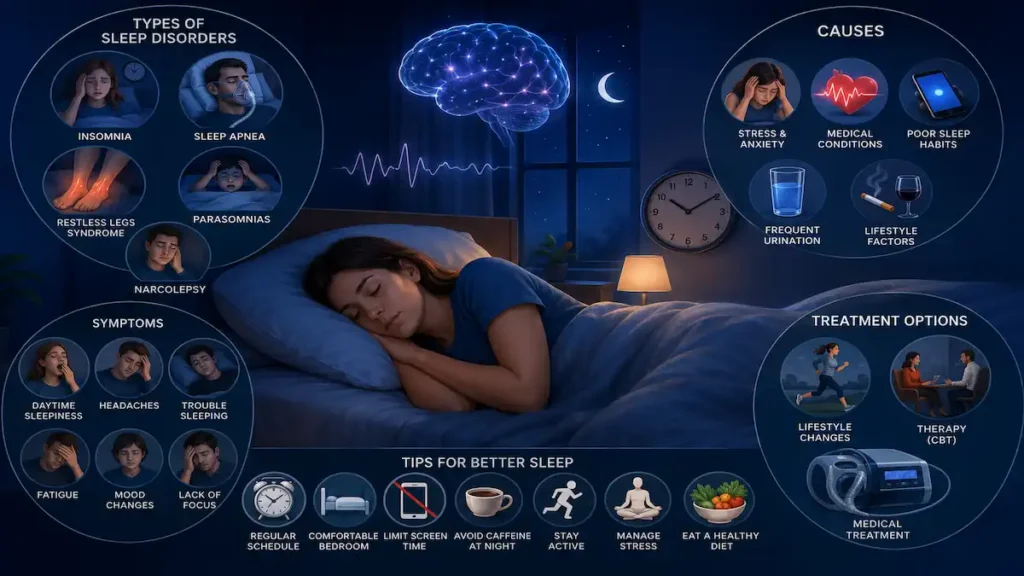
A good night’s sleep is one of the most important parts of a healthy life. It helps your body recover, supports brain function, improves mood, and gives you energy for the day ahead. When you get enough rest, it is easier to focus, learn new things, and stay active.
However, many people struggle with sleep problems. Some find it hard to fall asleep, while others wake up several times during the night. A few people may even stop breathing for short periods while sleeping or feel extremely tired during the day.
Occasional sleep problems are normal. Stress, illness, travel, or a busy schedule can affect your sleep for a short time. But when these problems happen often and start affecting your daily life, they may be a sign of a sleep disorder.
Sleep disorders are common and can affect people of all ages. Children, teenagers, adults, and older adults can all experience them. The good news is that most sleep disorders can be treated or managed with the right care and healthy lifestyle habits.
In this article, you will learn about the common types of sleep disorders, their symptoms, causes, treatment options, and simple ways to improve sleep naturally.
What Are Sleep Disorders?
Sleep disorders are conditions that affect the way a person sleeps. They can make it difficult to fall asleep, stay asleep, or get enough quality rest during the night.
People with these conditions often wake up feeling tired, even after spending many hours in bed. As a result, they may struggle with concentration, mood changes, low energy, and poor performance at work or school.
Not getting good sleep can affect almost every part of the body. Over time, it may increase the risk of health problems such as high blood pressure, obesity, diabetes, and heart disease.
Because sleep is so important for overall health, it is important to take sleep-related problems seriously.
Why Is Good Sleep Important?
Many people do not realize how much sleep affects their daily lives.
During sleep, the body repairs tissues, strengthens the immune system, and processes information collected throughout the day. The brain also stores memories and removes waste products that build up while you are awake.
Getting enough sleep can help:
• Improve memory and learning
• Boost mood and emotional health
• Support the immune system
• Maintain a healthy weight
• Improve concentration
• Increase energy levels
• Lower the risk of certain diseases
When sleep quality is poor, these benefits are reduced.
Common Types of Sleep Disorders
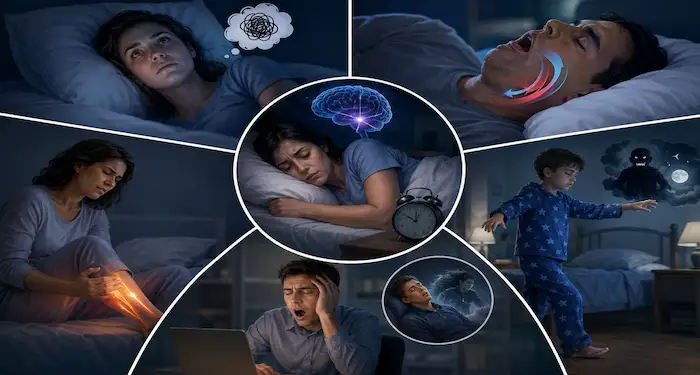
Several types of sleep disorders can affect a person’s ability to get good sleep. Some are more common than others.
1. Insomnia
Insomnia is the most common sleep disorder. People with insomnia have difficulty falling asleep, staying asleep, or both. Some people lie awake for hours before falling asleep. Others wake up during the night and struggle to go back to sleep.
Insomnia may last for a few days, a few weeks, or even several months.
Symptoms of Insomnia
• Difficulty falling asleep
• Waking up during the night
• Waking up too early
• Feeling tired during the day
• Poor concentration
• Mood changes
• Irritability
Common Causes
• Stress
• Anxiety
• Depression
• Caffeine
• Poor sleep habits
• Medical conditions
When insomnia lasts for a long time, it can affect both physical and mental health.
2. Sleep Apnea
Sleep apnea is a serious disorder that causes breathing to stop and start repeatedly during sleep.
People with this condition stop breathing for short periods during the night. These pauses may happen many times without the person knowing it.
Because breathing is interrupted, the body may not get enough oxygen.
Symptoms of Sleep Apnea
• Loud snoring
• Gasping for air during sleep
• Morning headaches
• Dry mouth after waking
• Excessive daytime tiredness
• Trouble focusing
Many people discover they have sleep apnea when a family member notices their symptoms.
Without treatment, sleep apnea can increase the risk of heart disease and high blood pressure.
3. Restless Legs Syndrome (RLS)
Restless Legs Syndrome causes uncomfortable feelings in the legs and a strong urge to move them.
The symptoms often become worse in the evening or when a person is resting.
Many people describe the feeling as tingling, crawling, pulling, or itching inside the legs.
Symptoms of RLS
• Uncomfortable sensations in the legs
• Constant urge to move the legs
• Difficulty relaxing
• Trouble falling asleep
• Frequent waking during the night
Moving the legs often provides temporary relief.
4. Parasomnias
Parasomnias are unusual behaviors that occur while a person is sleeping.
These behaviors can occur while falling asleep, during sleep, or while waking up.
Common Examples
• Sleepwalking
• Sleep talking
• Nightmares
• Night terrors
• Teeth grinding
• Bedwetting
These conditions are more common in children, but adults can also be affected.
5. Narcolepsy
Narcolepsy is a neurological condition that affects the brain’s ability to control sleep and wakefulness.
People with narcolepsy may suddenly fall asleep during the day without warning.
Symptoms of Narcolepsy
• Extreme daytime sleepiness
• Sudden sleep attacks
• Sleep paralysis
• Dream-like experiences while waking up
• Difficulty staying awake
Although rare, narcolepsy can have a major impact on daily activities.
Common Signs and Symptoms of Sleep Disorders
Many people ignore the early signs of sleep problems. They may believe they are simply tired because of work or a busy lifestyle.
Some common warning signs include:
• Difficulty falling asleep
• Waking up often during the night
• Feeling tired every morning
• Daytime sleepiness
• Lack of focus
• Mood swings
• Memory problems
• Loud snoring
• Breathing difficulties during sleep
• Frequent headaches
If these symptoms continue for several weeks, it may be time to seek professional help.
What Causes Sleep Disorders?
There is no single cause of sleep disorders. Many factors can affect how well a person sleeps.
Stress and Anxiety
Stress is one of the most common causes of sleep problems.
Worrying about work, school, family, or money can make it difficult to relax before bedtime.
People who experience high levels of stress often find themselves lying awake thinking about problems instead of sleeping.
Medical Conditions
Several health conditions can interfere with sleep.
These include:
• Arthritis
• Asthma
• Allergies
• Chronic pain
• Acid reflux
• Diabetes
• Heart disease
When symptoms become worse at night, they can make sleeping more difficult.
Poor Sleep Habits
Daily habits play a major role in sleep quality.
Common habits that affect sleep include:
• Using phones before bed
• Watching television late at night
• Drinking too much caffeine
• Staying up very late
• Sleeping at different times every day
Over time, these habits can disrupt the body’s natural sleep cycle.
Frequent Urination
Some people wake up several times during the night to use the bathroom.
This can interrupt the sleep cycle and reduce the amount of deep sleep the body receives.
Lifestyle Factors
Lifestyle choices can also affect sleep quality.
Examples include:
• Smoking
• Drinking alcohol
• Lack of exercise
• Poor diet
• Working night shifts
Making healthier choices can often improve sleep.
How Are Sleep Disorders Diagnosed?
If sleep problems continue for a long time, a doctor may recommend testing.
The first step is usually a discussion about symptoms, medical history, and sleep habits.
The doctor may ask questions such as:
• How many hours do you sleep?
• Do you wake up during the night?
• Do you snore?
• Do you feel tired during the day?
In some cases, additional tests may be needed.
Sleep Study
A sleep study monitors body functions while a person sleeps.
It may record:
• Brain activity
• Breathing patterns
• Heart rate
• Oxygen levels
• Body movements
This test is often used to diagnose sleep apnea and other conditions.
Treatment Options
Treatment depends on the type of sleep disorder and its cause.
Lifestyle Changes
Many people see improvements after making healthy changes to their daily routine.
Therapy
Doctors may recommend Cognitive Behavioral Therapy (CBT), especially for insomnia.
This therapy helps people change unhealthy habits and thoughts that can make it harder to sleep well.
Medical Treatment
In some cases, medications or special devices may be needed.
For example, people with sleep apnea may use a CPAP machine to help keep their airway open during sleep.
Always follow medical advice before taking sleep medications.
Simple Tips to Improve Sleep Naturally

Healthy habits can make a big difference in sleep quality.
Follow a Regular Schedule
Try to keep the same bedtime and wake-up time every day.
A consistent schedule helps train your body’s internal clock.
Create a Comfortable Bedroom
Your bedroom should be:
• Quiet
• Dark
• Cool
• Comfortable
A relaxing environment makes it easier to fall asleep.
Limit Screen Time
Phones, tablets, and computers give off blue light that can affect sleep.
Avoid using phones, tablets, and other screens for at least one hour before bedtime.
Avoid Too Much Caffeine
Coffee, tea, energy drinks, and some soft drinks contain caffeine.
Avoid drinking them late in the day.
Stay Active
Regular exercise can help improve sleep quality.
Even a short walk each day can help improve your overall health.
However, intense exercise right before bedtime may make it harder to fall asleep.
Manage Stress
Relaxation techniques can help calm the mind before bed.
Try:
• Deep breathing
• Meditation
• Gentle stretching
• Reading a book
These activities can help your mind and body relax before bedtime.
Eat a Balanced Diet
A healthy diet supports overall health and better sleep.
Try to include:
• Fruits
• Vegetables
• Whole grains
• Lean proteins
• Healthy fats
Avoid large meals right before bedtime.
When Should You See a Doctor?
You should seek medical advice if:
• Trouble sleeping continues for several weeks or longer.
• Daytime tiredness affects daily activities
• You stop breathing during sleep
• Loud snoring becomes a regular problem
• You frequently fall asleep during the day
• Sleep problems affect work, school, or relationships
Getting help early can prevent problems and improve overall quality of life.
Conclusion
Sleep disorders are common health conditions that can affect people of all ages. Problems such as insomnia, sleep apnea, restless legs syndrome, parasomnias, and narcolepsy can make daily life more difficult and reduce overall well-being.
The good news is that many of these conditions can be treated successfully. Healthy habits, proper medical care, and early diagnosis can help improve sleep quality and overall health.
If you continue to struggle with sleep problems, do not ignore them. Taking action today can help you enjoy better rest, more energy, and a healthier future.
Frequently Asked Questions (FAQs)
1. What are sleep disorders?
Sleep disorders are conditions that affect a person’s ability to get enough quality sleep on a regular basis.
2. What is the most common sleep disorder?
Insomnia is the most common sleep disorder and affects millions of people around the world.
3. Can stress cause sleep problems?
Yes. Stress and anxiety are among the most common causes of sleeping difficulties.
4. Is sleep apnea dangerous?
Yes. If left untreated, sleep apnea may increase the risk of heart disease, stroke, and high blood pressure.
5. How much sleep do adults need?
Most adults need between 7 and 9 hours of sleep each night.
6. Can exercise improve sleep quality?
Yes. Regular physical activity can help improve sleep quality and overall health.
7. Does screen time affect sleep?
Yes. Blue light from electronic devices can interfere with the body’s natural sleep cycle.
8. When should you get medical help for sleep problems?
You should seek medical advice if symptoms continue for several weeks or begin affecting your daily life.
9. Can sleep disorders be treated?
Yes. Many sleep disorders can be managed through healthy habits, therapy, medical treatment, and lifestyle changes.

Medical Disclaimer
This content is for informational purposes only and should not be considered medical advice.