Natural Remedies for Hypothyroidism: Diet, Supplements & Lifestyle
Introduction
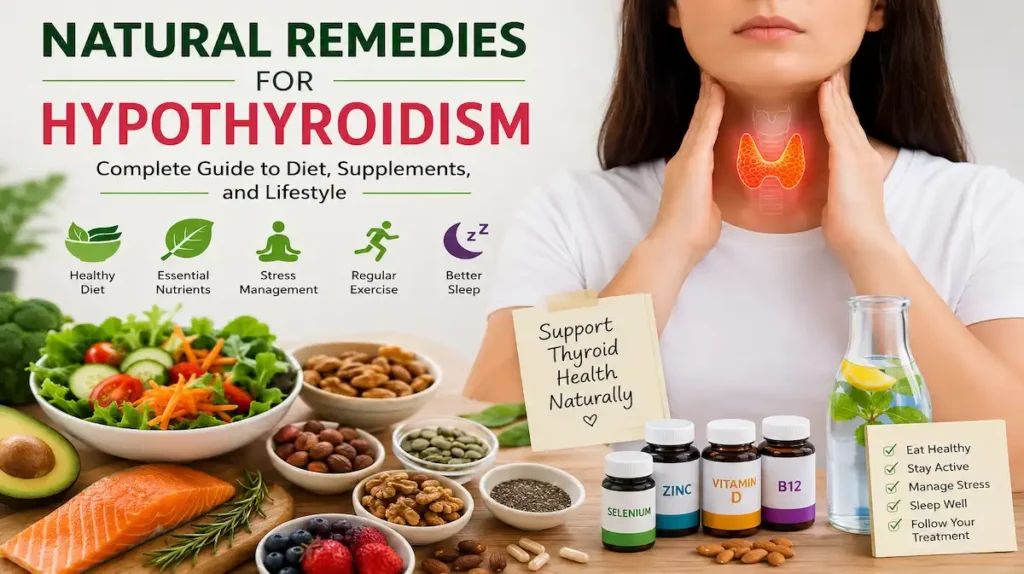
Natural remedies for hypothyroidism are a topic many people search for when they want to support their thyroid health naturally.
Many people feel tired every day but do not know why. Some gain weight even when they try to eat healthy foods. Others notice dry skin, hair loss, or feel cold more often than usual.
These can be signs of hypothyroidism.
Hypothyroidism happens when the thyroid gland does not produce enough hormones for the body to work properly.
Located at the front of the neck, the thyroid is a small gland shaped like a butterfly. Even though it is small, it has a big job. It helps control how the body uses energy.
When the thyroid slows down, many body functions slow down too. This can affect energy, weight, mood, digestion, skin, and hair.
Doctors usually treat hypothyroidism with medicine that replaces missing hormones.
Many people also look for natural remedies for hypothyroidism to support overall health.
Healthy foods, good sleep, exercise, and stress management may help support a healthy lifestyle alongside medical treatment.
Natural remedies cannot cure hypothyroidism. They should never replace prescribed medicine.
However, they may help improve overall well-being and quality of life.
In this guide, you will learn about hypothyroidism, its causes, symptoms, and natural ways to support health.
What Is the Thyroid Gland?
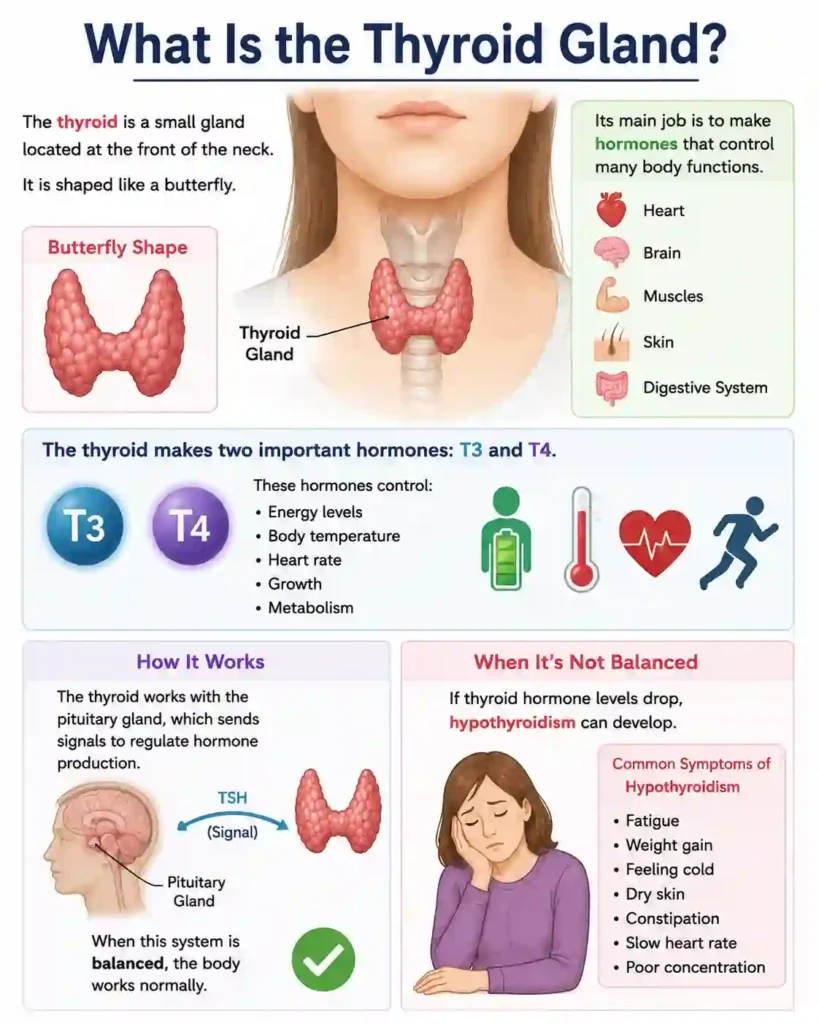
The thyroid is a small gland located at the front of the neck. It is shaped like a butterfly.
Its main job is to make hormones that control many body functions. These include the heart, brain, muscles, skin, and digestive system.
The thyroid makes two important hormones: T3 and T4.
These hormones control energy levels, body temperature, heart rate, growth, and metabolism.
The thyroid works with the pituitary gland, which sends signals to regulate hormone production.
When this system is balanced, the body works normally.
If thyroid hormone levels drop, hypothyroidism can develop.
What Is Hypothyroidism?
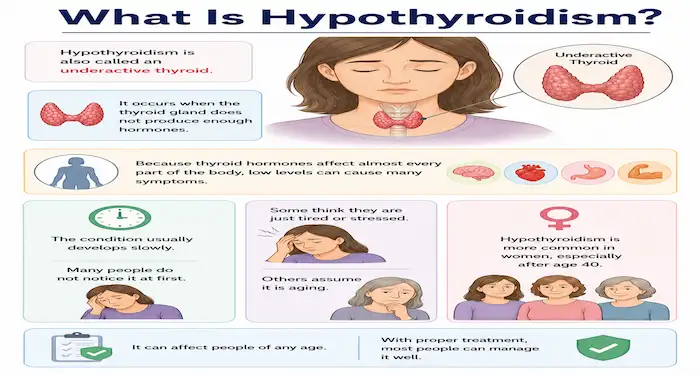
Hypothyroidism is also called an underactive thyroid.
It occurs when the thyroid gland does not produce enough hormones.
Because thyroid hormones affect almost every part of the body, low levels can cause many symptoms.
The condition usually develops slowly. Many people do not notice it at first.
Some think they are just tired or stressed. Others assume it is aging.
Hypothyroidism is more common in women, especially after age 40.
It can affect people of any age.
With proper treatment, most people can manage it well.
Common Causes of Hypothyroidism
There are several reasons why hypothyroidism may develop.
Hashimoto’s Thyroiditis
Hashimoto’s disease is one of the most common causes of hypothyroidism.
It is an autoimmune condition where the immune system mistakenly attacks the thyroid gland.
Over time, this damage reduces the thyroid’s ability to produce hormones.
The condition usually develops slowly.
Iodine Deficiency
The thyroid needs iodine to produce hormones.
If the body does not get enough iodine, hormone production may decrease.
Using iodized salt helps many people meet their iodine needs.
Thyroid Surgery
Some people may need surgery to remove part or all of the thyroid gland.
After surgery, the thyroid may not produce enough hormones.
Radioactive Iodine Treatment
This treatment is used for an overactive thyroid.
However, it can sometimes lead to hypothyroidism later.
Certain Medicines
Some medications can affect thyroid function.
If you have concerns, always consult your doctor.
Nutrient Deficiencies
The thyroid needs several nutrients to work properly.
Important nutrients include:
• Selenium
• Zinc
• Iron
• Vitamin D
• Vitamin B12
Low levels of these nutrients may affect thyroid health in some people.
Common Symptoms of Hypothyroidism
The symptoms of hypothyroidism can be different for each person.
Common symptoms include:
• Feeling tired all the time
• Low energy
• Weight gain
• Dry skin
• Hair loss
• Feeling cold easily
• Constipation
• Low mood
• Memory problems
• Trouble focusing
• Muscle weakness
• Joint pain
• Puffy face
• Slow heart rate
• Weak nails
Some people have only a few symptoms. Others may have many.
Because these symptoms can happen for different reasons, proper testing is important.
How Hypothyroidism Affects the Body
Low levels of thyroid hormones can affect many parts of the body.
Metabolism
Metabolism is the process by which the body turns food into energy.
When thyroid hormone levels are low, the body uses energy more slowly. This may make it easier to gain weight and more difficult to lose extra weight.
Heart Health
The thyroid helps control heart function.
Low hormone levels may slow the heart rate and affect cholesterol levels.
Digestion
Hypothyroidism can slow digestion.
This may lead to constipation and bloating.
Skin and Hair
Thyroid hormones help support healthy skin and hair.
When hormone levels are low, skin may become dry and hair may become thin or weak.
Mood and Thinking
Some people feel sad, forgetful, or have trouble focusing.
Proper treatment often helps improve these symptoms.
Can Natural Remedies Help?
Many people search for natural remedies after learning they have hypothyroidism.
Healthy lifestyle habits may help support overall health and improve daily well-being. However, they do not replace thyroid medicine.
Many people explore natural remedies for hypothyroidism because they want to support their thyroid health through healthy lifestyle habits. While these approaches cannot cure the condition, some natural remedies for hypothyroidism may help improve overall well-being.
People often see the best results when they combine medical treatment with healthy daily habits.
Helpful habits include:
• Eating a balanced diet
• Getting enough sleep
• Staying active
• Managing stress
• Drinking enough water
• Following your doctor’s advice
Natural remedies work best as part of a complete treatment plan.
The Role of Diet in Hypothyroidism
Food cannot cure hypothyroidism. However, eating healthy foods can help support your body and improve your overall health.
A balanced diet gives the body the nutrients it needs to work properly. It may also help with energy levels, digestion, weight management, and general well-being.
Try to include these foods in your daily diet:
• Fresh fruits
• Vegetables
• Whole grains
• Beans and lentils
• Nuts and seeds
• Eggs
• Fish
• Lean meat
• Dairy products or healthy alternatives
It is also important to drink enough water throughout the day.
Instead of following strict diet trends, focus on eating a variety of healthy foods. A healthy diet is considered one of the most important natural remedies for hypothyroidism because it helps provide essential nutrients that support normal body functions.
Selenium and Thyroid Health
Selenium is a mineral that helps the thyroid work properly.
The body uses selenium to change T4 into T3. T3 is the active form of thyroid hormone.
Some foods that contain selenium include:
• Brazil nuts
• Tuna
• Sardines
• Eggs
• Beans
• Lentils
Research shows that selenium may help support thyroid health in some people. However, taking too much selenium can be harmful.
Because of this, it is important to talk to your doctor before taking selenium supplements.
For many people, getting selenium from food is the safest option.
Why Zinc Is Important
Zinc is another mineral that helps the thyroid function properly.
It also supports the immune system and helps the body heal and grow.
Foods rich in zinc include:
• Beef
• Chicken
• Seafood
• Pumpkin seeds
• Lentils
• Chickpeas
• Nuts
A zinc deficiency may affect thyroid function in some people.
Eating a balanced diet can help you get enough zinc naturally.
Iron and Thyroid Function
Iron plays an important role in thyroid hormone production.
Low iron levels may make it harder for the thyroid to work properly.
Good sources of iron include:
• Spinach
• Lentils
• Beans
• Red meat
• Chicken
• Fish
• Fortified cereals
Vitamin C can help the body absorb iron better.
You can get vitamin C from foods such as:
• Oranges
• Lemons
• Strawberries
• Bell peppers
If you think you have low iron levels, speak with your doctor before taking supplements.
Vitamin B12 and Hypothyroidism
Vitamin B12 helps the body make healthy red blood cells.
It also supports the nervous system.
Some people with hypothyroidism may have low vitamin B12 levels.
Low B12 levels may cause:
• Tiredness
• Weakness
• Dizziness
• Memory problems
Foods that contain vitamin B12 include:
• Fish
• Eggs
• Milk
• Yogurt
• Cheese
• Fortified foods
A simple blood test can help check your vitamin B12 levels.
The Importance of Vitamin D
Vitamin D helps keep bones, muscles, and the immune system healthy.
Many people do not get enough vitamin D.
The body makes vitamin D when the skin is exposed to sunlight.
Vitamin D can also be found in:
• Fatty fish
• Egg yolks
• Fortified milk
• Fortified cereals
Low vitamin D levels are common in people around the world.
If your doctor finds that your vitamin D level is low, they may recommend a supplement.
Magnesium and Thyroid Health
Magnesium is involved in many important processes in the body.
It helps support:
• Muscles
• Nerves
• Energy production
• Bone health
Foods rich in magnesium include:
• Almonds
• Cashews
• Pumpkin seeds
• Spinach
• Beans
• Whole grains
While magnesium is important for overall health, more research is needed to understand its exact role in thyroid conditions.
The best approach is to include magnesium-rich foods as part of a balanced diet.
Probiotics and Gut Health
The digestive system contains billions of bacteria.
Some of these bacteria help support good health.
These helpful bacteria are often called probiotics.
Probiotics may help:
• Support digestion
• Improve gut health
• Maintain a healthy balance of bacteria
Foods that contain probiotics include:
• Yogurt
• Kefir
• Some fermented foods
A healthy gut is important for overall well-being.
Researchers continue to study the connection between gut health and thyroid health.
Is a Gluten-Free Diet Helpful?
Some people with thyroid disease also have celiac disease.
Celiac disease is a condition in which the body reacts badly to gluten.
Gluten is found in foods made from:
• Wheat
• Barley
• Rye
People with celiac disease need to avoid gluten completely.
However, not everyone with hypothyroidism needs a gluten-free diet.
At this time, there is not enough evidence to suggest that all people with hypothyroidism should stop eating gluten.
If you are thinking about making major changes to your diet, speak with your doctor or a registered dietitian first.
Why Limiting Sugar and Processed Foods May Help
Many processed foods contain large amounts of sugar, salt, and unhealthy fats.
Eating too many processed foods may contribute to:
• Weight gain
• Low energy
• Poor nutrition
• Blood sugar spikes
People with hypothyroidism may benefit from choosing more whole foods instead.
Try to eat more:
• Fruits
• Vegetables
• Whole grains
• Lean proteins
• Healthy fats
Small healthy changes can make a big difference over time.
Replacing sugary snacks with healthier options may help support better overall health.
Healthy Eating Tips for Everyday Life
Eating healthy foods does not have to be difficult.
Simple habits can make a big difference.
Try these tips:
• Eat regular meals.
• Include vegetables with lunch and dinner.
• Drink enough water each day.
• Limit sugary drinks.
• Choose whole foods when possible.
• Read food labels carefully.
• Avoid skipping meals.
Healthy eating is not about being perfect. It is about making better choices most of the time.
A balanced diet can support your health and help you feel your best while managing hypothyroidism.
Lifestyle Tips, Foods to Watch, and Daily Habits for Hypothyroidism
Lifestyle changes are among the most commonly discussed natural remedies for hypothyroidism. Daily habits such as exercise, stress management, and quality sleep may help support overall health.
Foods to Be Careful With
Most people with hypothyroidism do not need to completely stop eating any specific food. The main goal is to eat a balanced diet and avoid taking too many supplements without medical advice.
Some foods and products may affect thyroid health or interfere with thyroid medicine. Knowing about them can help you make better choices.
Soy and Thyroid Medicine
Soy foods can be part of a healthy diet. Common soy foods include:
• Tofu
• Soy milk
• Soybeans
• Edamame
Soy does not usually cause thyroid disease. However, it can interfere with how well the body absorbs thyroid medicine.
If you take thyroid medicine, try to leave a few hours between taking your medicine and eating soy foods.
If you are unsure, ask your doctor or pharmacist for advice.
Seaweed and Kelp Supplements
Seaweed and kelp contain iodine, which the thyroid needs to make hormones.
Because of this, some products are sold as “thyroid boosters.”
However, more iodine is not always better.
Taking too much iodine may actually make thyroid problems worse in some people. This is why doctors do not usually recommend kelp supplements for people with thyroid disease.
It is safer to get iodine from normal foods unless your doctor tells you otherwise.
Do You Need Iodine Supplements?
Many people think that taking extra iodine will help an underactive thyroid.
This is not always true.
In many cases, people already get enough iodine from their daily diet.
If you are taking thyroid medicine, iodine supplements are usually not needed unless your doctor recommends them.
Taking large amounts of iodine on your own may do more harm than good.
Stay Active Every Day
Exercise is one of the best things you can do for your overall health.
It will not cure hypothyroidism, but it may help you feel better.
Regular physical activity may help with:
• Energy levels
• Weight management
• Mood
• Sleep
• Muscle strength
• Heart health
You do not need a difficult workout plan.
Simple activities can help, such as:
• Walking
• Cycling
• Swimming
• Dancing
• Light stretching
Even a 20- to 30-minute walk most days of the week can be a good start.
The important thing is to keep moving and stay consistent.
Can Yoga Help?
Many people enjoy yoga because it helps the body and mind relax.
Yoga may help:
• Reduce stress
• Improve flexibility
• Improve balance
• Support better sleep
Some people with hypothyroidism feel calmer and more relaxed after regular yoga practice.
Yoga is not a treatment for thyroid disease, but it can be a healthy part of your daily routine.
Simple breathing exercises and gentle stretching may also help you feel more relaxed.
Managing Stress
Stress is a normal part of life, but too much stress for a long time can affect how you feel every day.
When people are stressed, they often feel:
• Tired
• Irritable
• Worried
• Overwhelmed
Finding ways to relax may help improve your overall well-being.
Simple ways to reduce stress include:
• Taking a walk
• Listening to music
• Reading a book
• Spending time with family
• Deep breathing exercises
• Meditation
• Yoga
Taking a few quiet minutes each day can have a positive impact over time.
The Importance of Good Sleep
Good sleep is important for everyone.
When you do not get enough sleep, you may feel tired, slow, and unfocused.
Many people with hypothyroidism already struggle with low energy, so good sleep habits are especially important.
Try these simple sleep tips:
• Try to go to bed at the same time every night.
• Wake up at the same time each morning.
• Avoid screens before bed.
• Keep your bedroom quiet and comfortable.
• Try to avoid too much caffeine later in the day.
Most adults need about seven to nine hours of sleep each night to stay healthy.
Good sleep helps the body recover and prepare for the next day. Getting enough rest is often included among natural remedies for hypothyroidism because sleep supports energy levels, mood, and overall wellness.
Be Careful With Supplements
Many supplements are advertised as natural thyroid treatments.
While some vitamins and minerals are important for health, more is not always better.
Taking large amounts of supplements may cause problems.
Some supplements may also affect how thyroid medicine works.
Common mistakes include:
• Taking too many supplements at once
• Using very high doses
• Replacing medicine with supplements
• Following advice from unreliable sources
Always read labels carefully and talk to your doctor before starting new supplements.
Can Natural Remedies Replace Thyroid Medicine?
This is a common question.
The answer is no.
Natural remedies may support your health, but they cannot replace thyroid hormone medicine.
For most people with hypothyroidism, medicine is needed to keep hormone levels in a healthy range.
Stopping your medicine without medical advice may cause symptoms to return.
Always speak with your doctor before making changes to your treatment plan.
When Should You See a Doctor?
You should talk to a doctor if you notice symptoms such as:
• Constant tiredness
• Weight gain without a clear reason
• Hair loss
• Dry skin
• Feeling cold all the time
• Constipation
• Low mood
• Trouble concentrating
A simple blood test can help check thyroid hormone levels.
If you already have hypothyroidism, regular doctor visits can help make sure your treatment is working well.
Conclusion
Natural remedies for hypothyroidism can play a helpful role in supporting overall health when used alongside medical treatment.
Although natural remedies for hypothyroidism cannot replace thyroid medication, healthy eating, regular exercise, quality sleep, and stress management may help improve daily well-being. The best natural remedies for hypothyroidism are those that become part of a consistent and healthy lifestyle.
Try to:
• Eat a balanced diet
• Stay active
• Drink enough water
• Get enough sleep
• Manage stress
• Follow your doctor’s advice
Small daily habits can make a big difference over time.
Natural remedies may support your health, but they work best when used alongside proper medical care.
With the right treatment and healthy lifestyle choices, you can manage hypothyroidism and continue to live a full and healthy life.
Frequently Asked Questions
1. Can hypothyroidism be cured?
Some thyroid problems may be temporary, but many people need long-term treatment.
Your doctor can explain what to expect based on your condition.
2. Can food cure hypothyroidism?
No.
Healthy food supports overall health, but it cannot replace thyroid medicine.
3. Should everyone take selenium supplements?
No.
Some people may benefit from selenium, while others already get enough from food.
Too much selenium may be harmful.
4. Is a gluten-free diet necessary?
Not for everyone.
People with celiac disease need to avoid gluten, but many people with hypothyroidism do not need a gluten-free diet.
5. Can yoga cure thyroid disease?
No.
Yoga cannot cure thyroid disease, but it may help reduce stress and support overall health.
6. Are thyroid supplements safe?
Not always.
Some products contain large amounts of iodine or other ingredients that may affect thyroid function.
It is always best to check with your doctor before trying new supplements.

Medical Disclaimer
This content is for informational purposes only and should not be considered medical advice.