7 Powerful Acne Treatment Tips for Clear and Healthy Skin
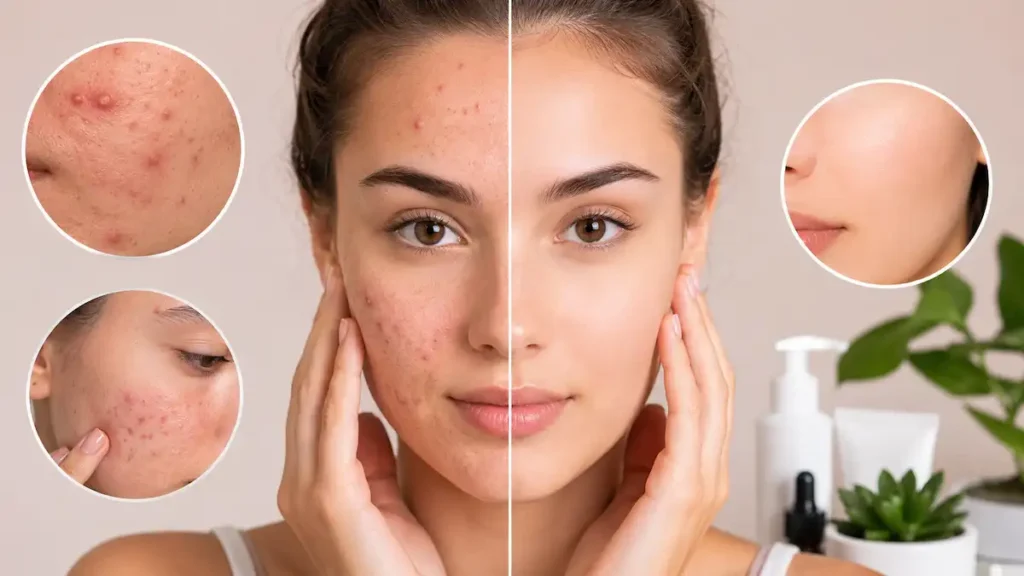
Acne treatment becomes important when pimples start affecting skin health and confidence. Acne is one of the most common skin conditions in the world. Proper acne treatment and healthy skin care habits may help reduce breakouts, redness, and oily skin problems over time.
Many people search for the best acne treatment to manage pimples, oily skin, and recurring breakouts naturally.
Almost everyone experiences pimples at some point in their life. For some people, it is mild and goes away quickly, while for others it can be long-lasting and severe.
Although acne is not a dangerous disease, it can affect a person’s appearance, confidence, and self-esteem.
Many people feel stressed or worried because of pimples on their face. The good news is that acne can be managed and controlled with proper care, healthy habits, and understanding of the condition.
What Is Acne and Why Does It Happen?
Acne is a skin condition that happens when hair follicles (pores) become blocked.
Our skin has many tiny openings called pores. Inside these pores are oil glands that produce a natural oil called sebum.
This oil is important because it keeps the skin soft, smooth, and protected.
However, sometimes these pores get blocked due to:
• Excess oil
• Dead skin cells
• Dirt and pollution
• Bacteria
When a pore gets blocked, oil and dirt cannot come out. This can cause redness, swelling, and the development of pimples.
So, acne is basically a condition where the skin pores get blocked and become infected or inflamed. Understanding how acne develops may help people choose a better acne treatment routine for their skin type.
How Acne Forms Inside the Skin
To understand acne better, let’s see how it forms step by step:
- Oil glands produce sebum (natural skin oil)
- Dead skin cells are normally removed from the skin
- Sometimes oil and dead skin mix together
- This mixture blocks the pore
- Bacteria start growing inside the blocked pore
- The skin becomes red, swollen, and painful
- A pimple or acne appears
This is how a simple blocked pore turns into acne.
Common Causes of Acne Breakouts
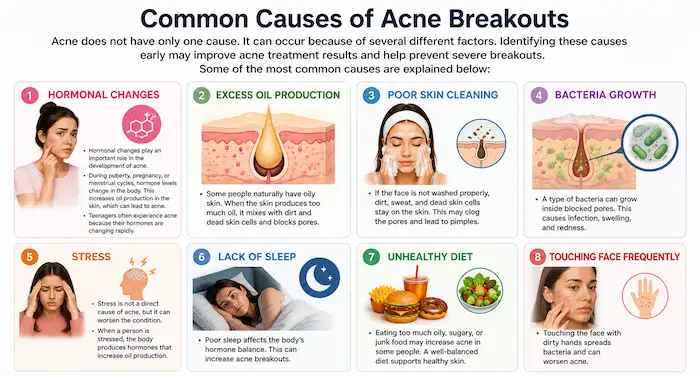
Acne does not have only one cause. It can occur because of several different factors. Identifying these causes early may improve acne treatment results and help prevent severe breakouts. Some of the most common causes are explained below:
Hormonal Changes
Hormonal changes play an important role in the development of acne.
During puberty, pregnancy, or menstrual cycles, hormone levels change in the body. This increases oil production in the skin, which can lead to acne.
Teenagers often experience acne because their hormones are changing rapidly.
Excess Oil Production
Some people naturally have oily skin. When the skin produces too much oil, it mixes with dirt and dead skin cells and blocks pores.
Poor Skin Cleaning
If the face is not washed properly, dirt, sweat, and dead skin cells stay on the skin. This may clog the pores and lead to pimples.
Bacteria Growth
A type of bacteria can grow inside blocked pores. This causes infection, swelling, and redness.
Stress
Stress is not a direct cause of acne, but it can worsen the condition.
When a person is stressed, the body produces hormones that increase oil production.
Lack of Sleep
Poor sleep affects the body’s hormone balance. This can increase acne breakouts.
Unhealthy Diet
Eating too much oily, sugary, or junk food may increase acne in some people. A well-balanced diet supports healthy skin.
Touching Face Frequently
Touching the face with dirty hands spreads bacteria and can worsen acne.
Different Types of Acne Pimples
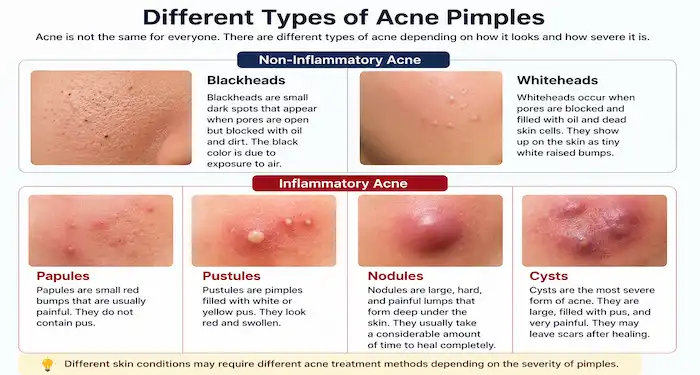
Acne is not the same for everyone. There are different types of acne depending on how it looks and how severe it is.
Non-Inflammatory Acne
Blackheads
Blackheads are small dark spots that appear when pores are open but blocked with oil and dirt. The black color is due to exposure to air.
Whiteheads
Whiteheads occur when pores are blocked and filled with oil and dead skin cells. They show up on the skin as tiny white raised bumps.
Inflammatory Acne
Inflammatory acne is more serious because it causes redness, swelling, and pain.
Papules
Papules are small red bumps that are usually painful. They do not contain pus.
Pustules
Pustules are pimples filled with white or yellow pus. They look red and swollen.
Nodules
Nodules are large, hard, and painful lumps that form deep under the skin. They usually take a considerable amount of time to heal completely.
Cysts
Cysts are the most severe form of acne. They are large, filled with pus, and very painful. They may leave scars after healing. Different skin conditions may require different acne treatment methods depending on the severity of pimples.
Signs and Symptoms of Acne
Acne can show different symptoms depending on its type. Common symptoms include:
• Small or large pimples on the face
• Redness on the skin
• Swelling or inflammation
• Pain or tenderness
• Oily skin
• Blackheads and whiteheads
• Dark spots or scars after healing
Early acne treatment may help reduce inflammation, redness, and long-term acne scars.
Acne on Different Body Parts
Acne is not only found on the face. It can also appear on:
• Back (back acne or “bacne”)
• Chest
• Shoulders
• Neck
These areas also have oil glands, so they can develop acne too.
Stages of Acne
Acne can be mild, moderate, or severe.
Mild Acne
• Small pimples
• Few blackheads or whiteheads
• Easy to manage
Moderate Acne
• More pimples
• Redness and swelling
• Needs proper skin care
Severe Acne
• Large painful cysts or nodules
• Can leave scars
• Needs careful long-term treatment
Best Acne Treatment and Skin Care Methods
There are many acne treatment methods available for different skin types and acne conditions.
Choosing the right acne treatment routine may help improve overall skin health and reduce future breakouts.
The treatment varies based on the severity of the condition.
Basic Skin Care Treatment
• Wash face twice daily
• Use gentle cleanser
• Keep skin clean and dry
• Avoid touching pimples
Over-the-Counter Care
Some mild acne can be treated using simple skincare products that help reduce oil and clean pores.
These may include ingredients that:
• Clean blocked pores
• Reduce oil
• Fight bacteria
• Remove dead skin cells
Lifestyle Changes
Healthy habits play a very important role in acne control:
• Eat healthy food
• Drink enough water
• Sleep properly
• Reduce stress
• Exercise regularly
Healthy lifestyle habits may support better acne treatment results over time.
Severe Acne Care
Severe acne takes time to heal. It requires patience, proper routine, and consistent care. It is important not to squeeze or pick pimples, as this can make them worse and cause scars.
Daily Habits That May Help Prevent Acne
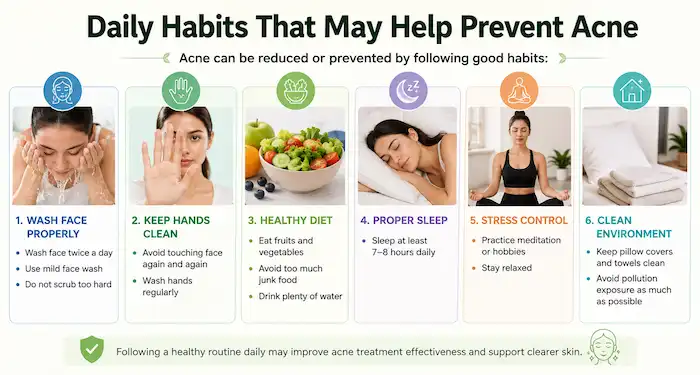
Acne can be reduced or prevented by following good habits:
Wash Face Properly
• Wash face twice a day
• Use mild face wash
• Do not scrub too hard
Keep Hands Clean
• Avoid touching face again and again
• Wash hands regularly
Healthy Diet
• Eat fruits and vegetables
• Avoid too much junk food
• Drink plenty of water
Proper Sleep
• Sleep at least 7–8 hours daily
Stress Control
• Practice meditation or hobbies
• Stay relaxed
Clean Environment
• Keep pillow covers and towels clean
• Avoid pollution exposure as much as possible
Following a healthy routine daily may improve acne treatment effectiveness and support clearer skin.
Common Acne Myths You Should Not Believe
Many people believe wrong things about acne. Let’s clear them:
Myth 1: Acne is caused by dirt
Truth: Acne is not just caused by dirt. Hormones and oil are main factors.
Myth 2: Chocolate causes pimples
Truth: Food affects people differently. Chocolate is not the main cause.
Myth 3: Washing face many times helps
Truth: Over-washing can damage skin and make acne worse.
Myth 4: Only teenagers get acne
Truth: Adults can also get acne.
Acne Scars and Dark Spots After Pimples
After acne heals, it may leave marks on the skin. These scars can be:
• Dark spots
• Red marks
• Pitted scars (in severe cases)
These scars usually fade slowly over time with proper skin care. Proper acne treatment and skin care may help reduce the appearance of acne marks gradually.
Emotional Effects of Acne on Confidence
Acne can also affect mental health. Some people feel:
• Low confidence
• Stress
• Embarrassment
• Social anxiety
It is important to understand that acne is a normal condition and many people go through it. With proper care, it improves over time.
Important Facts Everyone Should Know About Acne
• Acne is very common
• It is not a serious disease
• It can happen at any age
• It is caused by multiple factors
• It can be controlled with proper care
• Everyone’s skin reacts differently
Conclusion
With proper acne treatment, healthy habits, and regular skin care, acne can be managed and improved over time.
Acne is a very common skin condition that affects millions of people worldwide. It happens when skin pores get blocked with oil, dirt, and dead skin cells. Hormones, lifestyle, diet, and stress all play a role in its development.
Although acne can be frustrating, it is important to remember that it is manageable.
With proper skin care, healthy habits, and patience, anyone can improve their skin condition. Clear skin does not happen in one day. It takes time, consistency, and care.
The most important thing is to stay positive and follow a healthy routine. Consistent acne treatment and healthy skin care habits may help maintain clearer and healthier skin in the long term.
Frequently Asked Questions About Acne
1. What is the best acne treatment for oily skin?
The best acne treatment for oily skin usually includes gentle cleansing, oil control, healthy habits, and regular skin care.
2. What is acne?
Acne is a skin condition where pores get blocked and form pimples.
3. Who gets acne?
Anyone can get acne, including teenagers and adults.
4. Is acne dangerous?
No, acne is not dangerous but it can affect skin appearance.
5. Can acne be cured?
Yes, acne can be controlled and improved with proper care.
6. Does stress cause acne?
Stress can make acne worse but is not the only cause.
7. Should we pop pimples?
No, popping pimples can cause scars and infection.
8. How long does acne take to heal?
It depends on the severity. Mild acne heals faster, severe acne takes time.

Medical Disclaimer
This content is for informational purposes only and should not be considered medical advice.