Frozen Spinach vs Fresh Spinach: 5 Essential Nutrition Facts
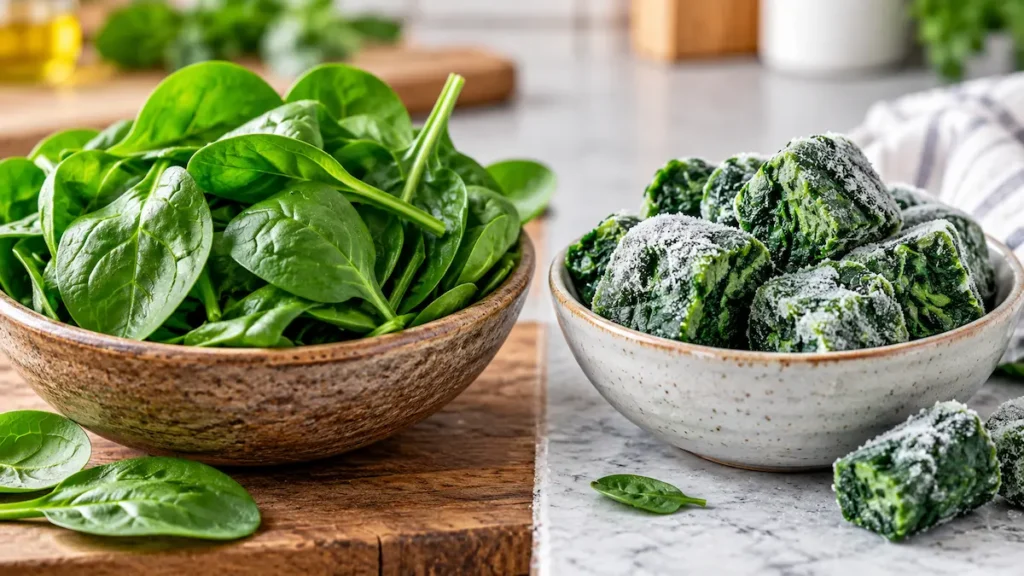
Frozen spinach vs fresh spinach is a useful comparison when you want more leafy greens without sacrificing nutrition. Both provide vitamins, minerals, fiber, and plant compounds, but processing, storage, and cooking can affect individual nutrients. Frozen spinach can be just as nutritious as fresh spinach, although neither consistently contains more of every vitamin or mineral. Fresh leaves are ideal for salads and dishes that need a delicate texture, while frozen spinach is convenient for cooked meals. The better choice depends on how you plan to eat it, how it has been stored, and the portion you use.
Key Takeaways
- Frozen spinach retains many nutrients found in fresh spinach.
- Blanching can reduce some heat-sensitive vitamins.
- Minerals and fiber are generally well preserved during freezing.
- Choose fresh for salads and frozen for cooked meals.
Is Frozen Spinach as Nutritious as Fresh Spinach?
Yes. Both forms provide vitamin K, folate, iron, magnesium, and fiber. Fresh spinach may spend days in transport, shops, and home refrigerators before it is eaten. Frozen spinach is usually processed relatively soon after harvesting, often with a brief blanching step before freezing. Blanching helps preserve color and quality but can reduce certain water-soluble vitamins. Freezing then slows many changes that would otherwise continue during storage. That is why neither consistently wins for every nutrient.
A 2015 study on vitamin retention examined fresh and frozen versions of eight fruits and vegetables, including spinach. Overall, frozen produce often had vitamin levels comparable to fresh produce, although results varied by nutrient and vegetable. A companion study reported broadly comparable results for many measured minerals, fiber, and phenolic compounds. Frozen spinach remains worthwhile, especially when fresh leaves may sit unused for days.
Frozen Spinach vs Fresh Spinach: Nutrition Comparison
Fresh and frozen spinach have broadly similar nutritional strengths, but certain vitamins respond differently to processing and storage. Vitamin C can decline with heat, oxygen exposure, and time, so losses may occur during blanching as well as during refrigeration of fresh leaves. Beta-carotene and folate can also vary with processing. Iron and magnesium are not destroyed by freezing, although some nutrients may be lost into water during blanching or cooking. The table summarizes these general differences rather than claiming fixed values for every product.
| Nutrient | Fresh Spinach | Frozen Spinach |
|---|---|---|
| Vitamin C | Present; may decline during storage | Some may be lost during blanching |
| Vitamin K | Rich source | Remains an important source |
| Folate | Naturally present | Retention varies with processing |
| Iron | Present | Generally retained |
| Magnesium | Present | Generally retained |
| Dietary fiber | Naturally present | Generally well preserved |
| Beta-carotene | Naturally present | Retention varies with processing |
The companion study on minerals and fiber found no statistically significant fresh-versus-frozen differences for most of the tested produce and measured components, but those findings do not mean every frozen spinach product has identical nutrient levels. Variety, processing, storage conditions, and cooking can all change the final result. For exact quantities, compare the nutrition information for similar products in the same preparation state.
Why Serving Size Matters More Than It Seems
In a frozen spinach vs fresh spinach comparison, using equal cup measurements can be misleading. Fresh spinach leaves are loosely packed, while frozen or cooked spinach is more compact because the leaves shrink during processing or cooking. As a result, one cup of cooked spinach may contain considerably more spinach by weight than one cup of raw leaves. This means cooked spinach can provide more iron, magnesium, or vitamin K per cup simply because the serving contains more spinach, not because freezing increases its nutrient content.
For a more meaningful comparison, use equal weights, such as 100 grams, and confirm whether the figures describe raw, frozen-unprepared, drained, or cooked spinach. Water added or lost during processing can also alter nutrient values per 100 grams. Understanding the serving size is especially useful when reading nutrition tables or deciding how much spinach to add to a meal. Preparation and portion size matter.
Fresh or Frozen Spinach: Which Works Better in Meals?
Fresh spinach offers tender leaves and a mild texture that work well in salads, sandwiches, wraps, and quick sautés. Frozen spinach is typically softer after thawing and is better suited to soups, pasta sauces, casseroles, omelets, and fillings. It also saves washing and chopping time when the product has already been prepared. Choose according to the dish and texture you want.
| Dish | Best Choice | Why |
|---|---|---|
| Salads | Fresh | Tender, uncooked leaves |
| Sandwiches and wraps | Fresh | Better fresh texture |
| Soups and stews | Either | Both work well when cooked |
| Pasta sauces | Frozen | Mixes easily into sauces |
| Casseroles and fillings | Frozen | Convenient, compact portions |
| Quick sautés | Either | Choose based on desired texture |
Frozen spinach may release considerable water as it thaws. Squeezing or draining excess moisture helps prevent watery fillings and sauces; fresh spinach can release water during cooking too. When using frozen spinach instead of fresh, adjust the amount by weight rather than assuming the same number of cups will give the same result. Follow package directions if the spinach needs cooking before use.
How to Cook and Handle Spinach Safely
The frozen spinach vs fresh spinach comparison also depends on how each is prepared. Cooking methods can affect nutrient retention, as prolonged boiling may cause some water-soluble vitamins to move into the cooking water, while steaming or quick sautéing uses less water. Frozen spinach can often be added directly to soups and other cooked dishes, provided the packaging instructions allow it. When cooking liquid is consumed, as in soups, some nutrients released into the water remain part of the meal. However, no single cooking method preserves every nutrient equally.
For safety, wash fresh spinach under running water unless the package identifies it as prewashed and ready to eat; store it refrigerated and keep it away from raw meat. Do not assume that frozen spinach is ready to eat just because it was blanched before freezing. Some frozen vegetable products are intended to be cooked, and FoodSafety.gov’s cooking guidance stresses following package instructions. Avoid using frozen spinach raw in a smoothie or salad if its label calls for cooking.
Which Spinach Should You Buy?
When comparing frozen spinach vs fresh spinach, consider how you plan to use it. Fresh spinach is ideal for salads and other uncooked dishes, especially when you can use it soon after purchase. Frozen spinach is a convenient option for cooked meals and longer storage. Choose fresh leaves that are not slimy or badly wilted, and look for plain frozen varieties without added sauces when you want greater control over ingredients. Keeping both options available can make it easier to include leafy greens in your meals. For more variety, explore HealthBel’s guide to leafy green vegetables.
Both fresh and frozen spinach contain vitamin K, which can interact with warfarin and other vitamin K-antagonist medicines. People taking these medications should maintain a consistent vitamin K intake rather than making sudden dietary changes. The NIH vitamin K guidance explains this interaction. If you take one of these medicines, follow your clinician’s advice before significantly changing your spinach consumption. For most other people, choosing between fresh and frozen spinach comes down to cooking preferences, convenience, and budget.
Frequently Asked Questions
Does frozen spinach lose all its vitamins?
No. Frozen spinach retains many vitamins and minerals. Blanching can reduce certain heat-sensitive or water-soluble vitamins, but fresh spinach can also lose nutrients during storage. Actual retention depends on processing, storage, and cooking.
Is frozen spinach higher in iron than fresh spinach?
Not necessarily. Freezing does not destroy iron, but reported amounts can differ because of product variation, water content, and serving weight. Compare equal weights and similar preparation states rather than cups of raw and cooked leaves.
Can frozen spinach replace fresh spinach in recipes?
Yes, especially in soups, casseroles, sauces, and cooked fillings. Its softer texture makes it less useful for uncooked salads. Drain excess water when necessary and follow the product’s cooking directions.
Is it safe to eat spinach every day?
Spinach can be part of a varied diet. People taking warfarin or similar medicines should maintain a consistent vitamin K intake and follow medical guidance. Individual dietary needs may differ with certain health conditions.
Conclusion
In the frozen spinach vs fresh spinach comparison, both options offer valuable nutrients, and neither is consistently healthier than the other. Fresh spinach is ideal for salads and dishes where texture matters, while frozen spinach provides convenience for cooked meals and retains many essential nutrients. The best choice depends on your dietary preferences, portion sizes, and cooking methods. Rather than focusing on which type is superior, aim to include a variety of vegetables in your everyday meals as part of a balanced diet.
Sources & References
- Bouzari et al. (2015) – Vitamin Retention in Fresh vs Frozen Produce
- Bouzari et al. (2015) – Mineral and Fiber Retention
- NIH – Vitamin K and Medication Interactions
- FoodSafety.gov – Safe Cooking and Food Handling

Medical Disclaimer
This content is for informational purposes only and should not be considered medical advice.