7 Amazing Turmeric Ginger Tulsi Tea Benefits for Joint Pain
Joint pain is a common problem today. It can affect people of all ages, not just older adults. Sitting for long hours, not getting enough exercise, being overweight, old injuries, vitamin D deficiency, and arthritis are some common reasons for joint pain.
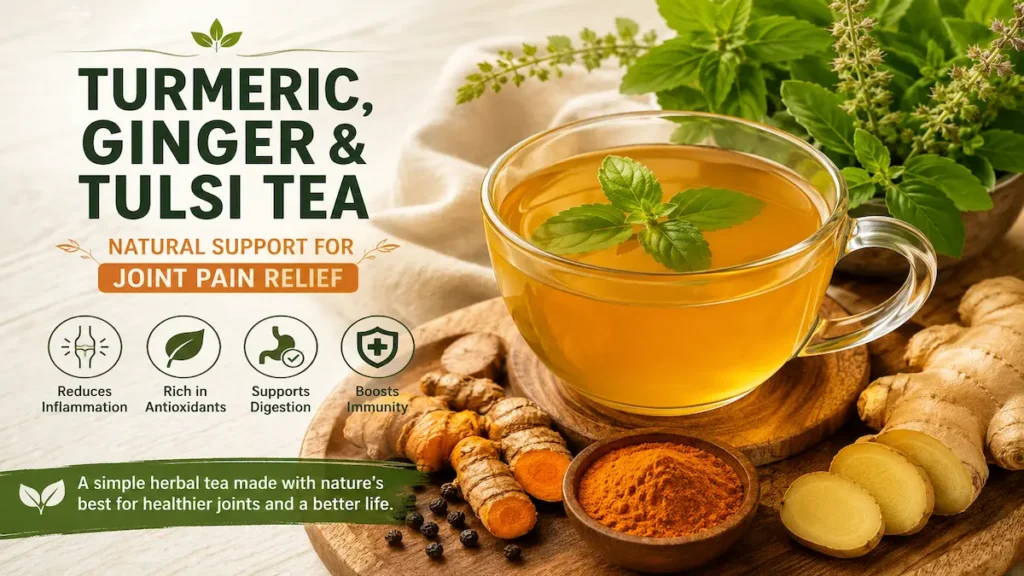
Many people look for natural ways to feel better. Turmeric Ginger Tulsi Tea is one of the most popular herbal home remedies for supporting joint health. Made with turmeric, ginger, and tulsi (holy basil), this traditional tea has been used in Ayurveda for hundreds of years. Today, many scientific studies suggest that these herbs contain natural compounds that may help reduce inflammation, protect the body’s cells from oxidative stress, and support overall wellness. While Turmeric Ginger Tulsi Tea is not a cure for arthritis, it may be a healthy addition to a balanced diet and active lifestyle.
However, it is important to know that turmeric, ginger, and tulsi tea cannot cure arthritis or joint diseases. If your joint pain is severe, lasts for a long time, or comes with swelling, you should see a doctor. This tea should only be used as part of a healthy lifestyle.
Why Is Turmeric Ginger Tulsi Tea Good for Health?
Turmeric
Turmeric contains a natural compound called curcumin. It has anti-inflammatory and antioxidant properties.
Curcumin, the active compound in turmeric, has been studied for its potential anti-inflammatory effects. Research suggests it may support joint health and help reduce mild muscle soreness and stiffness. While the findings are encouraging, more clinical studies are needed to confirm its long-term benefits.
Ginger
Ginger contains natural compounds called gingerols and shogaols.
These compounds may help reduce inflammation in the body. Ginger is also known to support digestion and may help reduce muscle soreness.
Research suggests that ginger supplements may help improve blood sugar control and reduce certain markers of inflammation in people with type 2 diabetes. However, these benefits were seen with concentrated supplements, not with ginger tea, and more research is needed to confirm the effects.
Tulsi (Holy Basil)
Tulsi is a well-known medicinal herb in Ayurveda.
It contains natural antioxidants such as eugenol and rosmarinic acid. Early research suggests that tulsi may help protect the body’s cells and support a healthy immune system.
Tulsi is considered an adaptogenic herb that may help the body manage different types of stress. Early research suggests it has anti-inflammatory and antioxidant properties and may support healthy blood sugar, cholesterol, and blood pressure levels. However, more large-scale human studies are needed before these benefits can be confirmed.
How Does Turmeric Ginger Tulsi Tea Help Joint Pain?
1. May Help Reduce Inflammation
Inflammation is one of the main reasons for joint pain.
The natural compounds in turmeric, ginger, and tulsi may help lower inflammation. This may help some people feel less pain and stiffness.
2. May Reduce Morning Stiffness
People with arthritis often feel stiff when they wake up.
Drinking this herbal tea regularly, along with exercise and healthy food, may help some people feel more comfortable.
3. Gives the Body Antioxidants
Antioxidants help protect the body’s cells from damage.
Turmeric, ginger, and tulsi are all rich in antioxidants that support overall health.
4. Supports Better Digestion
Good digestion helps the body absorb important nutrients.
Ginger may help with gas, bloating, and indigestion. Tulsi may also support a healthy digestive system.
5. A Warm Drink That Feels Comforting
A warm cup of herbal tea can help your body feel relaxed.
Many people enjoy drinking this tea during cold weather because it may help reduce the feeling of joint stiffness.
What Does Research Say?
Several well-known medical organizations and scientific journals have studied the effects of turmeric, ginger, and tulsi on inflammation and joint health. While the findings are promising, experts agree that more high-quality human studies are still needed, especially for herbal teas.
| Ingredient | Key Active Compound | Research Findings | Evidence Level |
| Turmeric | Curcumin | A review of clinical trials published in the BMJ Open (2021) found that curcumin supplements may help reduce pain and improve physical function in people with knee osteoarthritis. However, the quality of evidence ranged from low to moderate, and researchers called for larger clinical trials. | Moderate |
| Ginger | Gingerols, Shogaols | A systematic review published in the Osteoarthritis and Cartilage journal reported that ginger supplementation showed a small but measurable reduction in pain in people with osteoarthritis compared with placebo. | Moderate |
| Tulsi (Holy Basil) | Eugenol, Rosmarinic Acid | Laboratory and early human studies suggest tulsi has antioxidant and anti-inflammatory properties. However, according to reviews published in the Journal of Ayurveda and Integrative Medicine, there is currently limited clinical evidence proving that tulsi alone can reduce joint pain or treat arthritis. | Limited |
What Experts Say
According to the National Center for Complementary and Integrative Health (NCCIH), turmeric and its active compound curcumin have shown potential anti-inflammatory effects, but more well-designed human studies are needed before they can be recommended as a standard treatment for arthritis.
Researchers also point out that most clinical studies have used concentrated curcumin supplements (often 500–1,500 mg per day) rather than herbal tea. Because a cup of turmeric tea contains much lower amounts of curcumin, its effects may be milder.
Similarly, ginger has shown modest benefits in some clinical trials, but experts recommend using it as a supportive dietary ingredient rather than a replacement for prescribed medicines.
For tulsi, current evidence mainly comes from laboratory research and small human studies. Scientists believe it has potential because of its antioxidant compounds, but larger clinical trials are still required to confirm its role in managing joint pain.
How to Make Turmeric Ginger Tulsi Tea
Ingredients
- 1 cup of water
- 1 inch fresh ginger, grated
- ½ teaspoon turmeric powder or 1 inch fresh turmeric
- 5–7 fresh tulsi leaves
- A pinch of black pepper
- 1 teaspoon honey (optional)
- A few drops of lemon juice (optional)
Method
- Boil one cup of water.
- Add the ginger and tulsi leaves.
- Let them cook for about 5 minutes.
- Add the turmeric and cook for another 3 to 5 minutes.
- Strain the tea into a cup.
- Add a pinch of black pepper.
- Let it cool a little before adding honey or lemon juice.
Why Add Black Pepper?
Black pepper contains piperine.
Piperine helps the body absorb curcumin from turmeric better. That is why many people add a small pinch of black pepper to turmeric tea.
How Much Tea Can You Drink?
For most healthy adults, 1 to 2 cups a day is enough.
Drinking too much may cause stomach problems instead of giving extra benefits.
Who Should Be Careful?
Talk to your doctor before drinking this tea regularly if you:
- Take blood-thinning medicine
- Take medicine for diabetes or high blood pressure
- Are pregnant or breastfeeding
- Have gallbladder problems
- Have stomach ulcers or acid reflux
- Have kidney stones
- Are going to have surgery soon
Are There Any Side Effects?
Drinking too much may cause:
- Heartburn
- Acidity
- Gas
- Diarrhea
- Nausea
- Allergic reactions in some people
Stop drinking the tea and talk to your doctor if you feel unwell.
Tea Alone Is Not Enough
This tea can support joint health, but it cannot replace healthy habits.
To keep your joints healthy:
- Walk or exercise regularly.
- Keep a healthy body weight.
- Eat enough protein.
- Get enough calcium and vitamin D.
- Drink plenty of water.
- Sleep for 7 to 8 hours every night.
- Avoid sitting in one place for too long.
When Should You See a Doctor?
See a doctor if you have:
- Severe swelling
- Redness around the joint
- Fever
- Trouble walking
- A joint that looks different
- Pain that lasts for many weeks
Conclusion
Turmeric Ginger Tulsi Tea is a healthy herbal drink made with three natural ingredients that have been used in traditional wellness practices for centuries. Turmeric, ginger, and tulsi contain natural plant compounds that may help support the body’s natural response to inflammation and protect cells from oxidative stress. While Turmeric Ginger Tulsi Tea is not a cure for arthritis, it can be a healthy addition to a balanced diet and an active lifestyle.
Even though this tea may help some people with mild joint pain, it is not a cure for arthritis or any joint disease.
For healthy joints, eat a balanced diet, stay active, maintain a healthy weight, sleep well, and follow your doctor’s advice. Adding turmeric, ginger, and tulsi tea to your daily routine can be a simple and enjoyable part of a healthy lifestyle.
Frequently Asked Questions
Can Turmeric Ginger Tulsi Tea Cure Arthritis?
No. It cannot cure arthritis. It may only help support joint health and reduce mild discomfort in some people.
Can I drink it every day?
Yes. Most healthy adults can drink 1 to 2 cups a day unless their doctor advises otherwise.
Can I add milk?
Yes, but this tea is usually made with water.
Is honey necessary?
No. Honey is only added for taste.
How long does it take to work?
Some people may feel better after a few weeks, while others may not notice much difference. Results are different for everyone.
References
- National Center for Complementary and Integrative Health (NCCIH) – Nutritional Approaches for Musculoskeletal Pain and Inflammation
https://www.nccih.nih.gov/health/providers/digest/nutritional-approaches-for-musculoskeletal-pain-and-inflammation-science - BMJ Open Sport & Exercise Medicine (2021) – Therapeutic Effects of Turmeric or Curcumin Extract on Pain and Function for Individuals with Knee Osteoarthritis: A Systematic Review
https://bmjopensem.bmj.com/content/7/1/e000935 - PubMed (National Library of Medicine) – Therapeutic Effects of Turmeric or Curcumin Extract on Pain and Function for Individuals with Knee Osteoarthritis
https://pubmed.ncbi.nlm.nih.gov/33500785/ - National Center for Complementary and Integrative Health (NCCIH) – Arthritis and Complementary Health Approaches: What the Science Says
https://www.nccih.nih.gov/health/providers/digest/arthritis-and-complementary-health-approaches-science - National Center for Complementary and Integrative Health (NCCIH) – 7 Tips: Nutritional Approaches for Musculoskeletal Inflammation
https://www.nccih.nih.gov/health/tips/tips-what-you-need-to-know-about-nutritional-approaches-for-musculoskeletal-inflammation

Medical Disclaimer
This content is for informational purposes only and should not be considered medical advice.